
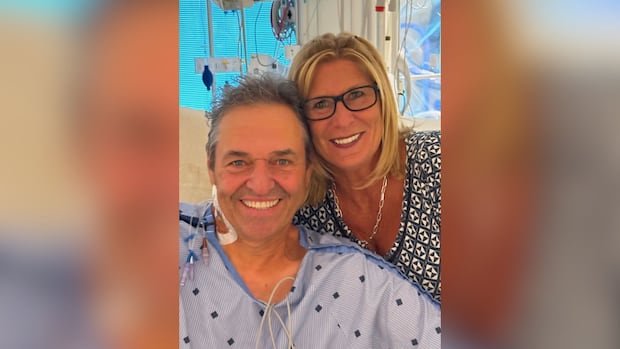

A 64-year-old man from Quebec has made history as the first patient in North America to undergo a liver transplant using a regenerated liver. This innovative technology has the potential to significantly increase the number of livers available for transplantation within its initial year of implementation.
Gérard Landry, a resident of Nouvelle in Quebec’s Gaspé Peninsula, had been battling liver issues for around 15 years, which eventually led to cirrhosis and liver cancer. Prior to his surgery at Montreal’s Centre hospitalier de l’Université de Montréal (CHUM), Landry received surprising news from his doctor that his new liver had been regenerated using a groundbreaking machine developed over several years.
The technology, known as Liver Assist, enables medical professionals to treat and evaluate a donated liver outside the body before transplanting it. In Landry’s case, this meant receiving a liver that might have been deemed too risky for transplantation without this technology.
Dr. David Hénault, a liver transplant specialist at CHUM, spearheaded the project and conducted Landry’s surgery. The Liver Assist system functions by connecting a donated liver to a machine that circulates an oxygen-rich fluid through the organ, potentially reversing damage caused by oxygen deprivation during the organ’s period outside the body.
Hénault explained that by simulating the conditions within the human body, doctors can assess how the liver performs with a blood-based solution, ensuring its functionality before transplant. This method has shown promise in salvaging livers that were previously deemed unsuitable for transplantation.
The implementation of this technology at CHUM is expected to increase the pool of available livers for transplant by an estimated 20 to 24 additional organs in its first year of use. As the technology becomes more widespread, this number is projected to grow, offering hope to more patients awaiting liver transplants.
Furthermore, studies have indicated that this innovative approach can reduce complications, the need for reoperations, and hospitalization durations for eligible patients. Landry’s swift recovery post-transplant serves as a testament to the effectiveness of this advanced technology.
As Landry continues his recovery journey in Montreal, he eagerly anticipates reuniting with his loved ones back in Gaspésie. His experience highlights the importance of organ donation discussions among families, underscoring the critical need for available organs to match advanced medical technologies for successful transplants.