

Thoroughbreds snort and toss their heads as eager hooves create an uneven rhythm on the newly harrowed sand of a scorching August afternoon.
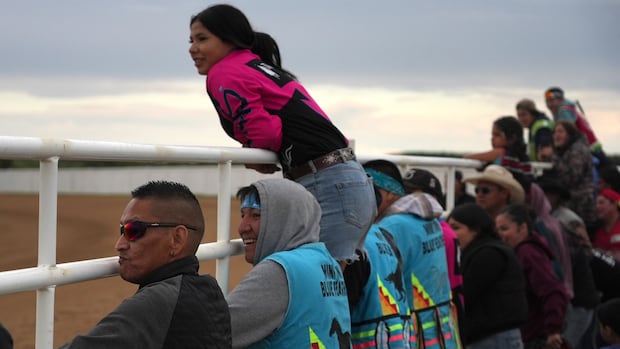
The announcer’s booming voice from the loudspeaker signals the beginning, prompting spectators to gather, some leaning against or even climbing onto the white rail fence that borders the track.
Excited voices resonate from the grandstands at Onion Lake Cree Nation’s Heritage Park, located 50 kilometers north of Lloydminster on the Saskatchewan side, as the fifth and final day of what the organizers refer to as Indian Relay Racing is about to kick off.
“The crowd has been incredible; the stands have been full each day,” said race organizer Candy Jackson. “With four relays happening concurrently and 14 remarkable teams — humble teams — choosing Onion Lake, I am grateful for their participation.”
This team sport consists of riders racing laps while changing horses. Each rider completes three bareback laps, riding a different horse for each lap. The exchanges can be intense, as riders must dismount and ensure both feet touch the ground before mounting the next horse.
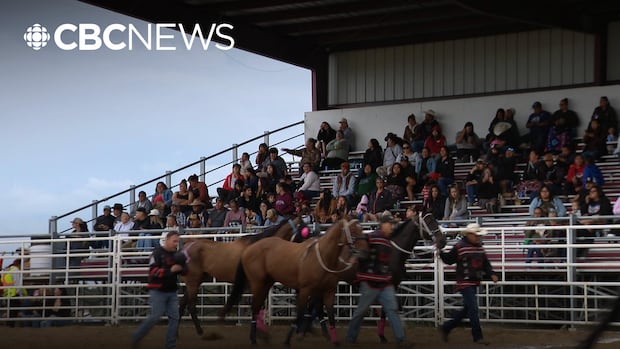
This sport entails racing down a dirt track on a thoroughbred horse’s bare back and is gaining traction across the nation. As Lexi Freehill reports from Onion Lake Cree Nation, it represents much more than just high-speed competition; it embodies a cultural connection.
Collisions among riders, overexcited or stubborn horses, and falls can drastically alter the outcome of a race in mere seconds.
Over the past ten years, this sport has been steadily increasing in popularity across the Prairies, with races emerging as popular summer events, attracting large audiences and boosting prize money.
Tyson Head, a farrier from Mistawasis, Sask., has been involved in horse racing throughout his life. Since founding his team T.K. Farrier in 2017, he has witnessed a surge of dedicated fans and substantial payouts becoming commonplace.
“We’ve been at it for nine years, and we’ve won numerous championships and titles during that time,” he told CBC News.
According to Head, the increasing interest in the races is drawing more sponsors, which in turn generates more enthusiasm from potential participants eager to enter the sport.
“When I began, there were only 16 teams,” he noted. “Now there are over 40 teams actively competing.”
This expansion opens the door for further growth, Head explained. Newcomers are learning from established teams and eventually launching their own, bringing in more aspiring racers while sharing valuable insights and skills in horsemanship.
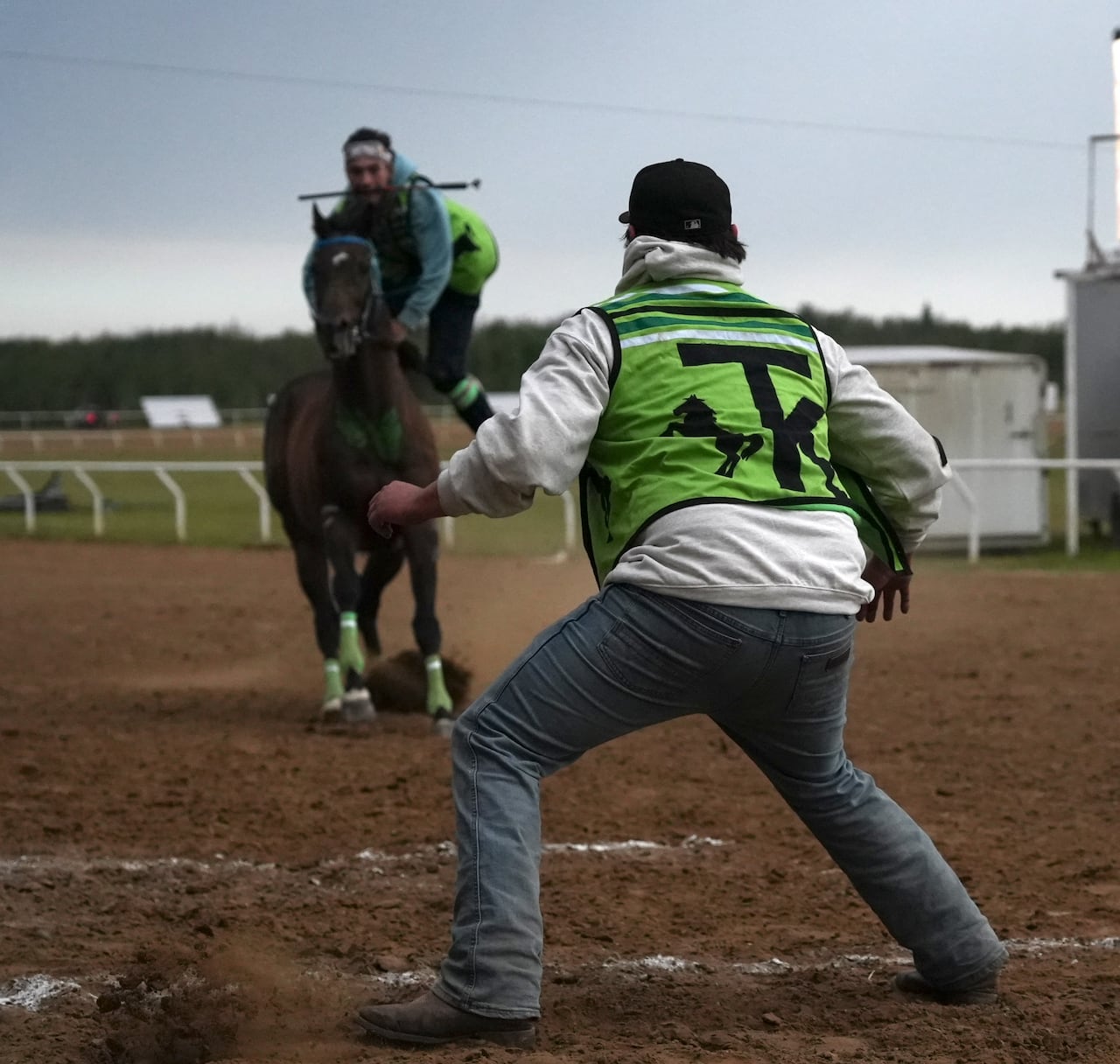
A backholder for T.K. Farrier shifts his position to catch the reins of the fast-moving horse as rider Carter Houle prepares for the final exchange in the championship race. (Lexi Freehill/CBC)
Although the rapid growth of the sport brings advantages, Jackson, who is from Goodfish Lake, expressed concerns about the challenges that accompany increased popularity.
“Initially, we started as wahkohtowin, which symbolizes unity and family,” Jackson reflected. “We helped one another out; if someone encountered a breakdown, we ensured they made it to their destination.
“As time progressed, the events grew larger… the sense of unity diminished, and people began to change. The focus shifted to winning championships.”
Jackson aims to ensure that the races — and the riders — maintain a connection to their cultural roots as an organizer and as the mother of Kal “Buffalo Boy” Jackson, one of the pioneering Canadian relay riders.
Beginning her race events with a pipe ceremony and prayers is one method Jackson incorporates tradition into the sport. Additionally, some riders, including 19-year-old cousins Kyla and Kayden Stanley, engage in prayer and smudging for themselves and their horses before they race.
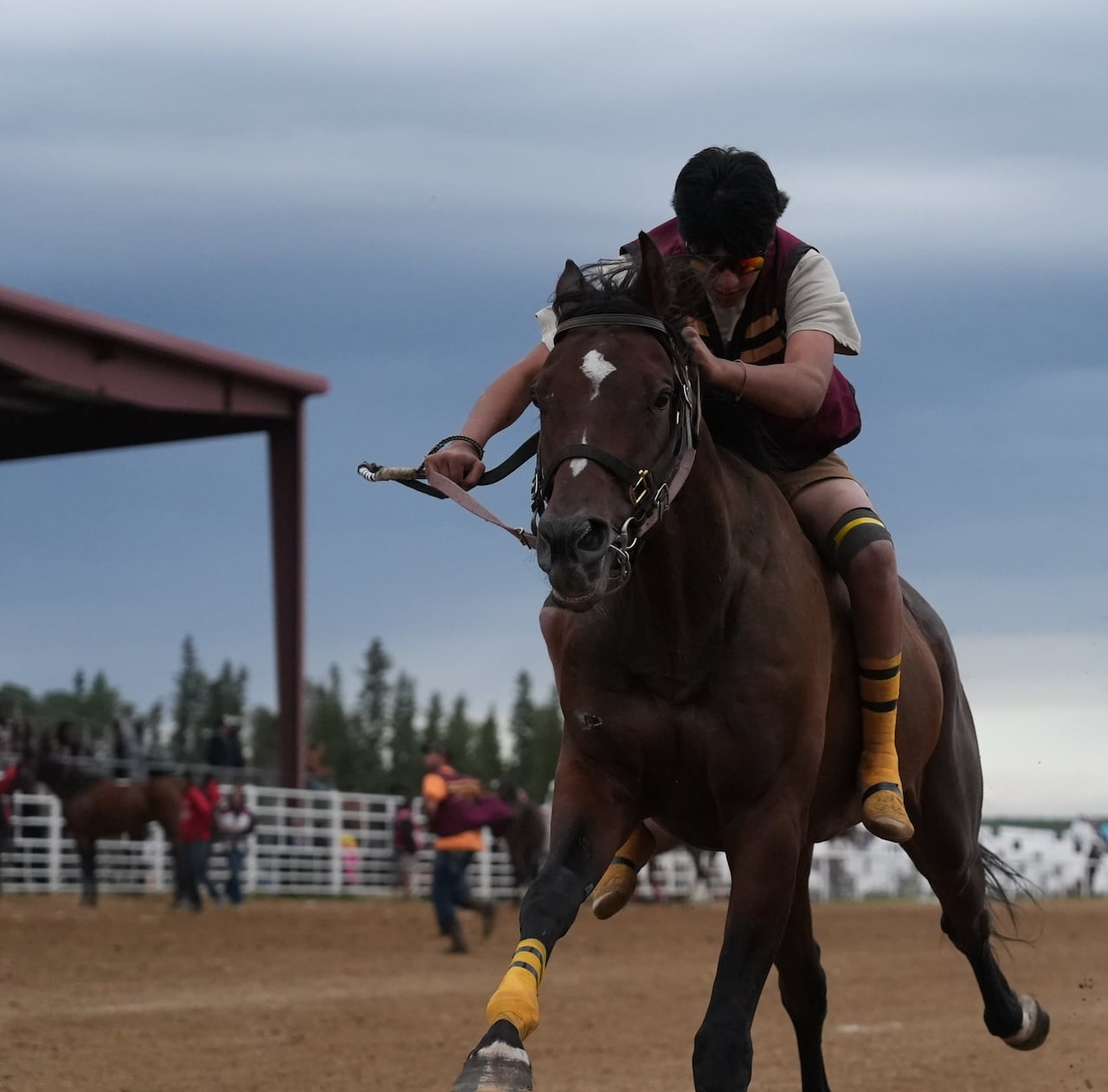
19-year-old jockey Kayden Stanley, hailing from Onion Lake Cree Nation, aspires to demonstrate his skills at the Calgary Stampede one day. (Lexi Freehill/CBC)
“[It] helps me feel much calmer and safer when I’m out there,” Kyla Stanley mentioned to CBC News.
“It’s undeniably a perilous sport if you’re not cautious,” Kayden Stanley remarked. “However, if you run safely, it’s a truly rewarding experience.”
Beyond the cash prizes and championship titles lies each rider’s chance to honor tradition and reconnect with their roots, Jackson noted, emphasizing that many young jockeys carry stories of personal struggles.
“The true essence of the sport is that riders possess a talent; the horse provides the gift,” she stated. “It embodies their healing spirit.
“The spirit of the horse has brought them back, making them true warriors.”