
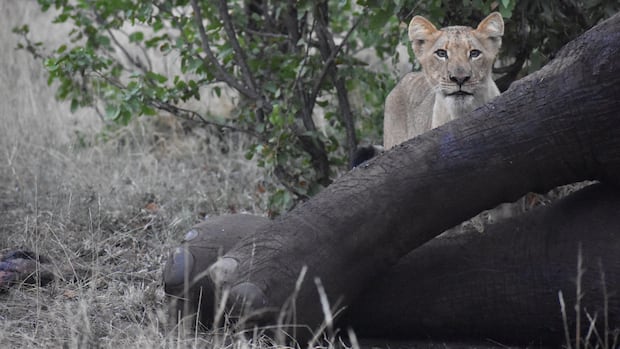


In the arid expanses of the African savannah, elephants are redefining the concept of life after death.
This revelation comes from a recent study conducted by a global team of scientists who investigated the locations of elephant remains in South Africa’s Kruger National Park.
These majestic grey animals, often termed “ecosystem engineers”, are known for their role in shaping the savannah during their lifetimes by digging waterholes, uprooting trees, and consuming vast amounts of vegetation. Researchers were already aware of this aspect.
“What remained unknown was whether the significant impacts they have while alive could persist after their death,” explained ecologist Courtney Reed, the study’s lead author, during an interview with As It Happens guest host Dave Seglins.
“Their remains hold a plethora of nutrients, including vast quantities of carbon, nitrogen, and phosphorus, so we aimed to determine if the nutrients from these carcasses could continue to influence the ecosystem.”
The results were published on Monday in the Proceedings of the National Academy of Sciences of the United States of America. Reed, now at Princeton University, conducted this research while serving as a post-doctoral researcher at the University of California Santa Barbara.
Cycle of renewal
By analyzing soil chemistry, animal grazing patterns, and biodiversity in the vicinity of the large carcasses, the researchers discovered that decomposition released “immense nutrient reservoirs” into the soil. This process triggered increased microbial activity and fostered the growth of nutrient-rich plants, drawing herbivores to the area long after the elephant remains had vanished.
The researchers observed that the effects of decomposition endure for over seven years post-mortem.
However, this surge in regrowth and biological activity does not occur immediately. Initially, the high nutrient concentration from the carcasses can lead to the death of surrounding vegetation, resulting in large bare areas or “cold spots” in biodiversity, according to Reed.

The research indicated that the high nutrient levels in elephant carcasses initially obliterate nearby vegetation, resulting in significant bare patches or ‘cold spots’ in biodiversity. (Submitted by Courtney Reed)
“An excess of a beneficial element isn’t always advantageous,” she noted. “This substantial influx of nitrogen, frequently in the form of ammonium, can be toxic to plants at extremely high concentrations.”
As time passes, however, Reed points out that the ecosystem starts to recover as the surplus ammonium diminishes and bacteria transform some of it into nitrate, a nitrogen form that is more accessible to plants.
Reed mentions that the returning vegetation is particularly high in nitrogen, serving as a crucial protein source for herbivores.
“This leads to an influx of herbivores like zebras, buffalo, and rhinos, who selectively graze on these nitrogen-rich grasses,” she explained. “Thus, a significant surge in herbivore activity occurs, lasting for years following the elephants’ demise.”
Moreover, the advantages do not end there. Researchers noted that grazing animals continue to frequent these burial locations for years, further enriching the soil with their waste.
For Reed, a fundamental takeaway from the study is the cycle of renewal: the potential for positive feedback mechanisms to keep affecting the environment long after the elephant has passed away.
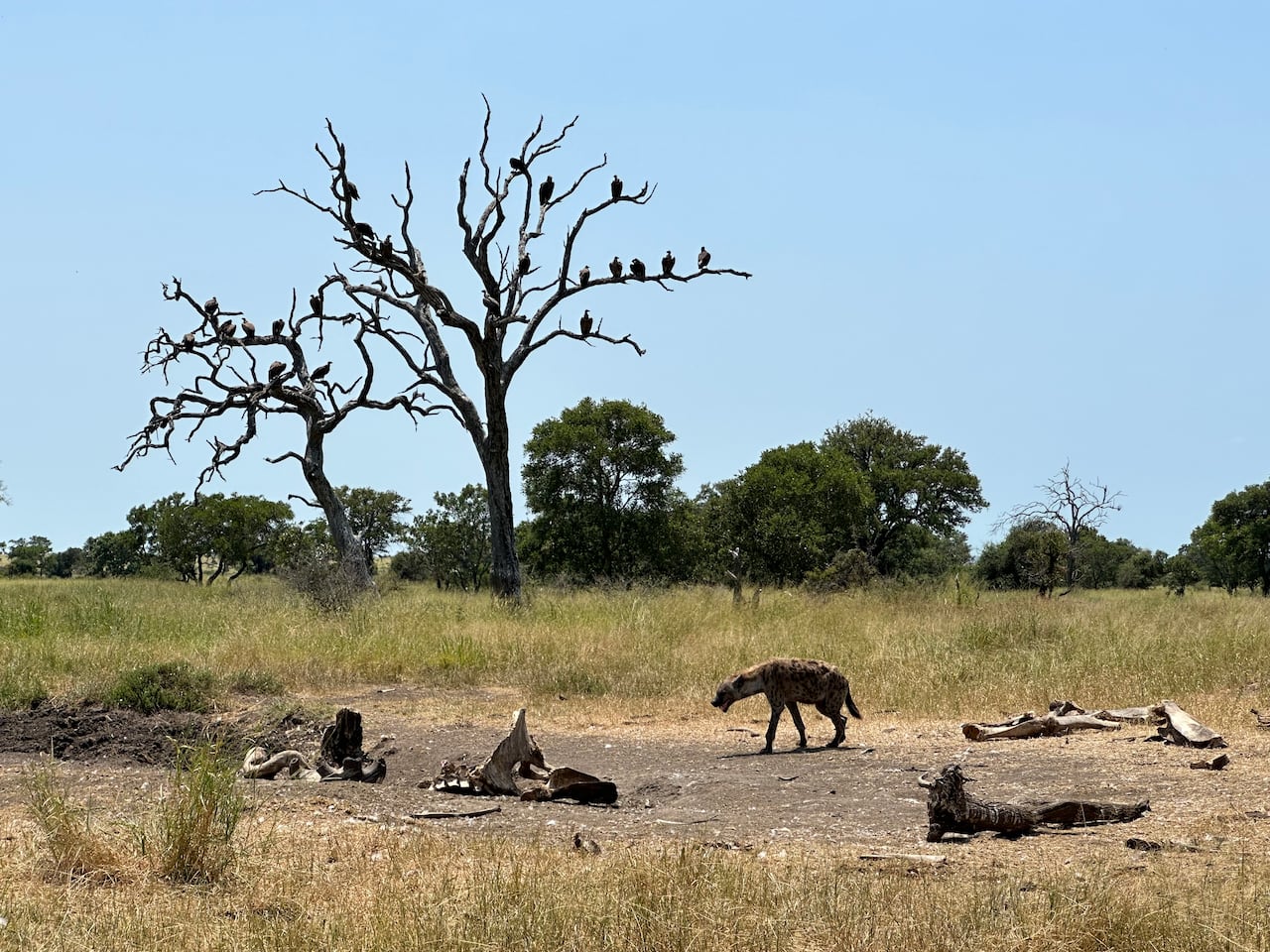
The study found that grazing animals and scavengers continue to visit the site of the carcass years later, further enriching the soil through their waste. (Submitted by Courtney Reed)
Nonetheless, an expert not involved in the study cautions that the ecological impact of an elephant carcass is not universally beneficial across all environments.
Chase LaDue, an elephant ecologist and research curator at the Oklahoma City Zoo, mentioned that the findings of the paper underscore the fragility of ecosystem balance.
In the African savannah, where biodiversity is influenced partly by natural disturbances, an elephant carcass can enhance the ecosystem. However, if human encroachment has reduced the habitat size, these carcasses can instead disrupt the ecological equilibrium.
“If a significant number of elephants die in a concentrated area, it impacts biodiversity in a way that cannot be balanced as it would in a more expansive, undisturbed landscape,” LaDue explained.
“This region of southern Africa hosts more elephants than the landscape can sustain, which could be yet another reason why the environment continues to suffer due to human activity, even after the elephants have departed.”