
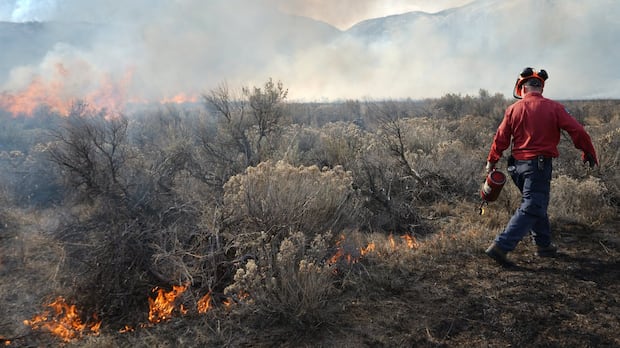

After almost eight years of pursuing financial support, the City of Kimberley has obtained $400,000 to investigate the potential impact of wildfires on its drinking water supply.
This initiative stems from the 2018 Meachen Creek fire, which heightened awareness regarding the susceptibility of local water sources.
Mathieu Bourbonnais, an assistant professor at the University of British Columbia (UBC) Okanagan and co-director of the Centre for Wildfire Coexistence, noted that people frequently take their drinking water for granted.
“You turn on the tap and have access to drinking water, and we just assume that will always be the case,” he remarked.
“However, we depend on the environment to provide that, and wildfires significantly alter the behavior of these systems.”
The drinking water for Kimberley is sourced from the Mark Creek and Matthew Creek watersheds.
A major wildfire could jeopardize both the quality and availability of Kimberley’s drinking water long after the fire has been extinguished.
The goal of the project is to assess these risks and identify strategies to mitigate them without introducing new issues for the water supply.
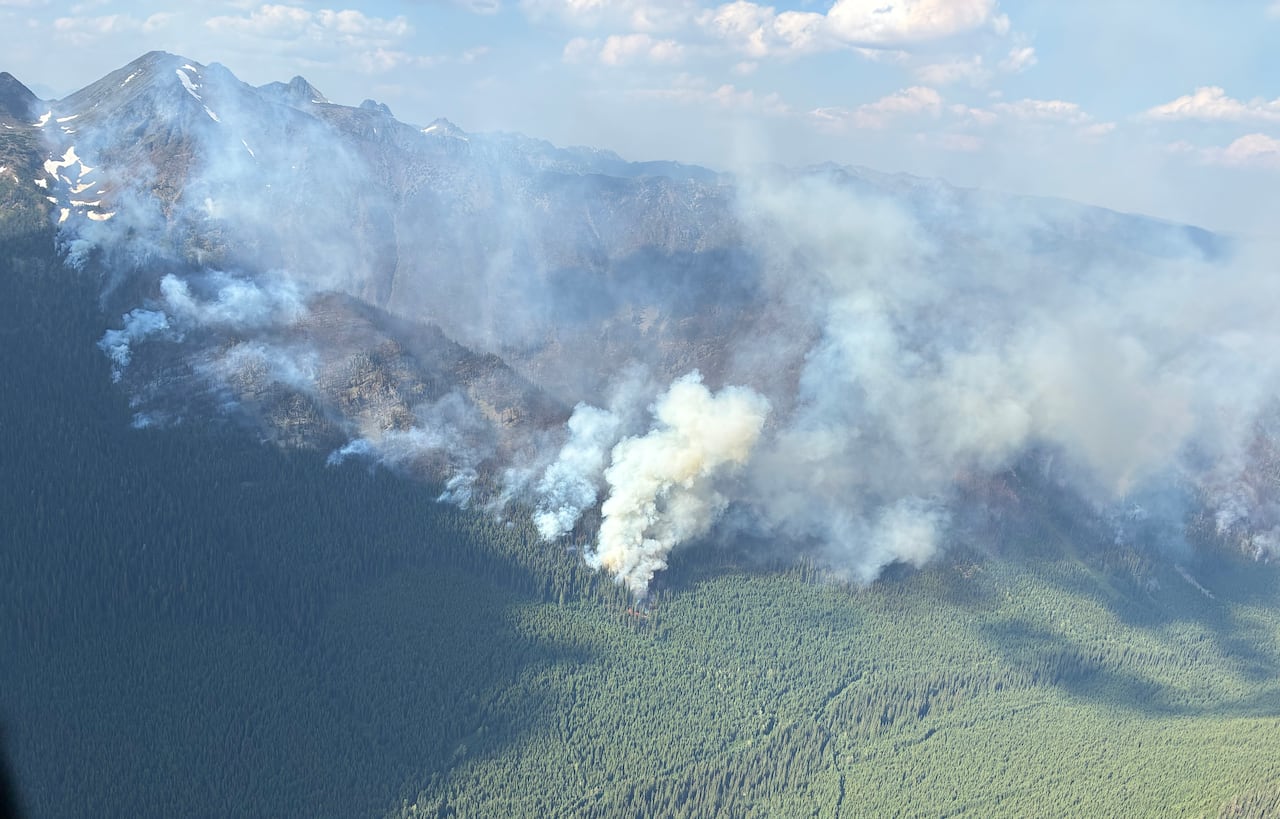
Smoke billows from the Matthew Creek wildfire near Kimberley, B.C., on July 19, prompting an evacuation alert for the entire city. (B.C. Wildfire Service)
Wildfire risks become more immediate
The recent Matthew Creek wildfire led to an evacuation alert for the entire city, reigniting concerns about the threats to Kimberley’s watersheds.
However, wildland fire ecologist Bob Gray indicated that the fire is not anticipated to significantly alter water movement within the watershed.
He noted that the most severely burned areas were relatively small and located higher up the slopes, while regions nearer to the river had experienced lighter burns.
The worry lies in the potential repercussions of a larger, more intense fire sweeping through one of Kimberley’s drinking-water watersheds.
Bourbonnais explained that intense wildfires can devastate vegetation and soil, leading to increased erosion and sedimentation in streams.
Moreover, they can disrupt the processes of snow accumulation and melting, ultimately affecting the timing of water flow into reservoirs.
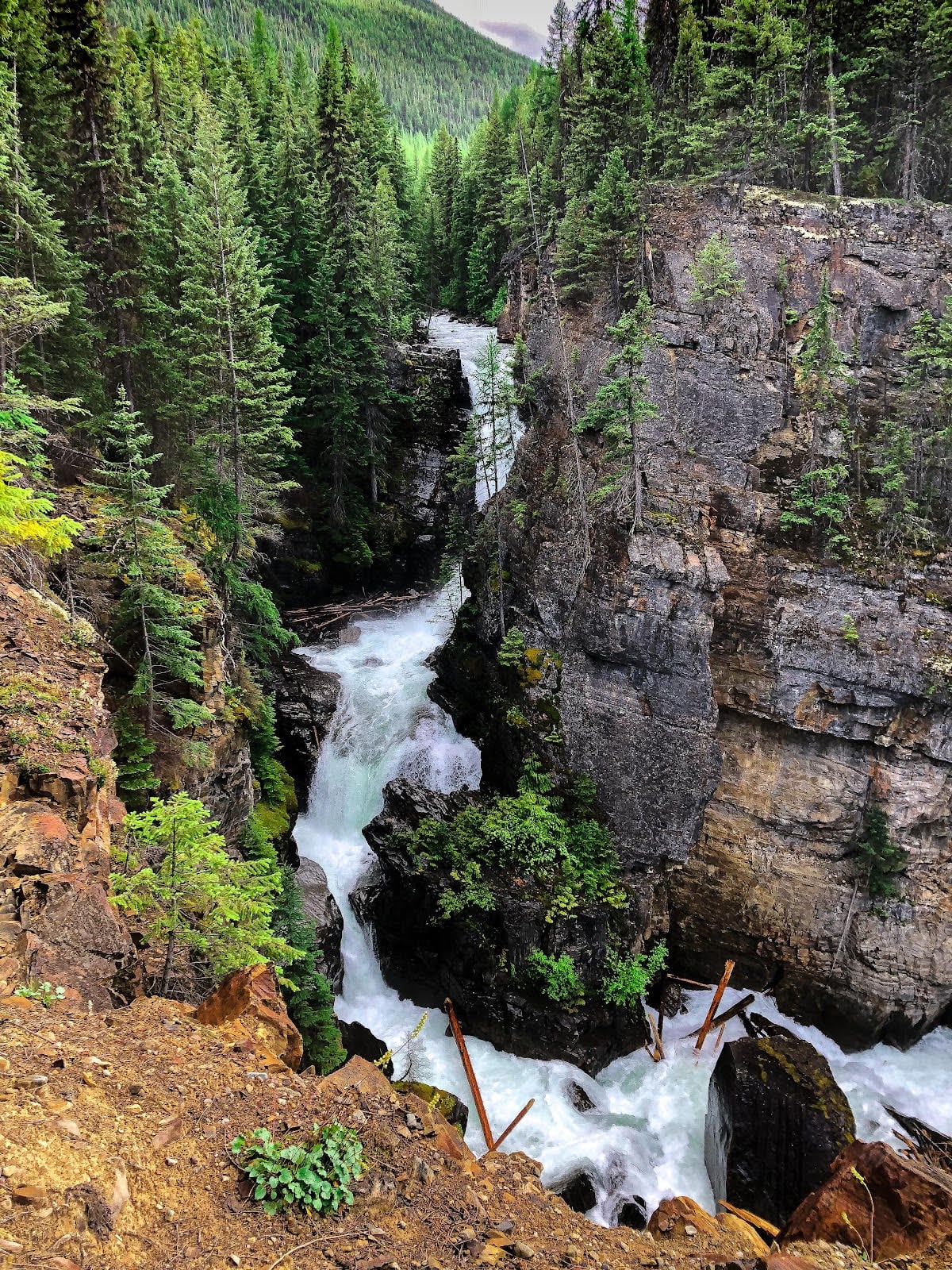
Meachen Creek Falls, near Kimberley, B.C., is shown in this undated image. (Tourism Cranbrook)
Preparing for future wildfires
Bourbonnais’s team at UBC Okanagan is collaborating with the city and Gray to simulate how fires might behave within the Mark Creek watershed.
The study will assess forest conditions, weather patterns, and climate change predictions extending to around 2060.
Researchers will also evaluate how a significant fire could impact water quality, streamflow, and the timing of water entering reservoirs.
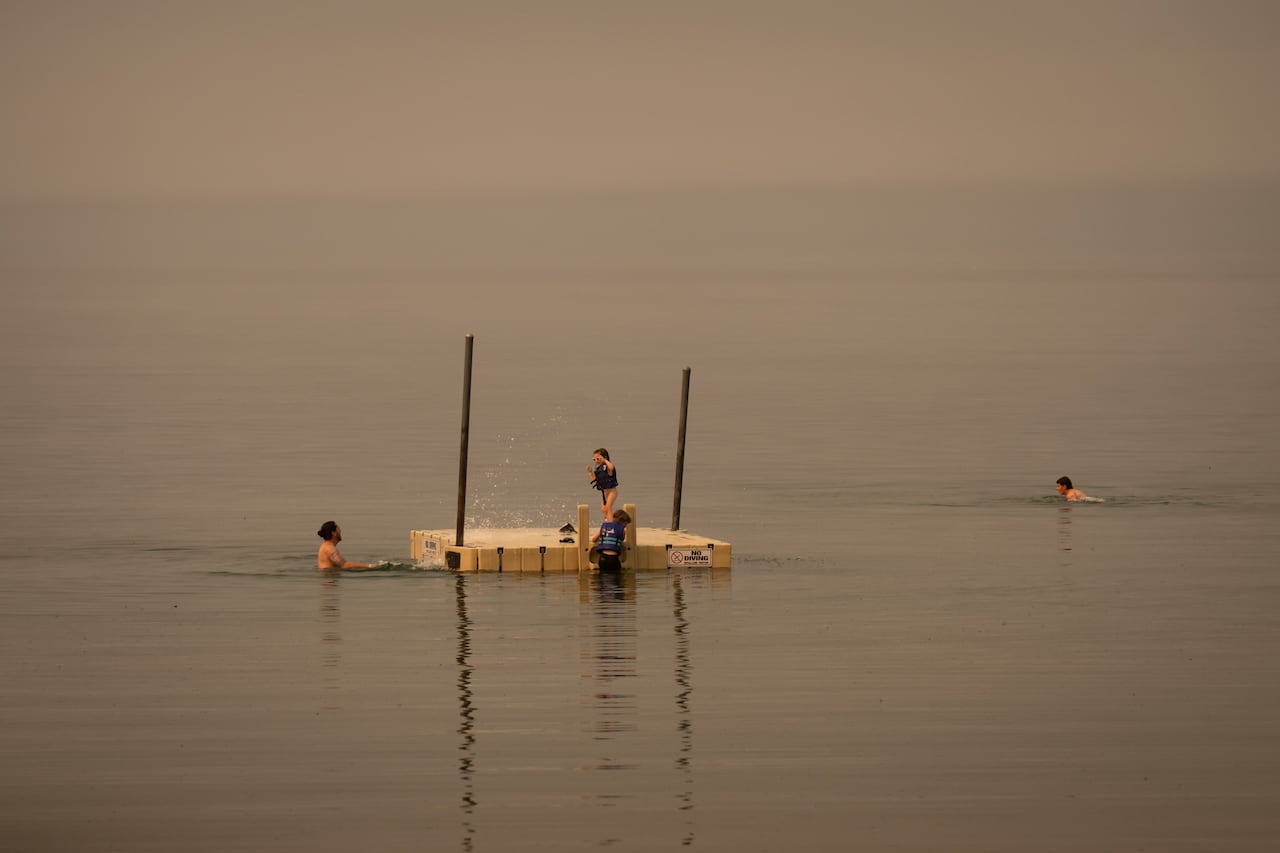
Individuals enjoy activities on Okanagan Lake while smoke from the nearby Bald Range wildfire lingers earlier this summer. (Ben Nelms/CBC)
Bourbonnais pointed out that much of the province’s prior wildfire risk assessments have concentrated on existing or historical conditions.
He emphasized that scientists still do not fully grasp the implications of a worst-case wildfire scenario on the hydrology of a large, forested watershed.
“Our focus is not just on the present, but on planning for the future,” he asserted.
Mitigating fire risks while safeguarding water supplies
The research will also assist in pinpointing where forest thinning, harvesting, and prescribed burning can help lower wildfire risks.
However, implementing these wildfire mitigation strategies presents its own set of challenges.
“If we utilize forestry or prescribed fire, it will also affect hydrology,” Bourbonnais explained.
“Therefore, it’s essential to find a balance between these two aspects.”
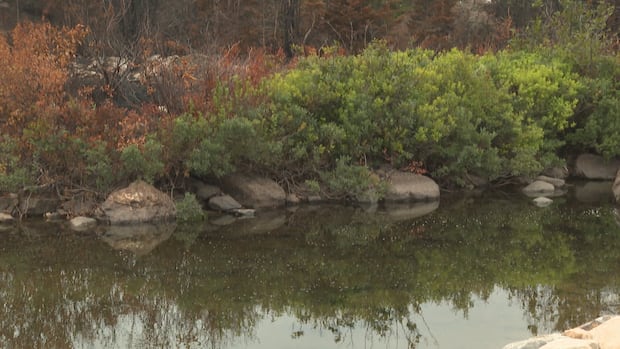
Gray, who has been involved in Kimberley’s wildfire prevention efforts for around two decades, stated that the modeling will aid in determining where mitigation strategies should be implemented and the extent of work required.
He emphasized the need for careful planning to prevent increasing erosion, sedimentation, or peak water flows.
“Our approach to harvesting must be very deliberate,” Gray noted.
-
Wildfires pose a threat to water quality in certain B.C. communities
-
Wildfires upstream could contaminate Calgary’s drinking water — the city is preparing
The initiative is anticipated to take approximately two years.
The Columbia Basin Trust is contributing $300,000, while the city will cover the remaining $100,000.
The results will inform future wildfire mitigation efforts and provide planning resources that can be utilized by other communities.
“The danger of inaction is greater than the risks associated with taking proactive measures,” Bourbonnais concluded.