
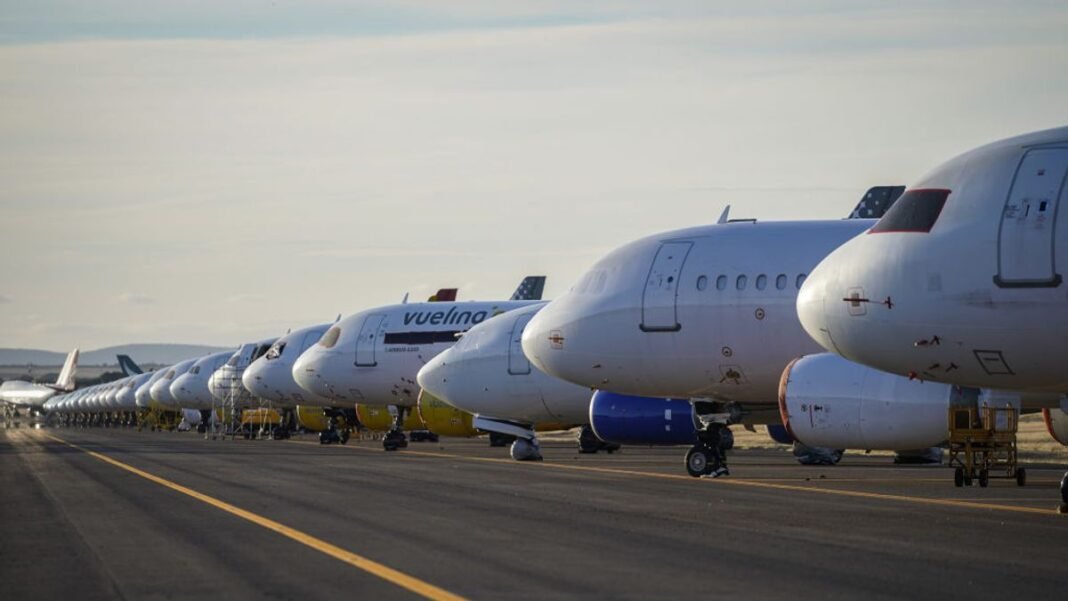

Real Ciudad, once hailed as a game-changer in the aviation industry, turned out to be a colossal infrastructure failure in the 21st century. The airport, constructed at a staggering cost exceeding €1.1 billion and inaugurated in 2009, was envisioned to alleviate congestion at other Spanish airports and entice numerous low-cost carriers from Europe.
Despite its grand ambitions, Real Ciudad struggled to stay afloat and eventually succumbed after a mere three years, earning the moniker of Spain’s “ghost airport.” The project, conceived during Spain’s construction boom in the mid-2000s, boasted impressive features like a 4.1km runway and a terminal capable of handling up to ten million passengers annually, attracting eager investors seeking profitability.
Positioned as an alternative to Madrid, the airport failed to attract travelers due to its distance from the capital and the absence of a high-speed rail connection promised for quicker transit times. Environmental issues further delayed its operations, escalating costs and dampening its initial prospects.
Airlines, including Air Berlin, Air Nostrum, Ryanair, and eventually Vueling, withdrew their services due to lackluster demand, leading to the airport’s rapid decline. By 2012, burdened with over €300 million in debt, the operating company declared bankruptcy, halting all operations.
Despite being auctioned off at a fraction of its original investment, potential buyers shied away from acquiring Real Ciudad. In a highly publicized event, a Chinese group attempted a meager €10,000 bid for the entire airport, which was promptly rejected, drawing widespread attention.
After years of setbacks and legal hurdles, the airport was finally sold in 2018 for a fraction of its construction cost. Real Ciudad reopened in 2019 as a facility for aircraft storage, maintenance, and dismantling, failing to reclaim its intended status as a bustling passenger hub.
Though briefly repurposed during the COVID-19 pandemic to house grounded jets, Real Ciudad has yet to fulfill its envisioned role, marking a stark contrast from its ambitious beginnings.