
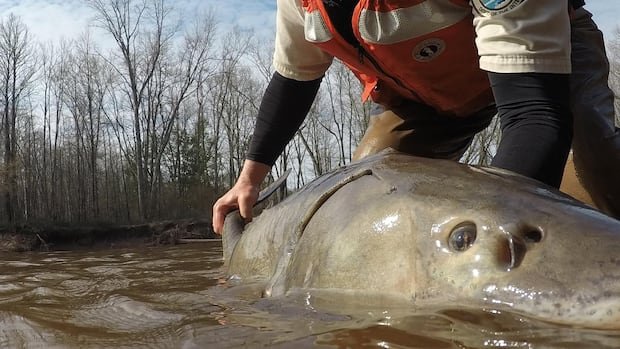

Lake sturgeon found in the Great Lakes may have been alive when Samuel de Champlain first reached Lake Huron over 400 years ago, according to recent research. These ancient-looking fish, known for their armored appearance, can live much longer than previously believed, with some potentially exceeding 400 years in age. Despite their remarkable longevity, lake sturgeon are facing significant threats. In Ontario, they are listed as a species at risk and are endangered specifically in the Great Lakes due to overfishing and habitat destruction, which decimated nearly 99% of their historic population.
A study utilizing over four decades of data on captured and recaptured lake sturgeon in the Great Lakes indicates that the recovery of these fish may be a more prolonged process than initially thought. Ed Baker, a fisheries scientist from the Michigan Department of Natural Resources who spearheaded the study, stated that there could be lake sturgeon swimming around that are centuries old. Traditional age estimates of 150 years for lake sturgeon are being challenged, as determining their age is not as straightforward as counting growth rings due to the fish’s slowed growth rate over time.
The study used long-term capture data to analyze individual sturgeon growth between captures, providing insights into their potential age. The findings revealed that some sturgeon could live for centuries, with growth rates supporting these extended lifespans. This unexpected discovery suggests that conservation efforts for lake sturgeon, led by experts like Trevor Pitcher from the University of Windsor, may need to be reevaluated to account for the species’ longevity.
Pitcher emphasized the importance of adjusting conservation plans to align with the potential multi-century lifespan of lake sturgeon. Given their critical role in the ecosystem, efforts to rebuild sturgeon populations must consider their significant impact on controlling invasive species. The depletion of sturgeon populations due to human activities has disrupted the natural balance, highlighting the urgency of conservation initiatives to restore these vital fish populations across the Great Lakes.
Lake sturgeon hold cultural significance beyond their ecological role, particularly in Indigenous traditions where they are revered as elders for their longevity and wisdom. Perry McLeod-Shabogesic, an elder from Nipissing First Nation, emphasized the spiritual connection with sturgeon, describing them as beings that exist “in between” worlds. Their enduring presence in the ecosystem and cultural narratives underscores the need for sustained conservation efforts to protect these ancient fish for generations to come.