
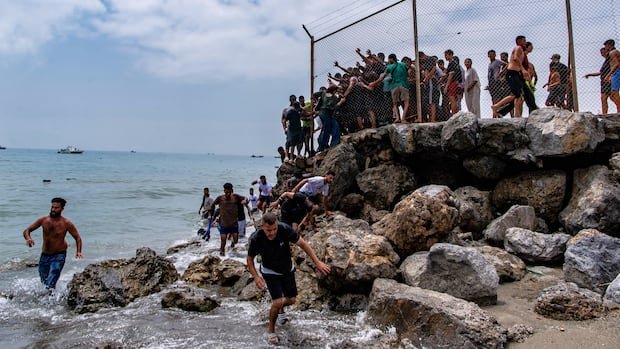

Spanish authorities have labeled the recent events in Ceuta as chaotic, unsustainable, and a violation. A tragic toll of 57 fatalities has been reported following a massive influx of migrants from Morocco into Spain’s Ceuta enclave, prompting astonishment and discord in Europe. Nearly 60,000 individuals crossed into the Spanish enclave in North Africa on Thursday, with approximately 48,300 returning to Morocco by Friday evening.
Many migrants reached Ceuta by swimming five kilometers from the Moroccan town of Fnideq, while others attempted a shorter route from the nearby town of Belyounech. Testimonies from swimmers highlighted the arduous and risky journey undertaken to reach Ceuta. Concerns were raised about the presence of children and unaccompanied minors among the migrants, emphasizing the dangers faced during irregular migration journeys.
Ceuta, along with the adjacent Spanish territory of Melilla, is strategically located on the northern coast of Africa, serving as Spain’s only land borders with Africa within the European Union. The surge in migrant crossings witnessed on Thursday was described as unprecedented, despite periodic attempts by migrants to reach Europe through these territories.
The recent events shed light on the underlying motivations driving migrants to seek entry into Ceuta and Melilla, which are perceived as gateways to Spain from Morocco and other African regions. Economic opportunities and the pursuit of better living conditions are key factors compelling migrants to embark on perilous journeys to these territories. The influx of migrants has put a strain on public services, highlighting the challenges faced by both migrants and authorities.
The sudden rush to the border on Thursday prompted a swift and overwhelming response from Spanish and Moroccan security forces. Spain deployed military personnel to reinforce police efforts in Ceuta, aiming to restore order and address the influx of migrants. The situation escalated as clashes occurred between migrants and security forces at border checkpoints, leading to confrontations and attempts to prevent further crossings.
The aftermath of the chaotic events saw migrants stranded in Ceuta, with reports of inadequate shelter and provisions. Some migrants who managed to return to Morocco shared harrowing accounts of their experiences, citing the lack of resources and hostile treatment encountered in Ceuta. The volatile situation underscored the complexities and challenges associated with migration dynamics in the region.
While the immediate triggers for the mass migration incident remain unclear, various factors, including legal decisions and political tensions, have been cited as contributing to the unprecedented surge. The events in Ceuta serve as a stark reminder of the complexities surrounding migration and the need for coordinated responses to address the underlying issues driving such movements.