
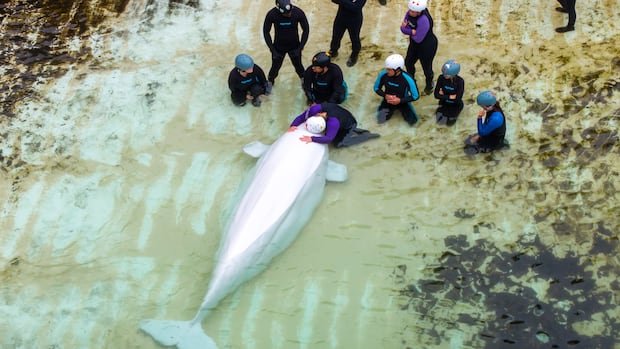

Marineland has completed the transfer of all its remaining captive whales and dolphins to various destinations following Canada’s ban on keeping captive whales in 2019. The defunct Ontario theme park moved 30 belugas and four dolphins to five locations in the U.S. and Spain, marking the largest transfer of these animals.
Unfortunately, five of the transferred animals have died, with the most recent fatality occurring on September 24 at the Oceanogràfic de València in Spain. Among them was Echo, a blind Black Sea bottlenose dolphin who faced health issues upon arrival and passed away shortly after.
Experts emphasize the significant stress belugas experience during transport, affecting their well-being. The impact of psychological stress on the animals’ health is a concerning issue raised by marine mammal experts.
Recent deaths of belugas and dolphins in Spain and Chicago have prompted investigations to determine the causes. The facilities are closely monitoring the remaining animals’ condition.
The relocation of belugas to SeaWorld and the Georgia Aquarium is being closely monitored, with early signs indicating stable health, although continued observation is necessary.
Experts highlight the challenges faced by captive belugas during transport and adjustment to new environments. The stress and physiological manifestations of the animals’ relocation are significant concerns.
Previous instances of relocated belugas experiencing health issues underscore the complexities of transferring captive marine mammals. The rescue efforts were undertaken due to the defunct park’s inability to care for the animals.
While rescue efforts were made to ensure the safety of the belugas during transport, concerns remain about the animals’ overall health and well-being. Wildlife advocates and experts express apprehension about the future well-being of the remaining belugas following the recent deaths.