

As the sun set and a solar eclipse dimmed the skies over northern France recently, a group of individuals gathered at a bus stop along a highway, many of them equipped with vibrant orange life vests. This assembly, which included women and young children, revealed that they had been camping in nearby woods for an extended period, awaiting a favorable opportunity to embark on a boat journey across the English Channel.
In current times, such crossings have become increasingly challenging. Multiple migrants interviewed by CBC News recounted encounters with law enforcement preventing their passage and, in some instances, resorting to tear gas. For years, the 40-kilometer coastal region between Dunkirk and Calais has served as a temporary refuge for migrants traversing Europe, influenced by shifting factors such as conflicts, migration paths, weather patterns, and European policies.
Despite an overall decline in migration numbers, the vessels are now transporting larger quantities of migrants through lengthier and more perilous routes across the Channel. These developments coincide with heightened discussions surrounding European migration, particularly following a significant surge of migrants storming the Spain-Morocco border in the Spanish territory of Ceuta in late July.
British politicians swiftly redirected their focus to migrants attempting the Channel crossing. Nigel Farage, leader of the anti-immigration Reform UK party, advocated for the Royal Navy to repatriate such migrants to France, a proposal challenged by former Navy officials who deemed it unfeasible.
In August, British Prime Minister Andy Burnham visited Dover, a prime landing spot for asylum seekers in the UK, expressing determination to reduce the number of vessels while emphasizing the necessity for safer passage routes to combat migrant-smuggling operations.
The reduction in Channel crossings has led to increased risks, prompting the UK to augment funding for French law enforcement operations to thwart illegal crossings, deploying additional surveillance technology and resources. Consequently, Calais has transformed into a perpetual border zone, with authorities clamping down on departures and dismantling informal settlements, prompting migrants to evade capture in various terrains as they await opportunities to cross.
By the end of July, approximately 14,200 asylum seekers had navigated the Channel, a decline from the corresponding period in 2025 when 25,436 undertook the journey. NGOs and grassroots organizations like Calais Appeal continue to provide support to migrants in Calais and Dunkirk, contending that deterrence tactics do not dissuade individuals from attempting the perilous journey.
“People find alternate routes, embarking on riskier and longer voyages with overcrowded boats,” remarked Salomé Brun during a visit to the Calais Appeal’s operational warehouse. The dinghies used by migrants, often termed “small boats,” no longer match their growing sizes.
In a recent event, a record 230 individuals successfully reached the UK in a “mega-dinghy,” following a series of high-profile rescues and interceptions. The risks posed by smugglers to migrants remain alarming, as reiterated by a spokesperson for France’s Maritime Prefecture for the English Channel and the North Sea.
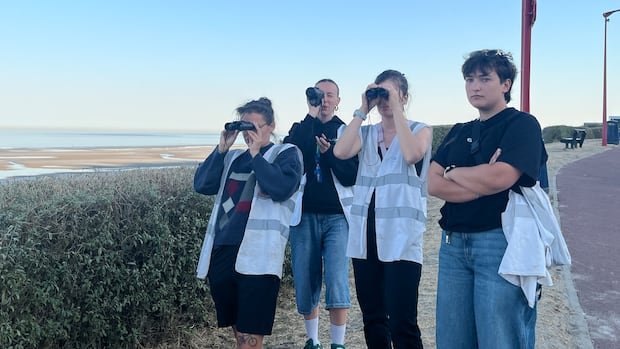
To avoid detection, smugglers have adopted a novel tactic known as “taxi boat,” deploying inflatable vessels from remote locations to ferry passengers near the coast. Amid these challenges, humanitarian endeavors spearheaded by citizens and volunteers have emerged as a critical lifeline for stranded migrants, offering essential aid and guidance in the face of mounting risks and uncertainties.
The quest for safety propels migrants like Mohammed, a Gaza native seeking refuge in the UK to reunite with his brother. Mohammed’s arduous journey through multiple countries underscores the perils and hardships endured by individuals fleeing conflict zones in pursuit of security and stability.
Despite the shared perception of the UK as a safe haven, the immigration discourse remains divisive, with successive British administrations implementing stringent measures to deter migrants. Far-right groups exploit social media to stoke anti-immigrant sentiments and orchestrate protests, reflecting a broader polarization on immigration policies and attitudes within the UK and across Europe.
The activism of groups like Calais Appeal and Utopia 56 has drawn criticism and scrutiny, with allegations of encouraging migrants to head to the UK. However, volunteers emphasize their commitment to raising awareness of the risks involved in the perilous journey, striving to empower migrants with information to make informed decisions for their safety.
In coastal communities like Ambleteuse, local authorities like Mayor Stéphane Pinto grapple with the escalating dangers posed by Channel crossings, urging concerted efforts to prevent loss of life and address the root causes of migration. Pinto’s personal connection to migration underscores the complexity and urgency of addressing the humanitarian crisis, emphasizing the need for coordinated international action to navigate the evolving migration landscape.