
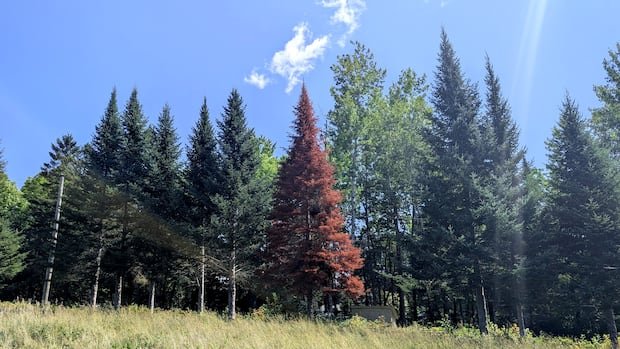

Balsam fir trees in New Brunswick are showing signs of distress, with a red hue and dying branches following a severe drought last summer. Concerns are rising about the future of these iconic trees in the province.
Professor Anthony Taylor, a forestry researcher at the University of New Brunswick, has been closely monitoring the situation. He has received reports from woodlot owners and witnessed the damage firsthand. The once vibrant evergreen trees, popularly used as Christmas trees, are gradually turning red, drying out, and perishing.
According to Prof. Taylor, the current scenario aligns with previous occurrences after hot and dry summers. He emphasized that the warm and dry conditions, like the drought experienced last year, negatively impact the growth of balsam fir trees.
Studying the effects of climate change on New Brunswick’s forests for years, Taylor noted similar die-offs in balsam fir trees following exceptionally hot and dry summers in 1986 and 2018. He explained that during drought conditions, the trees halt the photosynthesis process prematurely, hindering their growth and energy production needed for essential metabolic functions and defense mechanisms.
The shallow root system of balsam fir trees makes it challenging for them to access water during dry periods, further exacerbating their vulnerability. Peter McKeil, a woodlot owner in Burtt’s Corner, observed the damage to his trees starting in June, with the lower branches turning red and new red spots emerging daily, indicating an ongoing die-off.
McKeil estimated a loss of approximately 100 trees so far and has adjusted his harvesting practices to salvage value from the remaining fir before further losses occur. He expressed concerns about the future of the species in southern New Brunswick due to worsening climate change effects.
Prof. Taylor emphasized the urgency for climate action, highlighting the red trees as a visible indicator of the detrimental impact of climate change on the province’s balsam fir trees. He stressed the need to transition away from fossil fuels and reduce deforestation to mitigate climate change and protect vulnerable tree species.
As the red balsam fir trees serve as a stark reminder of the environmental challenges, Taylor hopes that his research raises awareness and sparks meaningful change to address the pressing climate crisis.