
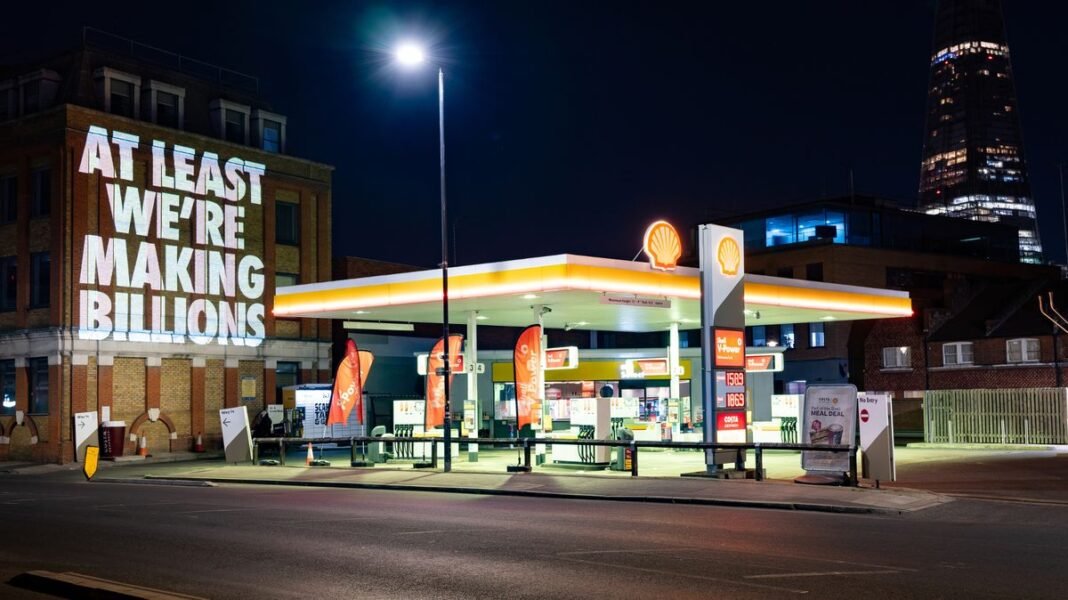

Oil company Shell faced criticism for generating substantial profits of nearly £5.1 billion in the first quarter of this year, attributed to the ongoing conflict in Iran. Despite a 4% decline in oil and gas output due to disruptions caused by the US-Israeli conflict with Iran, Shell’s profits more than doubled from the previous quarter and increased from the previous year. This surge in profits coincided with a rise in wholesale oil and gas prices.
While Shell and other energy companies benefited from the situation, ordinary households experienced the impact through rising petrol prices and potential increases in energy and food costs, contributing to inflation and economic challenges. Despite a slight decrease in Shell’s share prices post-March, they remained higher than pre-conflict levels in late February.
Following Shell’s financial results, Equinor and BP also reported significant profits in the same period. Shell’s CEO, Wael Sawan, saw a notable increase in personal wealth during the conflict, with additional shares valued at millions of pounds. Environmental group Greenpeace staged protests at Shell’s London offices and a nearby petrol station ahead of these results.
In response to their financial success, Shell announced a 5% dividend increase and plans to repurchase £2.2 billion of its shares in the next three months. Critics, including Simon Francis from the End Fuel Poverty Coalition, emphasized the need for fair taxation of energy firms amid rising costs for consumers and advocated for investments in renewable energy and household support.
Climate campaigners from Greenpeace and Friends of the Earth criticized the oil industry’s profits amid global conflicts and environmental challenges, highlighting the disparity between company earnings and consumer burdens. Oil prices remained high, reflecting market uncertainties related to geopolitical tensions, despite recent fluctuations.
Shell attributed its increased profits to seasonal factors and tax payments, emphasizing the importance of dividends for shareholders. The company highlighted its significant dividend payouts and shareholder base in the UK. These developments underscore the ongoing debate around energy pricing, corporate responsibility, and the transition to sustainable practices in the oil and gas sector.