
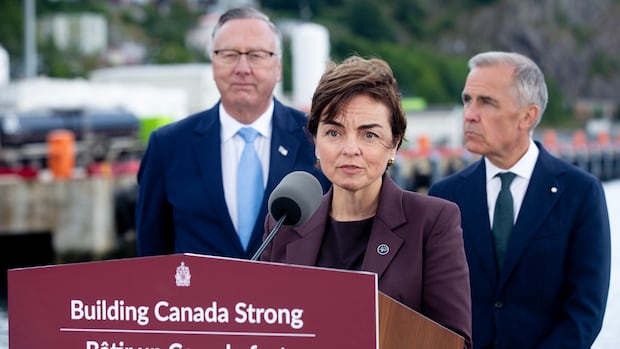

On Monday, Prime Minister Mark Carney visited St. John’s to reveal a new agreement concerning Churchill Falls and additional electricity projects in Labrador, in collaboration with N.L. Premier Tony Wakeham and Quebec Premier Christine Fréchette.
This initiative is being promoted as the largest clean energy investment in the history of North America, estimated at almost $70 billion, with the federal government contributing $10 billion in financing.
The funding will be utilized for enhancing and expanding the Churchill Falls generating station, advancing the Gull Island hydroelectric project, constructing transmission lines, and deploying a 2,000 megawatt onshore wind energy project in Labrador.
This project is expected to boost the current generating capacity of Churchill Falls, producing sufficient energy to power, heat, and cool all homes in Toronto, Montreal, and Vancouver combined.
Let’s delve into the implications of this development for Quebec, Fréchette, and the upcoming provincial election campaign.
Is this agreement finalized?
Not exactly.
The framework agreed upon and announced on Monday will remain in effect until March 2027.
A final agreement still requires signatures, and those involved are hopeful that it will be completed by year’s end.
The provincial election is set for October 5, which raises the possibility of a government change prior to the formal signing of the agreement.
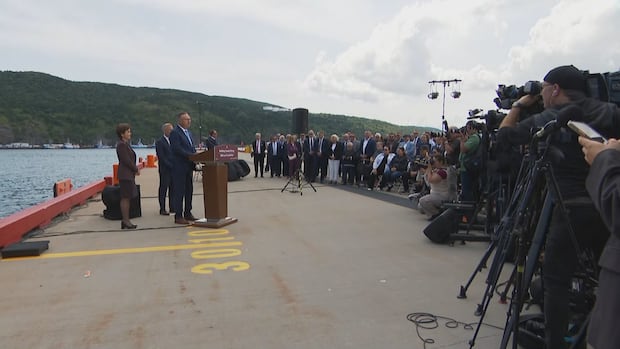
Quebec and Newfoundland and Labrador have a new agreement on Churchill Falls. While Premier Tony Wakeham calls it a better deal than the previously announced 2024 MOU, the Liberals and NDP aren’t sold on it just yet. The CBC’s Cameron Kilfoy reports.
What implications does this have for Quebec’s electricity requirements?
According to the agreement, the province would gain access to over 10,000 megawatts, which constitutes more than a quarter of Hydro-Québec’s total current output.
In comparison, the 2024 Churchill Falls Memorandum of Understanding, which Wakeham dismissed shortly after taking office, allowed for a potential total of 7,200 megawatts.
The electricity generated at Churchill Falls will be sold to Quebec at an average rate of 6.2 cents per kilowatt-hour, a move that Fréchette indicated could result in savings of $200 billion throughout the duration of the agreement.
Yvan Cliche, an expert in the energy field at the Université de Montréal’s international studies center, described it as a “historic landmark agreement for Quebec.”
Cliche believes this deal will not only benefit the energy sector but also consumers in Quebec, allowing Hydro-Québec to maintain its rates at the lowest possible levels.
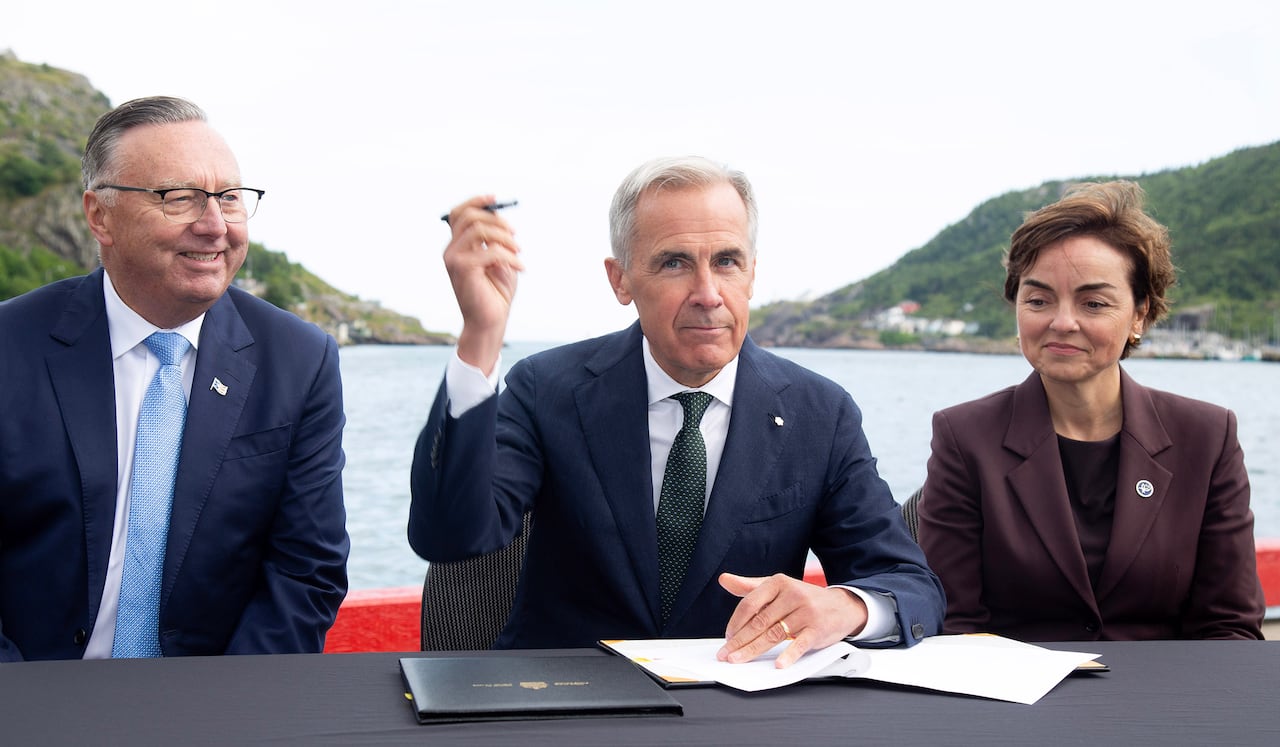
Prime Minister Mark Carney, centre, signs a new agreement on the Churchill Falls generating station and the launch of new hydro, wind and transmission projects, premiers Wakeham and Fréchette. (Paul Daly/The Canadian Press)
What does this signify for Fréchette?
For Fréchette, the agreement signifies a victory right before the campaign begins — an opportunity to showcase her economic credentials.
On Monday, the premier and leader of Coalition Avenir Québec (CAQ) referred to the agreement as a collaboration that secures Quebec’s energy future for the next 50 years and promises to generate thousands of jobs.
If her party manages to retain power in October — marking a third consecutive CAQ win but the first under Fréchette — she is committed to ensuring the Churchill Falls deal becomes official.
“This brings thousands of new megawatts to Quebec, which are essential for residents, businesses, and all regions,” Fréchette stated.
Carney emphasized that the time was appropriate for this agreement, even though it coincides closely with the election period. He mentioned that discussions commenced four months ago, shortly after Fréchette assumed the role of premier.
However, others expressed criticism even before the announcement.

Jonathan Shetush, the chief of the Innu nation of Uashat mak Mani-utenam issued a joint statement with the chief of Matimekush-Lac John stating there can be no official deal without their communities being consulted. (Shushan Bacon/Radio-Canada)
Leaders from the Innu nations of Matimekush-Lac John and Uashat mak Mani-utenam, both situated in Quebec’s Côte-Nord region, issued a joint statement highlighting that they were not consulted.
“Our involvement and consent are essential for any agreement regarding the Churchill Falls megaproject,” the statement asserts.
They further emphasized that the original project was executed on their traditional territory — the Nitassinan — and their claim for reparations is still pending in Quebec courts.
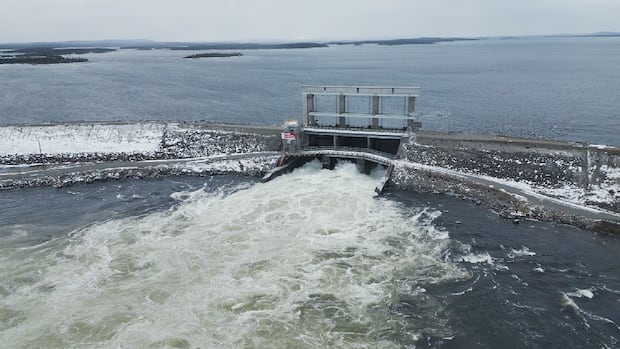
Hydro-Québec is set to invest $45 billion into the project and receive about $6.5 billion from the federal government. For Quebecers, that means their electricity bills are set to go up between two to five per cent starting in 2029.
What does this signify for the Quebec election campaign?
The campaign is expected to commence next week.
In the days leading to Monday’s announcement, speculation surrounded Fréchette, who took office in April, making her a target for criticism from opposition parties.
In a social media statement last week, Parti Québécois (PQ) Leader Paul St-Pierre Plamondon asserted that Fréchette lacks the authority to finalize such a deal right before an election that would bind Quebec for 50 years, arguing there was no urgency to finalize the agreement now.
On Monday, the two engaged in a verbal exchange, with Fréchette stating during a press conference that St-Pierre Plamondon would cancel the agreement if he were to be elected.
On X, the PQ leader responded, labeling her statement as “simply a falsehood” and accused her of hastily arranging a deal for electoral advantage.
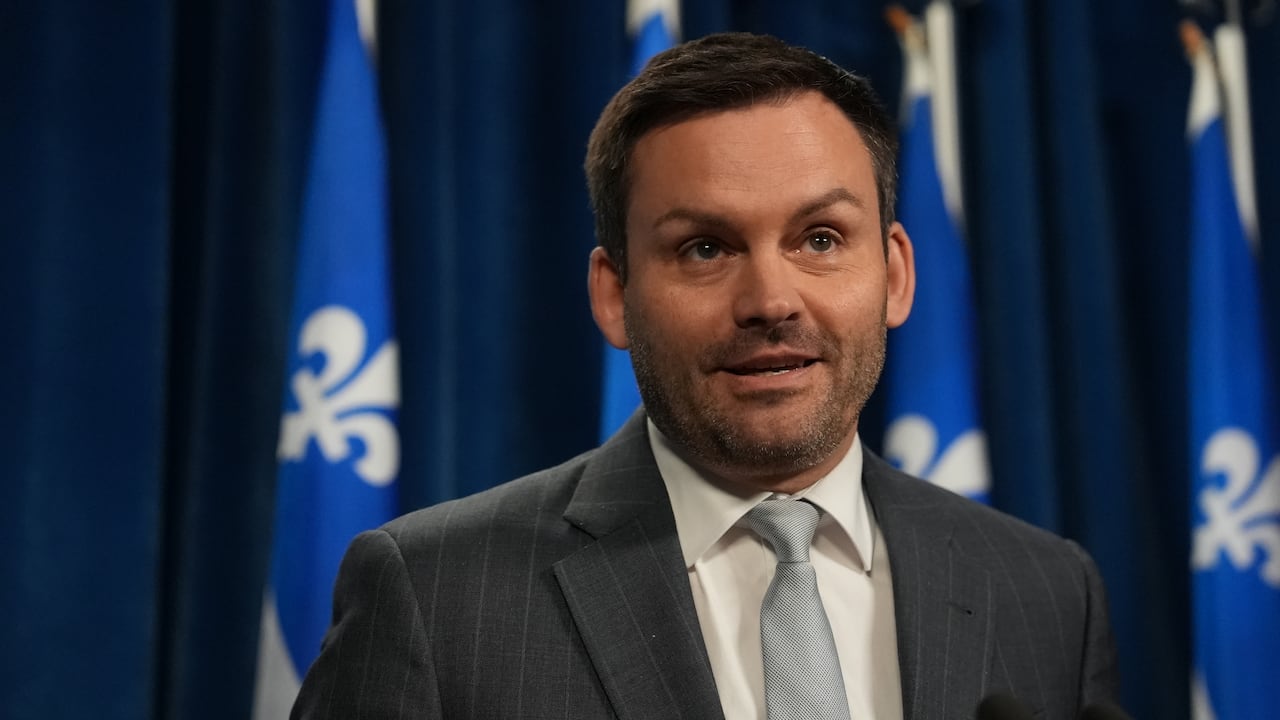
PQ leader Paul St-Pierre Plamondon, seen here in a photo taken in January earlier this year, says Fréchette is trying to score political points by rushing this deal. (Sylvain Roy Roussel)
What are the reactions from other parties?
Éric Duhaime, leader of the Quebec Conservatives, echoed similar criticisms, as did members of Québec Solidaire (QS).
In a written statement, Duhaime accused Fréchette of attempting to divert Quebecers’ attention from “eight long years of poor management of our public finances” under the CAQ.
He mentioned that his party supports enhancing energy production in Quebec and aims to maximize the province’s natural resources, including hydroelectricity, natural gas, “and potentially, nuclear energy.”
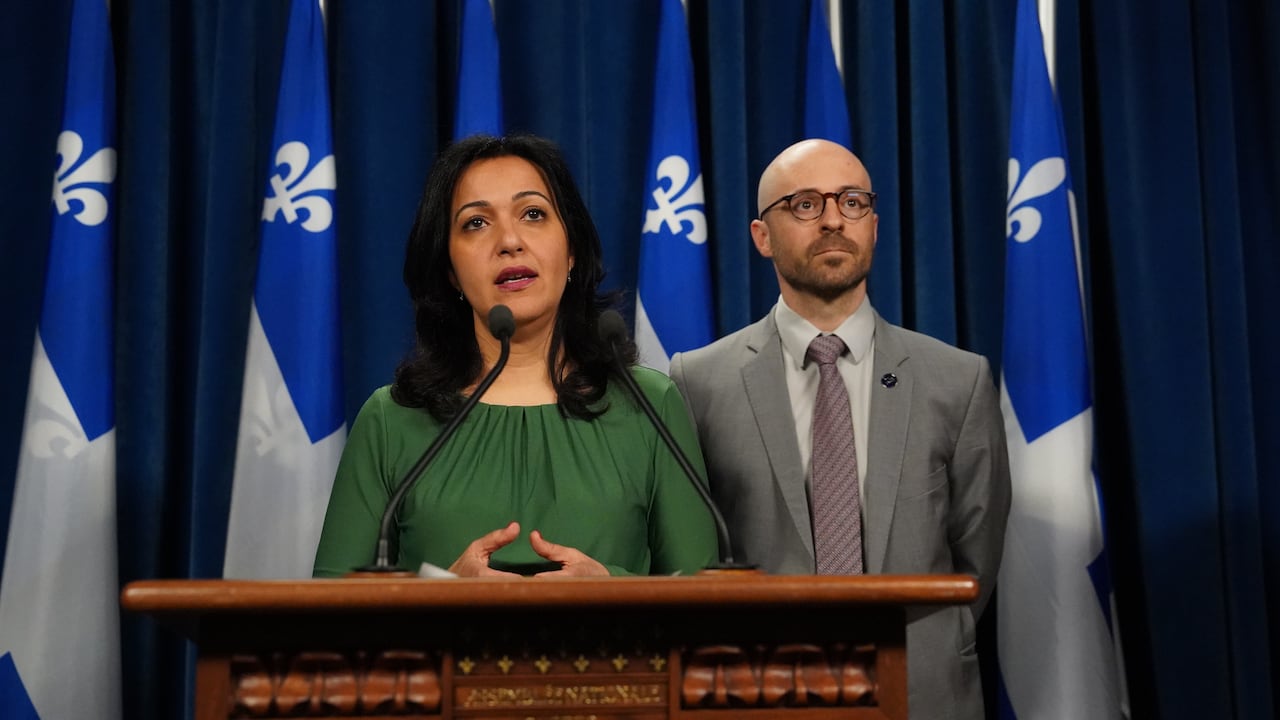
Ruba Ghazal, the parliamentary leader for Québec Solidaire, was among those accused Fréchette of serving her own political interests with the Churchill Falls deal and not those of Quebecers. (Sylvain Roy Roussel/Radio-Canada)
Ruba Ghazal, the parliamentary leader for QS, asserted that a deal of this significance should prioritize the interests of Quebecers for the next fifty years, “not the electoral interests of the CAQ.”
Charles Milliard, leader of the Quebec Liberal Party, stated that starting anew would be illogical and praised the efforts made by Hydro-Québec.
However, he added that the agreement would have immediate ramifications on public finances and on the rates for Quebec residents, asserting that if elected, his administration would “thoroughly analyze it before endorsing it.”
Fréchette had a response ready for the opposition parties on Monday: What proposals do you have?
“Where will they source the 10,000 megawatts we are introducing to Quebec with this agreement? At what expense will they acquire new megawatts? Where will they obtain them? How will they create 20,000 jobs?” she posed.
“Because that’s what this agreement entails. It’s 23,000 jobs for Newfoundland and Quebec.”