
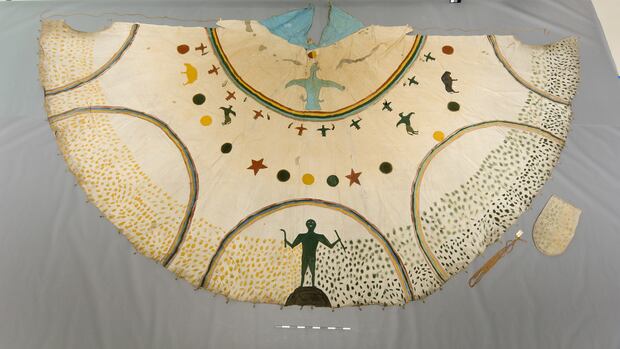

A professor from Saskatchewan has unearthed a significant part of the province’s past within the Smithsonian’s collection in Washington, D.C. This artifact is now on its way back home.
Andrew Miller, who teaches Indigenous studies at the First Nations University of Canada, was exploring the Smithsonian’s inventory of items while researching birds when he came across a teepee cover that had been taken from Kawacatoose First Nation nearly a century ago.
The cover was removed in the 1920s, but the family has kept its legacy alive by passing down its story through the years.
“A student had mentioned, ‘Oh, yeah, we have items that are in major museums in the United States,’” Miller recalled.
This comment came to mind as he browsed the catalogue and noticed the teepee cover, which was marked as “Dustyhorn—File Hills” and had an acquisition date of 1926.
He recognized that there were Dustyhorns residing in the Touchwood area of Saskatchewan, so he contacted Cory Dustyhorn, the current chief of Kawacatoose First Nation, regarding his discovery.
Dustyhorn was already aware of the tale concerning his great-great-grandfather Sîpiskwêsîkan’s teepee being taken long ago. Although Sîpiskwêsîkan was promised compensation for the cover, it never materialized.
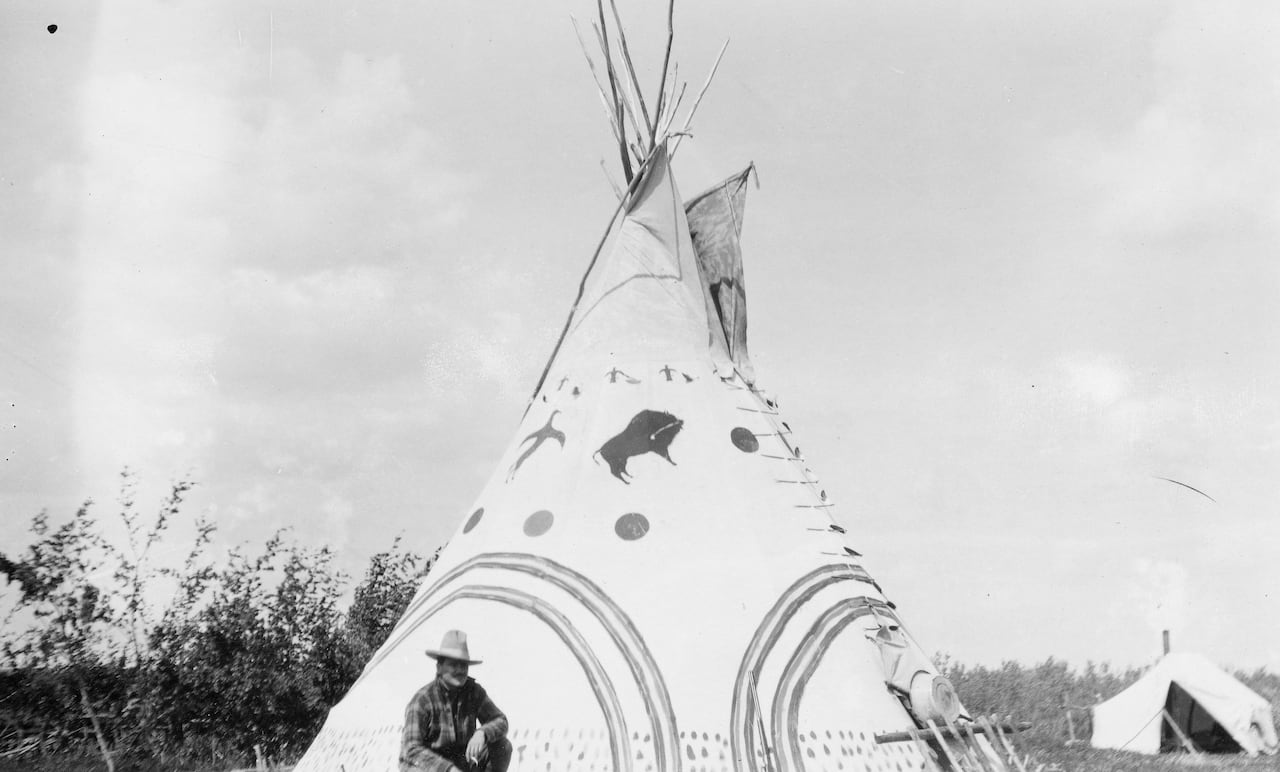
This historical image shows the teepee cover when it was first acquired by the Smithsonian. (Submitted by Andrew Miller)
Miller and Dustyhorn reached out to the museum, and Miller noted that the Smithsonian was very receptive throughout the entire process.
“They understand that certain items should not remain in their collection, as they were obtained during a time when cultural ethics and mutual respect were lacking,” Miller stated.
-
Indigenous artifacts held in Vatican Museums finally heading back to Canada
-
Dozens of artifacts repatriated after donation to Chief Poundmaker Museum
The museum was attentive to Dustyhorn’s account and was willing to facilitate the return of the teepee cover, needing to ensure it would go back to the correct community.
“I shared a family story about how someone began collecting artifacts in Alaska, eventually making their way to Saskatchewan, where they took our teepee,” Dustyhorn recounted.
He mentioned that museum officials interrupted him, confirming that the individual who acquired the teepee in 1926 indeed started his journey in Alaska, validating the oral tradition.
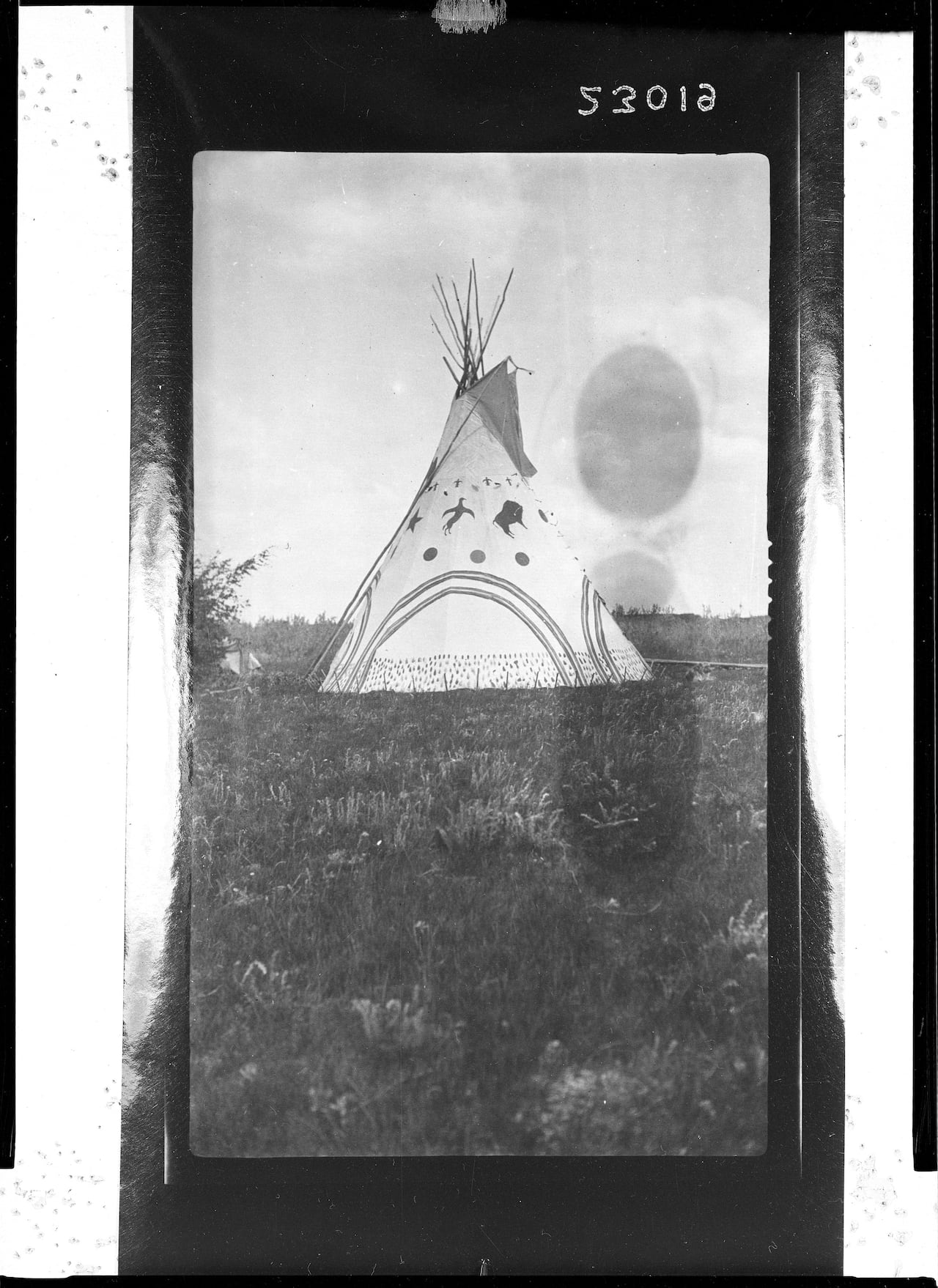
A picture of the teepee the Smithsonian Institute had on its online catalogue. (Submitted by Andrew Miller)
In an official statement, the Smithsonian recognized that some of its items were acquired unethically. At that time, the Indian Agent served as a go-between for Indigenous owners and buyers.
In 2022, the museum implemented a shared stewardship and ethical return policy to address its past misconduct.
“This policy acknowledges that ethical standards and professional practices in collecting have evolved over time, and that the Smithsonian currently possesses items it would not have acquired under contemporary standards,” the statement indicated.
Now, a century after the theft, the teepee is set to return to its original community.
Dustyhorn expressed that the return will fortify the bond between him, his family, and his community with his ancestor.
Plans are underway to establish a museum at Kawacatoose to showcase the teepee, but in the interim, it will be housed at the Royal Saskatchewan Museum in Regina.