
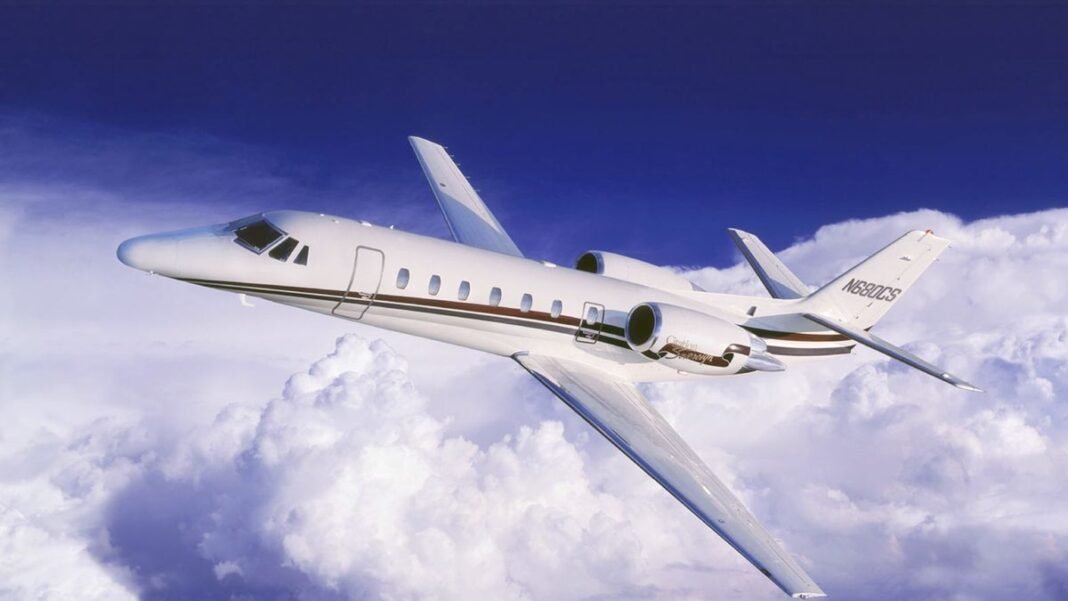

Billionaires and the ultra-wealthy are increasingly opting for private jet travel despite a surge in jet fuel problems affecting commercial airlines.
As major airlines grapple with tens of thousands of flight cancellations due to jet fuel issues linked to the Iran War, private and chartered aviation sectors are flourishing, as reported by the Mirror.
According to Nick Koscinski, an analyst at WINGX Advance aviation data firm, the global private jet industry, except for the Middle East, remains unaffected by escalating fuel prices. Global private jet flights have seen a 4.7% increase year-to-date up to April 19.
In cities across the US facing Transportation Security Administration staff shortages due to a pay freeze, there has been a substantial rise in private jet usage, with a 17% annual boost in Washington, DC, and Houston.
Since the war began and the Strait of Hormuz was blockaded, normal flows of fossil fuels from the Gulf have virtually ceased, impacting about a fifth of the world’s oil and gas that typically flows through the Strait.
Recent data from Kpler reveals a significant decline in global jet fuel shipments, with just under 2.3 million tonnes transported in the week ending April 26, representing less than half of the average weekly volume before the war. The International Energy Agency has cautioned that Europe could face a jet fuel shortage in weeks.
Analysis from WINGX Advance indicates a doubling of Jet A1 prices since January, constituting around 30% of variable operating costs for private jet operators. Analyst Richard Koe noted that despite cost increases being passed on to end-users, demand for private jet flights remains strong this year compared to last year.
Private jet travel is considered one of the most fuel-intensive and emissions-intensive activities. Between 2019 and 2023, private aviation emissions surged by 46%, with expectations of continued growth, according to a study published in Nature journal Communications Earth & Environment.
It was found that these small planes emit more heat-trapping carbon dioxide in about two hours of flying than an average person does in a year. In 2023, around a quarter million ultra-wealthy individuals emitted 17.2 million tons of carbon dioxide flying in private jets, comparable to the yearly emissions of the entire population of Tanzania.
Stefan Gössling, a transportation researcher at Sweden’s Linnaeus University, highlighted that while private jet emissions remain a fraction of global emissions, the issue lies in the inequality of impact, with the wealthy causing damage while the less affluent bear the costs. Oxfam also reported that billionaires emit more carbon pollution in 90 minutes than an average person does in a lifetime.