

In a hypothetical future, envisioning a scenario where Nigel Farage becomes the UK Prime Minister in April 2029, the country faces a situation where the United Kingdom appears to be on the brink of division under a Reform government. An AI version referred to as Thatcher 2.0 has risen to power, setting the stage for potential significant changes.
Reflecting on recent events, it is suggested that the current circumstances should serve as a wake-up call not only for the Labour Party but for the entire nation. There are concerns that within the next few years, influenced by social and economic grievances, the country could shift dramatically towards the far right if corrective actions are not taken promptly.
Despite past electoral choices such as Brexit, Boris Johnson, and Labour, there is a sentiment that the promised changes have not materialized. Criticism is directed at figures like Peter Mandelson, who are seen as perpetuating a disconnect between politicians and the public, fueling disillusionment with the status quo.
While acknowledging some positive actions taken by Labour during its time in power, there is a call for a more cohesive and inspiring vision to address pressing issues faced by the populace. The lack of a unifying narrative has left many feeling trapped in unstable economic conditions, yearning for tangible improvements in their daily lives.
The article highlights that despite certain achievements like enhanced workers’ rights and support for struggling families, Labour has struggled to communicate a compelling message that resonates with the public. The party’s perceived slow response to key issues and internal conflicts have hindered its ability to connect with voters effectively.
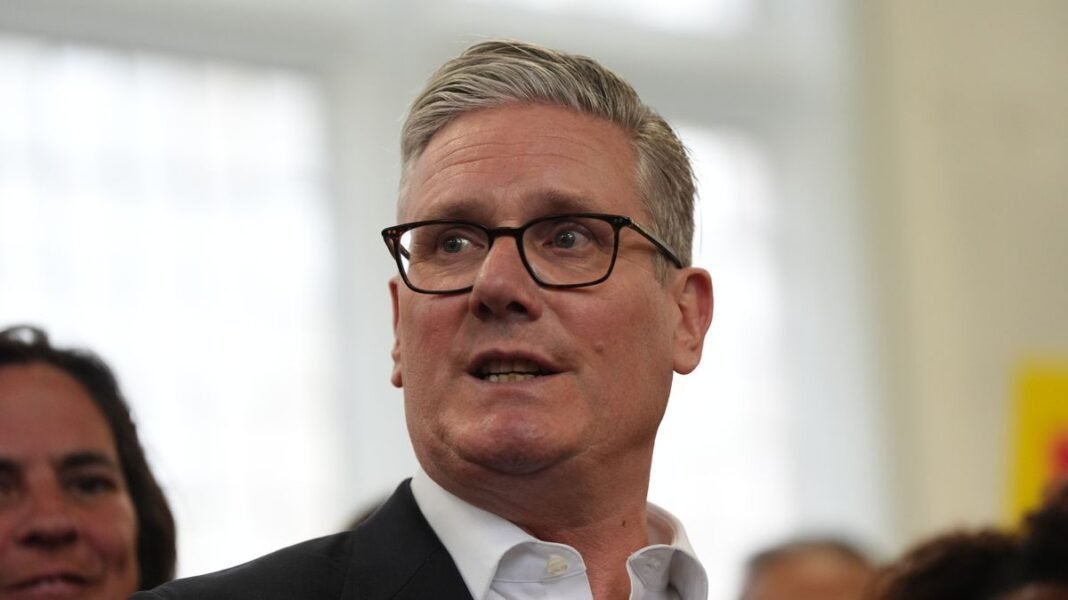
Facing global challenges and internal obstacles, including public perception issues and policy missteps, Labour is portrayed as navigating turbulent waters without a clear direction. The current political landscape, characterized by polarizing ideologies and populist movements, presents a complex environment for traditional political figures like Keir Starmer.
The narrative emphasizes the importance of immediate action within the Labour Party to avoid potential electoral setbacks and to regain public trust. The urgency to reassess strategies and leadership approaches is underscored, with an emphasis on the need for a cohesive and forward-looking agenda to secure a better future for the country.
In conclusion, the article warns of the consequences of inaction, painting a vivid picture of a potential electoral landslide favoring ideologies that may not align with the values of the current political establishment. The call to action urges a shift towards proactive engagement, leaving no room for complacency or internal discord within the party.