
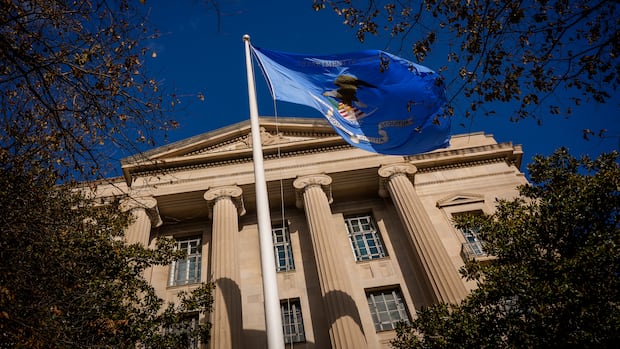

On Wednesday, the United States announced that it had successfully thwarted a Chinese hacking initiative connected to breaches at various critical institutions, including the U.S. Justice Department, NASA, the Federal Reserve, the Senate, and other sensitive governmental bodies.
In a release, the U.S. Justice Department revealed that it had confiscated domains associated with two hacking platforms known as “QScan” and “QTRouter,” which were involved in the operation.
An affidavit indicated that the U.S. Department of Energy, the Department of Health and Human Services (HHS), the National Institutes of Health (NIH), and four unnamed companies located in the U.S. and South Korea were among the targets of the hackers.
The Chinese Embassy in Washington has not yet responded to a request for comment. Beijing consistently denies any involvement in hacking activities.
According to the Justice Department, the platforms were operated by a firm based in China, the Nanjing Xinjiuwei Network Technology Company, which reportedly serves clients that include China’s civilian intelligence agency, the Ministry of State Security, and the military, the People’s Liberation Army.
There has been no immediate response from Nanjing Xinjiuwei regarding requests for comments.
-
‘We are not at war, but we’re not at peace either,’ warns German cyber chief
-
China-backed hackers ‘almost certainly’ targeted Canada during theft of millions of Americans’ data
The affidavit detailed that the hackers’ infrastructure had been utilized to breach critical systems and other sensitive networks in the U.S. and globally since at least 2018.
The extent of access they achieved varied. The hackers made unsuccessful attempts to infiltrate NASA’s networks in August 2019 by exploiting a vulnerability in a virtual private network. In September 2024, they executed intrusions at three unnamed laboratories within the Energy Department, the NIH, an unidentified HHS agency, and a U.S. security device manufacturer, as stated in the affidavit.
Officials from the agencies and organizations identified by the Justice Department as targets have not yet responded to inquiries for comments. In recent years, a series of hacking campaigns linked to China have compromised numerous sensitive networks within the U.S. government and private sectors.
In March, the FBI informed Congress that hackers had breached specific agency networks related to individuals under FBI scrutiny, with subsequent reports attributing the breach to China. Additionally, Chinese-affiliated hackers have been implicated in the compromise of certain networks of the U.S. House of Representatives committees, as well as multiple major telecommunications firms in recent times.
Experts monitoring Chinese cyber activities indicate that private contractors frequently execute high-profile intrusions on behalf of various Chinese governmental agencies.
“The number of firms providing specialized offensive services has surged over the past decade,” remarked Dakota Cary, a China analyst affiliated with cybersecurity company SentinelOne.