
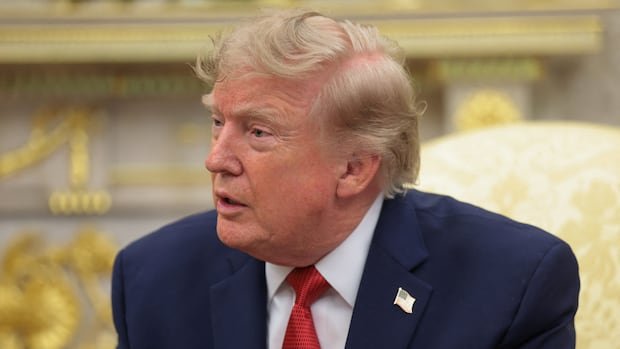

U.S. President Donald Trump has once again issued a threat towards Oman, as Iran has revealed ongoing collaboration with the Gulf Arab nation on a strategy to regulate ship passage through the Strait of Hormuz. The complete reopening of this vital waterway has been a significant demand from the United States.
Meanwhile, the 60-day negotiation period aimed at attaining a peace agreement between the United States and Iran is nearing its end with no mention of an extension, leaving both parties seemingly distant from reaching a resolution.
Key developments on Monday include Iran reporting progress in finalizing a deal with Oman concerning the transit of ships through the Strait of Hormuz, with both countries working on a joint statement. The Iranian Foreign Ministry spokesperson, Esmail Baghaei, disclosed that an agreement has been reached regarding the transit route map, hinting at a potential arrangement where ships would enter near Iran and exit near Oman without incurring fees during an interim period.
In a previous interaction, Trump expressed a threat towards Oman in an interview with Fox News, indicating possible military action if Oman interferes. This is not the first time Trump has made such statements, as he previously warned Oman during a cabinet meeting in May. Additionally, Trump dismissed the significance of the 60-day deadline for peace talks and highlighted ongoing backchannel communications with the Islamic Revolutionary Guard Corps.
Houthi rebels in Yemen claimed responsibility for attacking a ship and four military vessels in the Red Sea near Mokha. The rebels allegedly launched ballistic missiles at the Saudi Arabian vessels, causing damage, although Saudi Arabia has not responded to these claims.
In a separate incident, drone attacks targeted Iraqi officials in northern Iraq, with suspicions of the attacks originating from the Iran-Iraq border. These attacks, aimed at regional government buildings, mark a significant escalation in the region. Iranian Foreign Minister Abbas Araghchi distanced Iran from the attacks, urging vigilance against potential attempts to disrupt regional stability.
As tensions persist in the region, the withdrawal of U.S. forces from the Kurdish region of Iraq has commenced in line with an agreement between Washington and Baghdad to conclude the U.S. military presence in Iraq by September 30.