
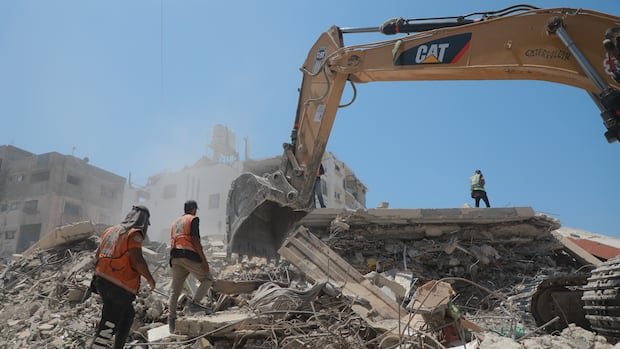

In Gaza City, members of the Al-Drimli family are seen meticulously searching through the debris of their former residence to locate their neighbor’s remains. Armed with basic tools like shovels, buckets, and a wheelbarrow, the family toils under the scorching sun, silently but determinedly. The cacophony of clanging shovels and buzzing electric saws reverberates as they sift through the remnants of a six-story building struck by an airstrike in November 2023.
Having already unearthed the remains of their own family members, the Al-Drimlis are now on a mission to find their neighbor, who was seeking refuge with them during the devastating strike. According to the Gaza Health Ministry, an estimated 8,000 to 10,000 bodies still lie buried under the rubble almost three years after the onset of the conflict between Israel and Hamas.
Facing a severe scarcity of excavators in Gaza, many Palestinians, like the Al-Drimli family, resort to manual labor due to the exorbitant costs and unavailability of heavy equipment. Ayman Al-Drimli highlighted the challenges, emphasizing the prohibitive expenses and scarcity of equipment, forcing them to rely on rudimentary tools for their somber task.
With only a handful of operational excavators in the strip, equipment operators like Samir Sabra and his son, Uday Sabra, struggle to keep up with the demand. Samir lamented the high costs of running an excavator, citing the financial strain of maintaining the machinery amid a scarcity of spare parts, fuel, and maintenance resources.
Uday Sabra, working alongside the Palestinian Civil Defence volunteers, shared the overwhelming nature of the task at hand. The sheer scale of destruction necessitates more equipment and resources to expedite the recovery efforts. Despite their relentless efforts, the shortage of machinery poses a significant challenge in the monumental task of retrieving the deceased from the rubble.
Mahmoud Basal, the spokesperson for the Palestinian Civil Defence, underscored the impact of targeted strikes on heavy machinery during the conflict, exacerbating the current equipment shortage. He emphasized the urgent need for additional machinery to facilitate the recovery process and expedite the retrieval of remains buried beneath the debris.
Efforts to procure essential supplies, including fuel, oil, and spare parts, are impeded by Israeli restrictions, hampering the maintenance of critical machinery required for rescue operations. The international community’s intervention is crucial to address the logistical challenges hindering the efficient clearance of rubble and recovery of bodies in Gaza.
Despite the ceasefire agreements and promises of increased access to heavy equipment, the ground reality in Gaza paints a starkly different picture. Basal highlighted the protracted nature of the recovery process in the absence of adequate resources, warning of prolonged delays in retrieving the victims’ remains from the rubble.
As Uday Sabra continues his painstaking work in Gaza City, the harrowing task of unearthing the deceased from the debris persists. Determined to provide closure to the families of the victims, he remains resolute in his commitment to honoring the departed by ensuring a proper burial for those lost in the conflict.