
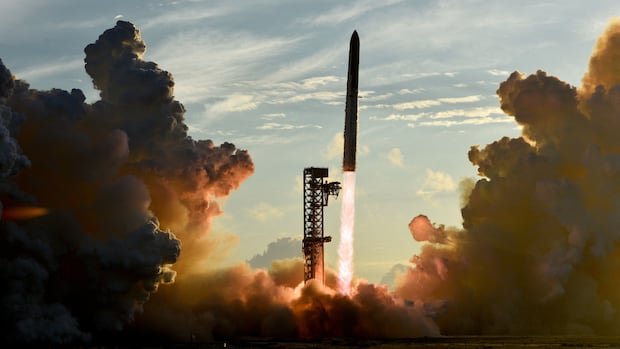

SpaceX successfully launched its massive Starship into orbit for the first time on Monday, deploying the most advanced Starlink satellites to date. However, the flight was cut short, with the spacecraft splashing down in the Pacific Ocean after a little over three hours.
Initially targeting a 10-hour flight encompassing six orbits around Earth to demonstrate readiness for NASA’s Artemis moon program, the mission faced a setback when one of the engines shut down prematurely after liftoff. Despite this, flight controllers opted to proceed as planned, as the remaining engines were functioning properly.
Celebrations erupted at SpaceX mission control as Starship achieved orbit. NASA Administrator Jared Isaacman commended SpaceX for their successful orbital mission, emphasizing the safe and inspirational approach taken.
The Starship, a flagship creation by founder Elon Musk, carried 26 cutting-edge Starlink satellites to augment the existing fleet of 11,000 satellites providing internet services. These satellites were deployed smoothly, garnering applause from onlookers at the Starbase launch site in Texas.
Following the satellite deployment, the decision was made to conclude the flight earlier than planned, with no explanation provided. This marked the 14th full-scale launch of Starship from Texas in three years, a notable advancement from previous test flights that terminated in the Indian Ocean.
SpaceX’s cautious approach was evident in the decision not to attempt a return of the first-stage booster to the launch site, opting for a splashdown in the Gulf of Mexico. Musk underscored the importance of ensuring safety and functionality before attempting a return and catch maneuver to prevent potential accidents.
Looking ahead, SpaceX aims to refine its procedures based on the outcomes of this orbital mission. Plans include utilizing mechanical arms to retrieve the spacecraft, potentially enabling a reflight by the end of the year or early next year. The 124-meter Starship, designed for full reusability, offers promising cost-saving opportunities for future space endeavors.
With ambitions to certify Starship for orbital flights, SpaceX is gearing up for upcoming missions, such as NASA’s Artemis III and IV. These missions will involve intricate docking exercises with lunar landers, setting the stage for future crewed missions to the moon and beyond. Musk’s vision for Starship extends beyond Earth’s orbit, with plans to eventually transition from Falcon 9 rockets to Starship for satellite launches and interplanetary travel.
As SpaceX continues to push the boundaries of space exploration, the successful Starship launch underscores the company’s commitment to innovation and progress in the aerospace industry.