

The oil-rich country of Saudi Arabia continues its construction boom with plans for a new city dedicated to entertainment, sports, and culture. Qiddiya City, located about 30 miles southwest of Riyadh, the capital, is expected to be completed by 2031. It is envisioned to be a hub for various recreational activities and is estimated to be three times larger than Paris, accommodating around 500,000 residents.
Several attractions within Qiddiya City, such as Six Flags and Aquarabia theme parks, are already operational. The city’s Speed Park Track aims to host the Saudi Arabian Grand Prix starting in 2028, while the Prince Mohammed bin Salman sports venue is on track for completion by 2029 to prepare for hosting matches during the 2034 World Cup.
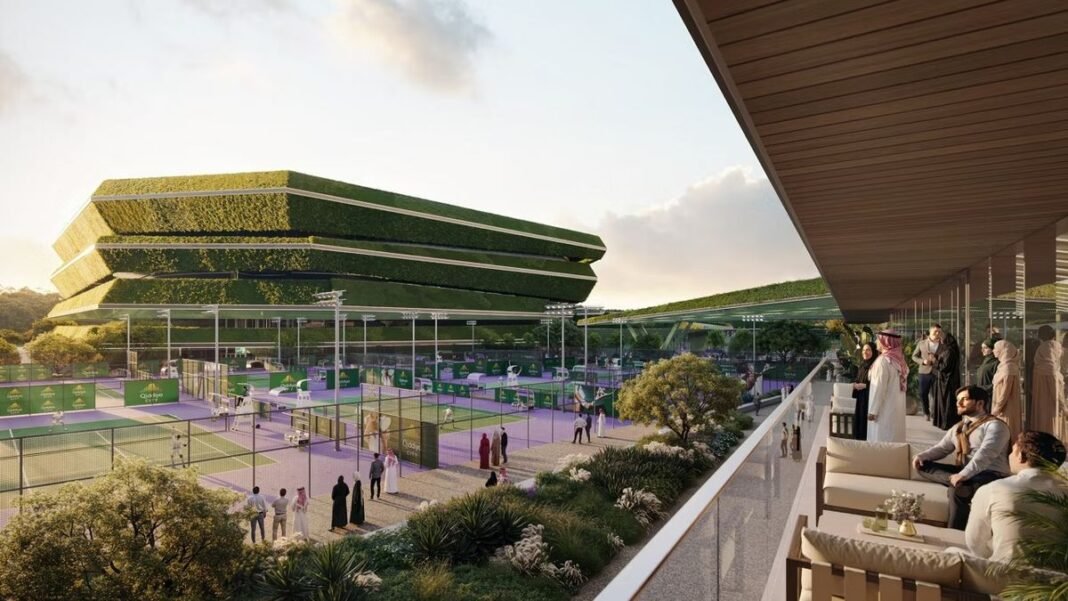
A notable feature of the project is the National Tennis Centre, designed by Populous, the same firm behind Wimbledon’s iconic retractable roof. The center is planned to offer state-of-the-art facilities for competitions, training, and wellness, with two multi-purpose arenas featuring retractable roofs for climate control and hosting diverse events beyond tennis.
Unlike Wimbledon’s grass courts, the National Tennis Centre will include 28 hard courts and 2 clay courts, with the main Centre Court capable of accommodating approximately 15,000 spectators. The complex also includes Court Three with an 8,000-seat capacity and a retractable roof designed to provide cooling relief in the region’s hot climate.
Qiddiya City, part of Saudi Arabia’s Vision 2030 initiative to diversify its economy, aims to become a global destination for entertainment, sports, and culture. The development of facilities like the National Tennis Centre and a championship golf course designed by Sir Nick Faldo are key milestones in establishing Qiddiya City’s international reputation.
Abdullah Aldawood, Managing Director of Qiddiya Investment Company, highlighted the importance of the National Tennis Centre in promoting sports participation and tourism in line with Vision 2030. Eno Polo, CEO of the ATP, praised the center as a significant addition to the global tennis landscape, offering opportunities for engagement with the sport at all levels and contributing to its growth in the region.