
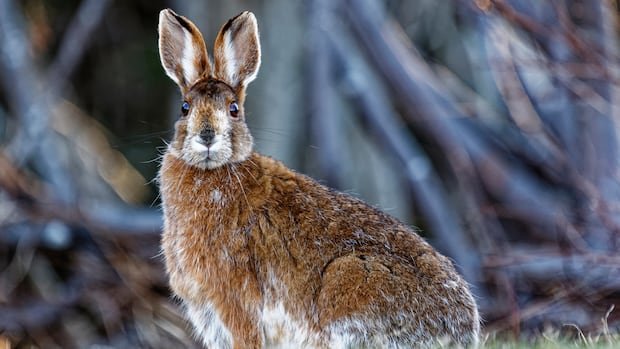

Snowshoe hares have become more prevalent in Prince Edward Island following post-tropical storm Fiona, according to a wildlife biologist in the province. Garry Gregory from P.E.I.’s fish and wildlife division has noted an increase in sightings of “rabbits” by Islanders, although these animals are actually snowshoe hares, not native rabbits. While there isn’t formal tracking data confirming a population surge, Gregory believes the changes in the landscape post-Fiona have likely facilitated an uptick in hare numbers.
The aftermath of the storm has left behind dense debris in forests across P.E.I., creating ideal escape cover for hares. The tangled brush piles and fallen trees have provided hiding spots, making it difficult for predators to access the hares. This enhanced protection has likely contributed to more hares surviving and potentially boosting the population. However, as the debris breaks down over time and coniferous trees shed their needles, the advantage for hares will diminish gradually.
The storm’s impact has also led to new growth in the forest, offering winter food sources for hares. The opening of the forest canopy post-Fiona has allowed shade-intolerant plants like willows, grey birch, and maples to flourish, providing essential forage for hares during the colder months. This new habitat not only benefits hares but also supports other wildlife such as songbirds and grouse that thrive in early successional growth areas.
While more hares on the island may raise concerns about predator populations, Gregory noted that predators in P.E.I. are generalists and not solely reliant on snowshoe hares for sustenance. Therefore, the increase in hares does not necessarily translate to a surge in predator numbers on the island.
For Islanders encountering hares in their yards, Gregory advised against feeding them, as hares primarily feed on grass and herbaceous plants in summer. Feeding hares could habituate them to human presence and attract them closer to potential dangers like dogs. Gregory also addressed reports of hares with ticks, clarifying that the tick species found on hares are typically harmless to humans and specific to wild hares and rabbits, posing minimal health risks to the animals unless infestations are severe.