
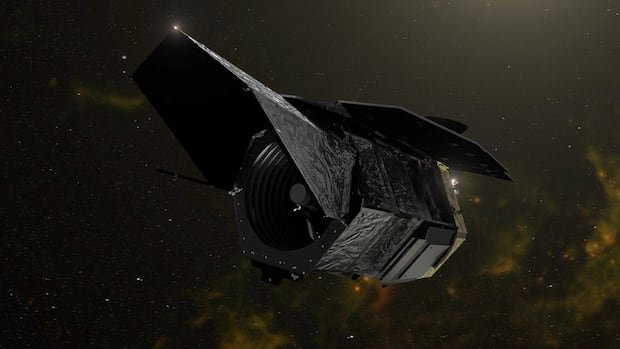

At 7:26 a.m. this Sunday, a brand-new space telescope is scheduled for launch from Cape Canaveral, Florida atop a Falcon Heavy rocket. The Nancy Grace Roman Space Telescope, named after NASA’s pioneering chief astronomer, is set to embark on a mission to explore the mysteries of our universe. Once operational, it will be positioned 1.5 million kilometers away at a strategic location known as L2, where gravitational forces create a stable orbit for satellites. The primary mission spans five years, with the potential for an extension.
The significance of adding this new telescope to the existing array of space telescopes, such as the Hubble Space Telescope and the James Webb Space Telescope, lies in its unique capabilities. Unlike its predecessors, the Nancy Grace Roman Space Telescope features a 2.4-meter mirror akin to the Hubble, coupled with advanced technologies like a coronagraph for blocking starlight to unveil planets orbiting distant stars. Additionally, it is equipped with a Wide Field Instrument, matching Hubble’s sensitivity but with the capacity to image an area 100 times larger, offering a substantial leap in observational capabilities.
The telescope’s imaging system is poised to capture billions of stars, facilitating a diverse range of sky and stellar surveys. Anticipation is high for the remarkable discoveries that astronomers hope to achieve with the Nancy Grace Roman Space Telescope.
One of the primary objectives is the search for exoplanets, as astronomers strive to unravel the uniqueness of our solar system and explore the possibility of life beyond Earth. Leveraging methods like the transit method, which involves monitoring stars for planetary transits, the telescope aims to expand on the discoveries made by predecessors like the Kepler Space Telescope. The Nancy Grace Roman Space Telescope is expected to revolutionize exoplanet research by analyzing a vast number of stars and potentially identifying thousands of transiting exoplanets.
Moreover, the telescope will employ the microlensing method to delve deeper into the search for exoplanets, offering a unique perspective for identifying Earth-like planets and expanding the current understanding of planetary systems.
Another key focus of the mission is the study of dark matter and dark energy, comprising a significant portion of the universe’s composition. Astronomers aim to investigate these enigmatic forces within galaxies and globular clusters, shedding light on their distribution and interactions within the cosmic landscape. By conducting extensive surveys and mapping out dark matter structures in galaxies, the Nancy Grace Roman Space Telescope seeks to provide valuable insights into the nature of dark matter and dark energy.
The telescope’s exploration of dark energy, which drives the universe’s expansion, is poised to enhance our understanding of cosmological phenomena. Through in-depth observations and analyses, scientists hope to gain a deeper insight into the dynamics of the universe and the role of dark energy in shaping its evolution.