
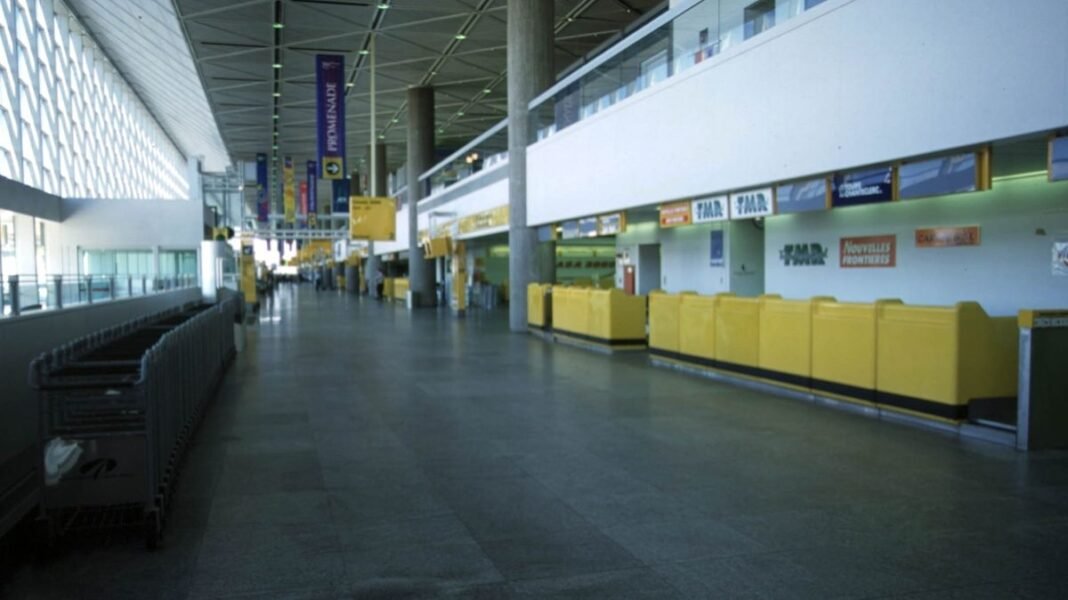

An ambitious airport project that displaced thousands of residents and aimed to become the world’s largest was abandoned and left to decay due to a series of setbacks.
In 1969, the Canadian government cleared approximately 324 square kilometers of farmland, forcing around 10,000 local inhabitants to vacate the area to make way for the construction of Mirabel International Airport. The envisioned mega-hub, designed to serve Montreal and beyond, featured six terminals and six runways. Mirabel Airport was inaugurated in October 1975 to coincide with the Montreal Olympics, with projections anticipating up to 60 million passengers annually by 2010.
Contrary to expectations, the airport struggled to attract airlines and lacked essential transport infrastructure. The promised high-speed rail link connecting downtown Montreal to Mirabel never materialized, resulting in the airport’s isolation from the city. Despite efforts to increase capacity, Mirabel never reached more than three million passengers per year, falling significantly short of its initial ambitious forecasts.
As domestic flights remained concentrated at the older Dorval (now Trudeau) Airport and airlines hesitated to operate from Mirabel due to its remote location, passenger numbers steadily declined. The inevitable outcome became evident, leading to the final commercial passenger flight departing Mirabel on October 31, 2004, bound for Paris on Air Transat. Subsequently, the terminal ceased operations and was left abandoned.
A demolition company was eventually enlisted, and by 2016, the vast airport structure was demolished. Unlike many deserted airports, Mirabel managed to repurpose itself as a hub for cargo operations, aerospace testing, and aircraft assembly. A poignant reminder of its past as a passenger terminal is the decaying Château de l’Aéroport-Mirabel, a 344-room hotel constructed adjacent to the terminal in the 1970s. By 2002, the hotel had closed its doors due to the decline of airport activities, serving as a poignant symbol of unfulfilled promises to the local community. The original grand vision of multiple terminals and runways was never fully realized, with only one terminal being constructed.
Describing the project’s colossal failure, Benoit Labonté, president of Montreal’s chamber of commerce, lamented, “It was a disaster for Montreal. There was no incentive for any passenger to transfer through Montreal.” He highlighted the city’s failure to establish robust air connections as a contributing factor to losing its commercial prominence to Toronto.
Labonté further expressed, “The decision to build Mirabel was a regrettable one for Montreal. Following that, numerous businesses opted to relocate to Toronto.” James Cherry, president of Aéroports de Montréal, the entity overseeing both major airports in the city, acknowledged that the project was destined for failure. He emphasized the site’s accessibility challenges, stating, “Access to that location posed a significant issue. Travelers today predominantly seek flights under 2 1/2 hours, and the lengthy commute deterred many from utilizing Mirabel.”
At Reach and our affiliated entities, we and our partners utilize data collected through cookies and other identifiers to enhance user experience, analyze site usage, and deliver personalized advertising. Opt-out options are available by clicking the “Do Not Sell or Share my Data” button on the webpage. Your preferences are browser-specific. By using our website and services, you consent to the use of cookies and acknowledge the practices outlined in our Privacy Notice and Terms and Conditions.