
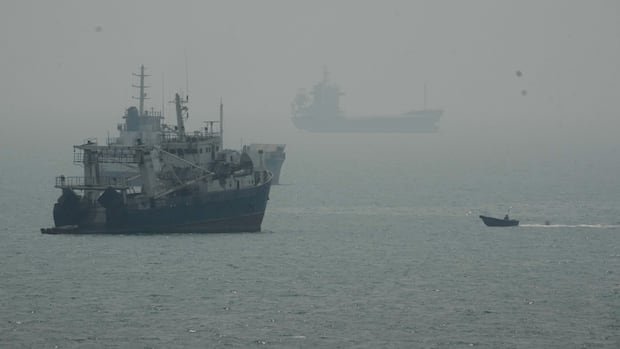

Iran confirmed on Wednesday that it had engaged in clashes with 10 ships near the Strait of Hormuz, following the sinking of five Iranian oil tankers by the U.S. This marks the most significant series of retaliatory strikes on maritime vessels by both parties since the commencement of the ongoing conflict.
The Islamic Revolutionary Guard Corps (IRGC) of Iran reported launching a ballistic missile attack on a U.S. base near Al Azraq in eastern Jordan. Additionally, they claimed to have targeted two U.S. ships and eight oil tankers that were attempting to pass through a restricted area declared by Iran in the Strait of Hormuz.
These confrontations in and around the strategic waterway led to a surge in oil prices, with the international Brent crude benchmark surpassing $100 US per barrel for the first time since July. The conflict’s impact on oil markets has been further compounded by escalating hostilities between Saudi Arabia and the Iran-aligned Houthis in Yemen, resulting in uncertainty and disruptions in energy supplies.
As a consequence of these events, consumers in the U.S. have experienced notable increases in gas prices, with the national average for regular gasoline reaching $4.15 per gallon and diesel prices hitting $5.90 per gallon. These price hikes have raised concerns, especially in the lead-up to the upcoming November midterm elections in the United States.
In response to the military actions, the Bank of America analysts expressed skepticism about the prospects of a lasting resolution before the U.S. midterm elections. Meanwhile, Canada has also witnessed a rise in gas prices, prompting the government to extend the gas tax holiday until the end of January.
Furthermore, Iran announced the establishment of a maritime restricted area extending from Chabahar in Iran into parts of the Gulf of Oman and the Arabian Sea. Incidents such as a drone attack on an Iraqi oil tanker and disruptions in the Gulf and Gulf of Oman due to military activities have added to the tensions in the region.
The Strait of Hormuz, a critical chokepoint for global oil transportation, has been significantly affected by the conflict, impacting the flow of oil and other essential resources. The U.S. has responded by imposing a military blockade on Iranian ports, leading to a complex situation in the region.
Despite these challenges, efforts to ensure the safe passage of vessels through the strait continue, although the situation remains volatile and unpredictable. The clashes and disruptions in the region underscore the heightened tensions and risks posed by the ongoing conflict between Iran and the U.S.