
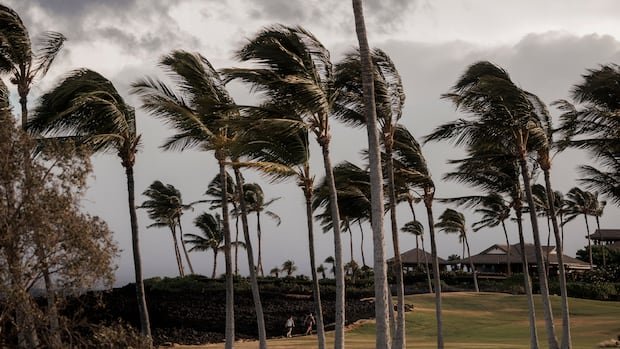

Hurricane Lala set its sights on Hawaii’s Big Island on Saturday, heading towards a potential landfall, marking the first direct hurricane hit on the island in 155 years. The National Hurricane Center reported Lala’s sustained winds reaching 120 km/h, classifying it as a Category 1 hurricane. The eyewall was expected to pass over or near the island’s southern tip by evening, bringing its strongest winds to the volcanic slopes thousands of feet above sea level.
Projections indicated that the island’s higher elevations, predominantly featuring the towering Mauna Kea volcano, could receive up to 63.5 centimeters of rainfall, posing a significant risk of life-threatening mudslides. Residents in remote mountainous areas, living in makeshift dwellings off the grid, were urged to seek safe shelter promptly.
Bobby Camara, a 75-year-old lifelong Big Island resident, expressed his plans to weather the storm, stating, “I think stocking up is part of life over here… You learn to be self-reliant.” Governor Josh Green described the approaching storm as “enormous,” cautioning about potential destructive flooding and even the threat of wildfires sparked by strong winds across the island chain. Approximately 10% of customers on the Big Island experienced power outages.
Residents like Mike Caputo, residing near the island’s east coast, were particularly concerned about flash flooding and fallen trees, especially the albizia trees known for their large size but weak structure. Caputo, a 50-year-old local fire captain, mentioned taking precautions by trimming his trees in advance to prevent road blockages.
The Big Island was under a hurricane warning, with tropical storm warnings issued for several other Hawaiian islands. The latest forecasts anticipated Lala making landfall very close to the island’s southern tip. Shelters were opened, events canceled, and ranchers advised to leave cattle in open pastures to avoid potential structural collapses.
Officials emphasized the severity of the storm, urging residents to remain vigilant, especially in the remote and rural southern region of the island known for agriculture like coffee and cattle farming. The aftermath of previous floods in March still lingered for many, with concerns about further damage looming over growers.
As winds intensified across the islands, meteorologists warned of increased wildfire risks due to dry and breezy conditions outside the storm’s core. Memories of a devastating fire in Maui in 2023 prompted heightened awareness of weather-related dangers, emphasizing the need for precautionary measures.
Reflecting on past hurricane impacts, experts highlighted the unpredictability of storms and the potential for significant damage. The historical context of hurricanes in Hawaii, such as the catastrophic Hurricane Iniki in 1992, served as a reminder of the destructive power of such natural disasters.