

In a compelling narrative reminiscent of many unforgettable tales, director Phil Cox embarked on his documentary about Khartoum from a rather unexpected starting point – a period of confinement in his own jail cell.
Following the creation of a film for Channel 4 News in 2017, Cox found himself incarcerated for three months in the Sudanese capital during the authoritarian rule of President Omar al-Bashir. Using his time behind bars as an opportunity, the seasoned conflict news professional from Hackney, east London, began establishing connections with various individuals.
Upon his return to Khartoum in 2021, amidst a shift to a joint military-civilian government post the dictator’s overthrow in 2019, Cox set out to reunite with the acquaintances he had made during his imprisonment. With a track record of accolades working with the Native Voice Films collective for platforms such as Netflix and HBO, Cox secured funding from the British Council and spent eight months documenting stories throughout Khartoum, equipping local subjects with donated mobile phones to capture their daily experiences.
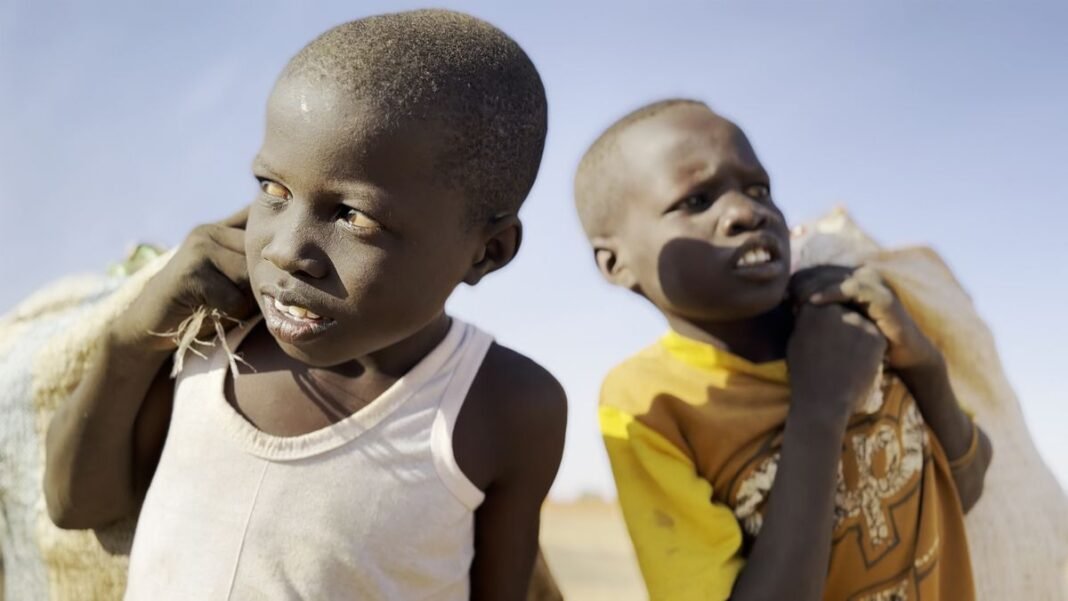
Describing the project as a poetic portrayal of the city, Cox collaborated with Sudanese filmmakers Anas Saeed, Rawia Al Hag, Ibrahim Snoopy, and Timeea M. Ahmed to produce the film “Khartoum,” focusing on the lives of five individuals: plastic bottle collectors Wilson and Lokain, tea stall owner Khadmallah, civil servant Majdi, and resistance committee volunteer Jawad.
However, the envisioned narrative took an unexpected turn due to subsequent regime changes, leading to heightened tensions culminating in violent clashes between the Sudanese armed forces and the pro-Arab Rapid Support Forces during filming on April 15, 2023. Cox’s role swiftly shifted from filmmaker to rescuer and evacuation coordinator amid the chaos and conflict.
Facing perilous circumstances during the escapes from Khartoum, Cox and his team navigated through challenges, emphasizing the urgency of ensuring the safety of their companions over preserving the film footage.
Despite the challenges, the essence of the city was vividly captured as the film evolved, culminating in a poignant portrayal of the lives of the main characters who had become refugees. Through a collaborative effort, the individuals were brought together in Nairobi, Kenya, where they revisited memories of Khartoum and reenacted pivotal moments amidst the turmoil, juxtaposed with pre-violence footage and poignant imagery of the conflict.
One particularly touching segment featured Wilson and Lokain, who shared their experiences during the tumultuous events in Khartoum, shedding light on the harsh realities they witnessed. Reflecting on the film’s impact, Cox emphasized the extraordinary courage displayed by ordinary individuals in the face of adversity.
The film “Khartoum” is set to be showcased at Film Africa 2025 at London’s Riverside Studios and Rich Mix, with plans for a broadcast on the BBC in the coming year. Cox’s profound connection to Sudan and his commitment to sharing the stories of resilience and perseverance in the face of crisis underscore the film’s significance in raising awareness about the region’s challenges and the resilience of its people.
As the conflict in Sudan persists, efforts towards peace and resolution remain ongoing, highlighting the continued struggle and resilience of the Sudanese people in the face of adversity.