
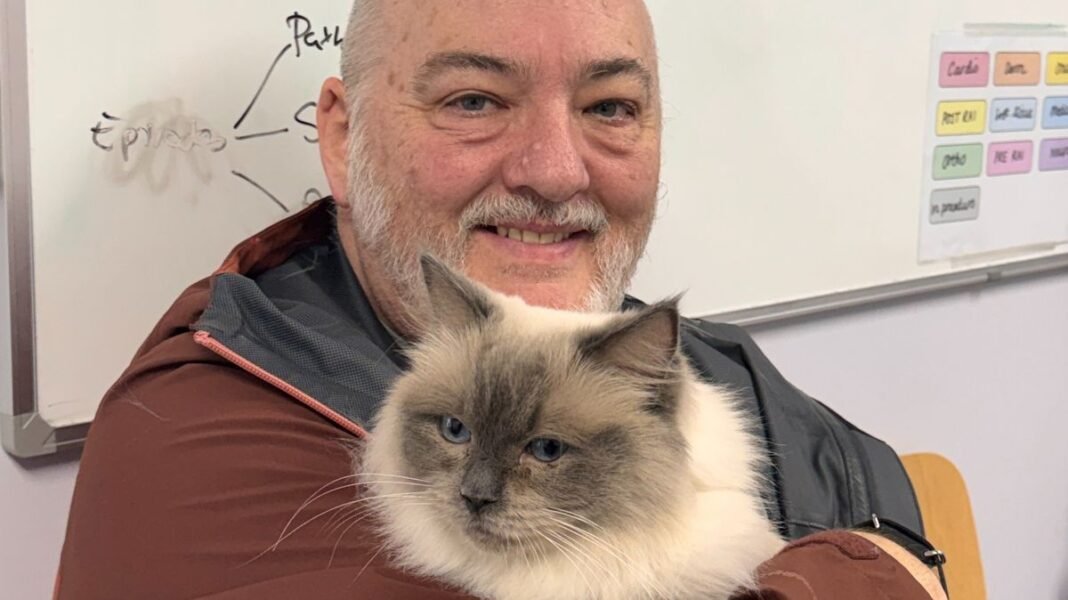

Cat enthusiast Nic Maber encountered a distressing situation when one of his beloved felines required urgent veterinary attention. The shock came when the veterinary bill amounted to nearly £2,000 after his five-year-old Ragdoll cat, Peppa, consumed bedding while under their care.
Nic, who is a caregiver to six Ragdoll cats, sought help from an out-of-hours service through his Cardiff-based veterinarian and transported Peppa to Newport. Subsequently, she was referred to Langford Small Animal Referral Hospital due to suspected heart issues. Peppa underwent several inpatient treatments, including an overnight stay, over a period of four to five days.
While at the hospital, a vet recommended a gastroscopy for Peppa after suspecting she had ingested bedding during her stay. The procedure revealed two hairballs in her stomach, likely corresponding to the foreign material observed during the gastroscopy. An ultrasound identified additional material in the colon, indicating the passage of the foreign object. A CT scan was conducted, totaling £1,899.86, with a promised 50% discount only on the gastroscopy part.
This unexpected expense added strain to Nic and his wife Charlotte, who is battling terminal cancer. Despite the vet’s knowledge of their situation, Nic felt a lack of empathy from them. Expressing his disappointment, he shared, “I trusted them with my cat during a challenging time for my family, only to be presented with a bill of nearly £2,000 for an incident that occurred under their care.”
Nic contested the overall bill of £12,500, which included £2,000 for the out-of-hours service. He objected to paying the £1,899.86 attributed to the incident that transpired while Peppa was hospitalized. In response, the Clinical Governance Manager offered a 50% discount of £949.93 as a goodwill gesture, while denying any liability. Additionally, Nic was requested to sign a confidentiality agreement barring discussion of his experience.
Seeking legal advice, Nic approached several solicitors, but the cost outweighed the potential recovery. However, consumer rights advocate The Complaining Cow assisted Nic in drafting an email to the CEO, highlighting the breach of consumer law by the veterinary practice. According to the Consumer Rights Act 2015, services must be executed with reasonable skill and care, and individuals are entitled to be compensated for any breach.
Following the email, the claim was referred to the practice’s insurer. In response, the insurer offered to waive all fees related to the investigation of Peppa’s ingestion of a foreign body as an additional goodwill gesture. Notably, the veterinary sector underwent scrutiny in March 2026, with the Competition and Markets Authority introducing new regulations focused on pricing transparency within the industry.
Despite the challenges faced, Peppa has fully recovered. Nic transitioned to an independent veterinarian, emphasizing the importance of compassionate and transparent animal care over profit-centric practices. The new vet’s approach and reasonable pricing have restored Nic’s confidence in veterinary services.
Neither the insurance company nor the veterinary practice has responded to requests for comments, underscoring the need for improved communication and transparency in the veterinary sector.