
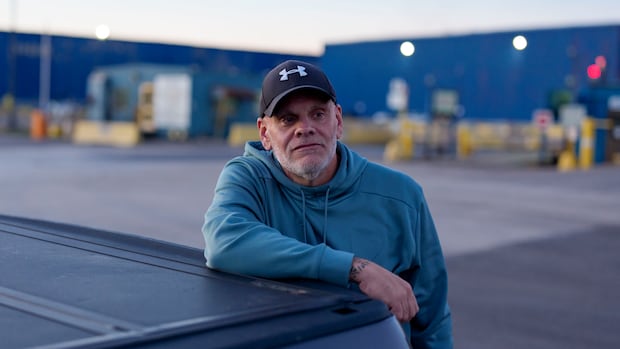

Last week, Stelco Holdings terminated the employment of 85 workers, as reported by union leader Ron Wells. He noted that the previous week, the company had already distributed 90 layoff notices.
The U.S.-owned steel manufacturer claims that the planned layoffs of up to 500 employees in Hamilton and Nanticoke, Ontario, are a short-term effect of the trade conflict between Canada and the U.S. However, shifts in technology and changes in demand, combined with tariff-related challenges, are contributing to the reduction of the once-thriving workforce in the sector.
Statistics Canada indicates that direct employment in the primary steel manufacturing sector in Canada has decreased from nearly 29,000 in 2003 to approximately 14,000 as of July.
Wells, who has spent 47 years at Stelco and serves as president of United Steelworkers Local 1005, recalled that there were about 14,000 employees at Stelco when he first joined the company.
“Producing a ton of steel today requires significantly fewer workers,” Wells told CBC News. “The process has become much more efficient.”
According to filings from U.S. regulatory bodies, Cleveland-Cliffs, the Ohio-based owner of Stelco and the largest producer of flat-rolled steel in North America, saw its workforce decrease from about 30,000 to roughly 25,000 between December 31, 2024, and December 31, 2025.
This year’s layoffs included around 600 positions in Dearborn, Michigan, as Cleveland-Cliffs shut down a large blast furnace. CEO Lourenco Goncalves attributed this decision to weak demand from North American automotive manufacturers.
This action also resulted in an additional 600 job cuts in Minnesota to align the company’s raw ore output with the lowered demand for blast furnace production.
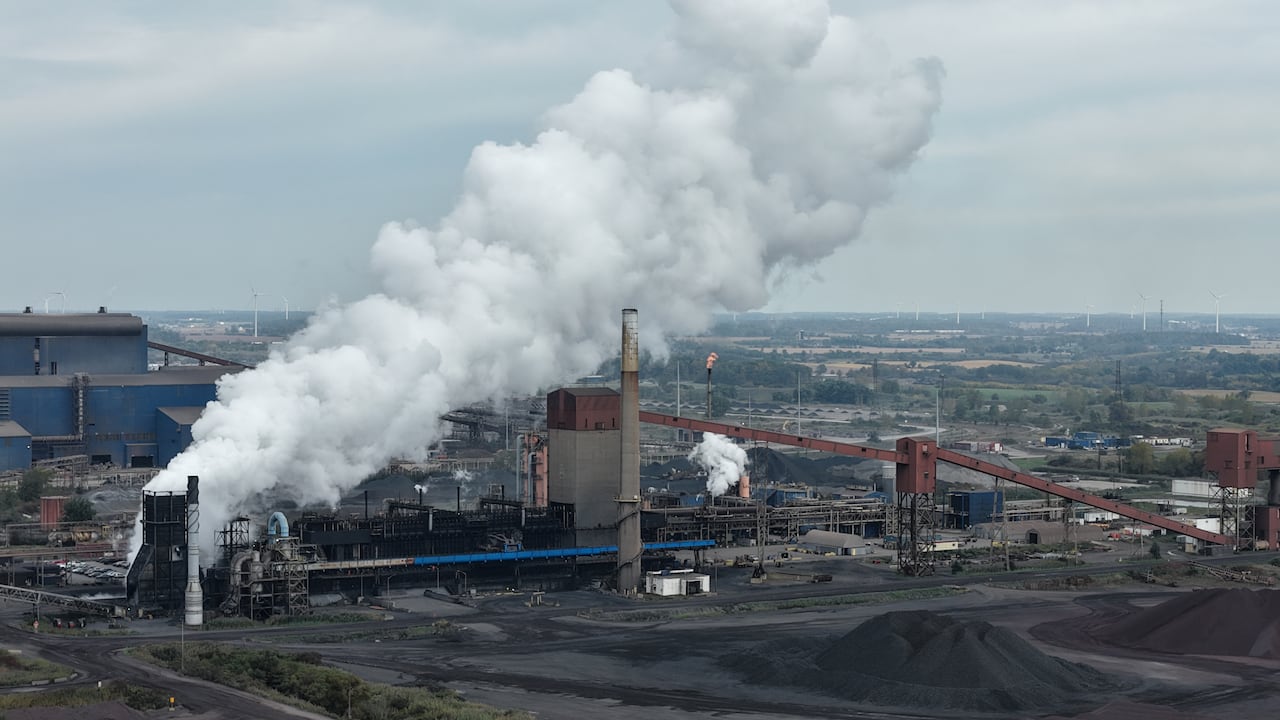
An aerial image of Stelco’s facility in Nanticoke, Ont. (Patrick Morrell/CBC)
In late September, three months following U.S. President Donald Trump’s executive order imposing tariffs of up to 50 percent on certain steel and aluminum imports from Canada, Stelco announced plans to lay off up to 500 workers across its two Ontario facilities.
This announcement sparked a dispute between the company and the federal government regarding Stelco’s obligations under the Investment Canada Act to maintain a specific number of jobs in Canada.
Stelco’s workforce is not the only group of steelworkers in Ontario facing job insecurity.
In December of last year, Algoma Steel issued layoff notices to approximately 1,000 employees, which is nearly one-third of its workforce. The Sault Ste. Marie, Ontario-based company attributed its decision to U.S. tariffs impacting its competitiveness in exports, coinciding with its plans to accelerate its shift towards environmentally friendly and less labor-intensive electric-arc furnace production.
This followed ArcelorMittal Long Products Canada announcing the permanent closure of its Parkdale wire-drawing plant in Hamilton in June 2025. This company is a subsidiary of ArcelorMittal S.A., the world’s second-largest steel and mining corporation.
“Despite our best attempts, the persistent economic challenges, rising steel imports into Canada, and overall market conditions indicated that a reduction in our operational footprint was necessary,” stated company spokesperson Jean-Philippe Grou to CBC News at that time.
Demands for action against cheaper foreign steel imports
In a letter to Industry Minister Mélanie Joly, obtained by The Canadian Press, Stelco president Paul Simon expressed concerns that imports of cold-rolled and coated steel comprised 45 percent of the market share for these products.
Wells argues that the federal government is not doing enough to protect Canadian manufacturers from cheaper foreign imports. He advocates for increasing tariff-rate quotas to restrict the flow of foreign steel that competes with Canadian products.
“There is excessive capacity coming from abroad,” he asserted. “It undermines prices in Canada.”

Industry Minister Mélanie Joly asserts that changes in market conditions cannot justify breaches of commitments made by Stelco to the government and Canadian workers. Potential outcomes from negotiations may involve ‘financial penalties’ or ‘forced divestiture’ by the U.S. owners, Joly stated.
A recent forecast from Wood Mackenzie highlights the differing circumstances of the steel industries in the U.S. and Canada. It predicts a 4.5 percent increase in U.S. steel production this year, despite a decline in domestic demand. Senior research analyst Tiago Vespoli anticipates a different scenario for Canada.
“The escalation of U.S. steel tariffs to 50 percent has significantly disrupted established trade patterns, leading to a situation where U.S. steelmakers can boost production and market presence, while Canadian producers are experiencing increased pressure on export volumes and capacity utilization,” he commented on Thursday.
Wells expressed optimism regarding a recent rise in spot prices for galvanized steel, a product Stelco is moving away from in Hamilton.
“Galvanized steel is currently priced at $1,800 a ton in Canada, a significant improvement from six months ago. This situation makes the layoffs and the shutdown of the cold mill and coated steel operations rather perplexing. It appeared that prices for coated products were beginning to recover. We believe this layoff is partly a tactic to prompt Carney to take action and secure a trade agreement,” he remarked.
“We suspect this may be an effort to enhance Trump’s image ahead of the midterms, showcasing that his tariffs are effective while Canadian steelworkers are losing their jobs.”
Goncalves has publicly backed Trump’s tariff policies, which has drawn pointed criticism from Joly and Prime Minister Mark Carney.
With a potential legal battle between Cliffs and Ottawa appearing increasingly imminent, Wells maintains hope that Stelco will reinstate the laid-off workers.
“Honestly, it’s difficult to take them at their word anymore,” he admitted.
“I firmly believe these layoffs are temporary. I am confident that this trade situation will be resolved soon, and our members will return to their jobs.”