
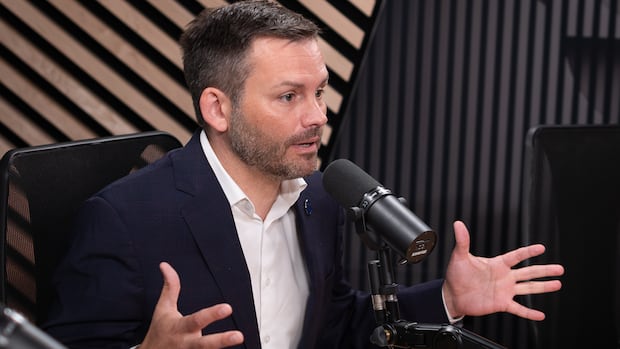

A referendum is on the horizon — but not just yet.
This was the clear message from Parti Québécois Leader Paul St-Pierre Plamondon during a series of media interviews on Tuesday.
With just over a week remaining before the commencement of Quebec’s election campaign, St-Pierre Plamondon issued a statement early in the day indicating that he would refrain from initiating a sovereignty referendum while U.S. President Donald Trump is in office.
Trump’s term is set to conclude on January 20, 2029.
This timeline would grant St-Pierre Plamondon more than a year and a half to conduct a referendum prior to the conclusion of his first term, assuming his party secures a majority in Quebec’s elections on October 5.
In a conversation with CBC News, St-Pierre Plamondon explained that he aims to clarify his party’s objectives ahead of the election campaign. He stated that the next government will prioritize “addressing issues” stemming from the current Coalition Avenir Québec (CAQ) administration.
“This is not a retreat. We have been stating there would be a referendum within the first four years,” he noted. “Now we are providing more clarity.”
He remarked that the situation in the U.S. has been affecting Canadian politics, starting with Mark Carney’s “elbows up” campaign — which employs fear to erase Justin Trudeau’s legacy from voters’ minds, according to him.
A bid to ‘calm the issue,’ according to a pollster
St-Pierre Plamondon’s declaration comes amid growing economic concerns regarding upcoming U.S. tariffs. The previous round of tariffs dealt a significant blow to the Quebec economy.
Philippe Fournier, a polling analyst, mentioned that many uncertainties linger ahead of the provincial campaign, with the PQ maintaining a slight advantage over the Quebec Liberal Party in polls.
However, one fact stands out: the majority of voters currently oppose another referendum.
“It was the most strategic move to address voters’ worries about the unpredictability caused by the Trump administration, the tariffs, and overall global uncertainty,” Fournier commented on the PQ leader’s announcement.
“This is an effort by Mr. St-Pierre Plamondon to alleviate this concern. I’m uncertain whether it will be effective.”
Opposition parties wasted no time in responding to St-Pierre Plamondon’s announcement.
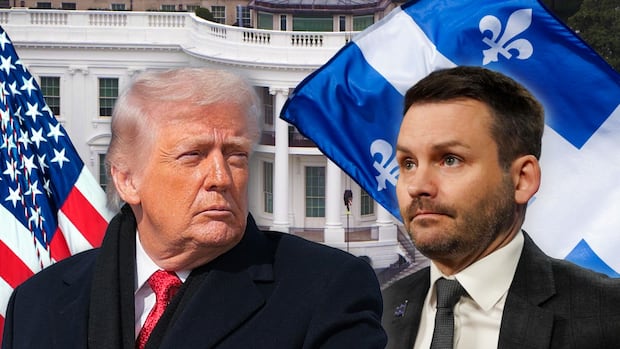
Parti Québécois Leader Paul St-Pierre Plamondon states that the party would initiate a referendum in its first mandate, but only after the departure of the U.S. president in January 2029.
PQ leader criticized as a ‘referendum weather vane’
Éric Duhaime, head of the Conservative Party of Quebec, which opposes another referendum, criticized St-Pierre Plamondon as a “referendum weather vane.”
“How can anyone place their trust in someone who has spent five years insisting he would achieve independence at any cost, only to change his stance one week before the election? If another protectionist administration emerges in Washington, will he just delay his initiative again?” Duhaime remarked.
“Quebec should not have its political agenda dictated by the Americans.”
Charles Milliard, leader of the Quebec Liberal Party, suggested that the postponement implies “separating Quebec from Canada is a weak option” and that the PQ is unclear about its goals.
“It’s a party that’s simultaneously saying yes and no,” Milliard stated.
Christine Fréchette, the current premier of Quebec and leader of the Coalition Avenir Québec, called the announcement “irresponsible” in light of the impending tariffs.
The PQ has been in power several times since the last near-referendum in 1995 but has avoided putting the matter to voters for a third time.
Nevertheless, St-Pierre Plamondon asserts that a PQ government would conduct a referendum within its first term.
He mentioned that no one is dissatisfied with the updated timeline, now that it is clearer. His party aims to run a campaign that is “clear and solid on every issue.”
Fournier suggested that St-Pierre Plamondon’s strategy could attract “soft nationalist voters who may not support a referendum but want to see Fréchette replaced.”
He added: “The real question is whether it will be successful. I’m uncertain about that.”