
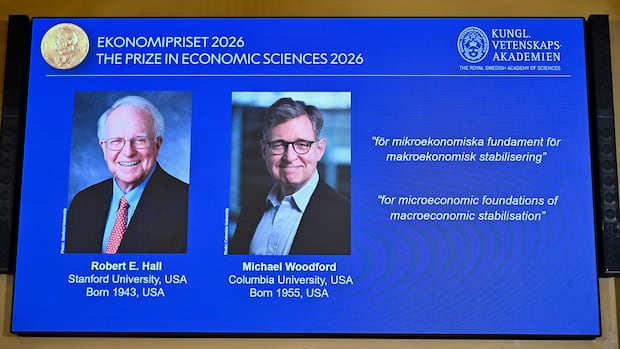

On Monday, American economists Robert E. Hall and Michael Woodford were awarded the Nobel memorial prize in economics for their contributions to models that assist governments and central banks in addressing economic shocks.
The Royal Swedish Academy of Sciences revealed the laureates in Stockholm, highlighting their work that aids policymakers in navigating economic variability.
According to the academy’s statement, “The laureates have assisted in stabilizing the economy’s fluctuations.”
Hall is connected with Stanford University in California, while Woodford is associated with Columbia University in New York.
Woodford expressed his sentiments to the committee via phone from New York on Monday, stating: “It’s a great privilege, and it’s unexpected.”
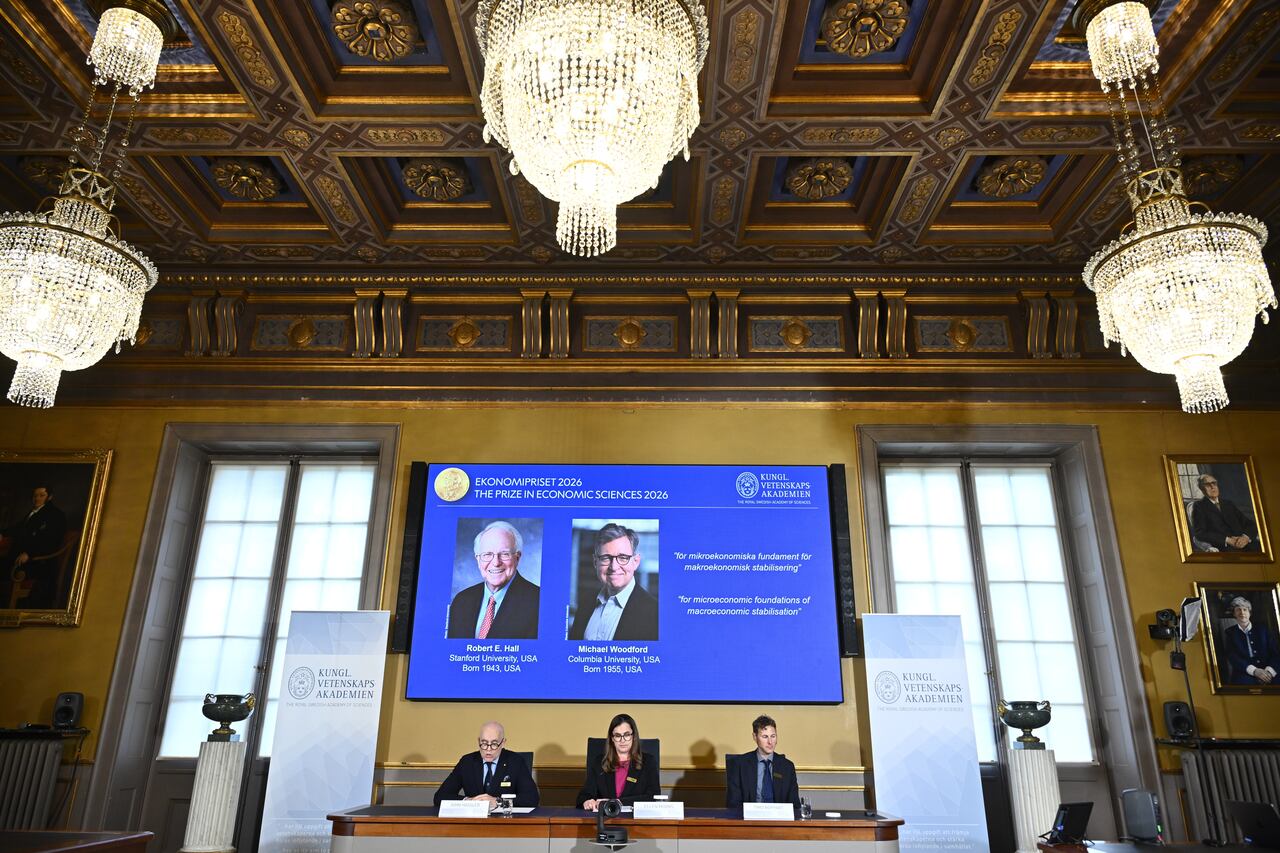
The announcement of the Nobel memorial prize in economics took place in Stockholm on Monday. Hall and Woodford received the award for their models that help governments and central banks manage economic shocks. (Anders Wiklund/TT News Agency/The Associated Press)
John Hassler, chair of the Committee for the Prize in Economic Sciences, remarked in a press release, “The work of the laureates has laid a solid theoretical groundwork for the models currently utilized by central banks and governments globally.”
“Thanks to their contributions, we are more prepared to handle economic shocks, such as energy crises or abrupt shifts in household spending.”
‘A new basis for stabilization policy’
For many years, governments tackled economic shocks by adhering to the Depression-era approaches advocated by British economist John Maynard Keynes: intervening in the economy through tax reductions and increased government spending to stimulate consumer and business expenditure, thereby reigniting growth.
Timo Boppart from the Nobel economics prize committee stated, “This is the Keynesian approach, and it proved effective — until it didn’t.”
-
He won the Nobel Prize for his work understanding the brain — and his kids flipped out
-
Audio
Anne Carson just won the Nobel Prize for Literature. We learn more about her literary legacy
Economists had believed that managing the economy involved straightforward trade-offs — for example, unemployment would remain low during periods of high inflation and increase when inflation decreased.
However, the phenomenon of “stagflation” in the 1970s — characterized by high inflation coupled with high unemployment — demonstrated that this perspective was overly simplistic.
In response, Hall and Woodford worked to develop a more comprehensive model that considers how consumers and businesses actually decide when to invest and spend.
Hassler stated, “Through their individual contributions, Robert E. Hall and Michael Woodford have established this new groundwork for stabilization policy.”
In the previous year, three researchers focusing on business innovation, including Canadian economist Peter Howitt, were awarded for elucidating how novel products and inventions foster economic growth and enhance human welfare, often at the expense of older companies.
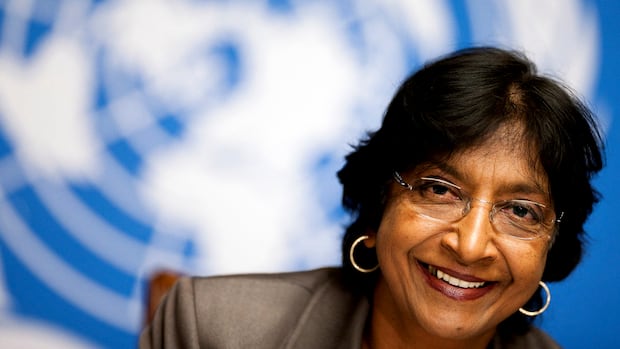
South African jurist Navanethem (Navi) Pillay has received the 2026 Nobel Peace Prize for her efforts in advancing human rights and international law. Her career has involved investigations into atrocities in Rwanda, Myanmar, and Gaza, where her findings faced significant criticism from Israel.
The economics prize is officially recognized as the Bank of Sweden Prize in Economic Sciences in Memory of Alfred Nobel.
This prize was established by the central bank in 1968 in memory of Nobel, the 19th-century Swedish businessman and chemist who invented dynamite and initiated the five Nobel Prizes.
Nobel purists argue that the economics prize does not technically qualify as a Nobel Prize; however, it is traditionally awarded alongside the others on December 10, the anniversary of Nobel’s death in 1896.
Last week, Nobel prizes were announced in the fields of medicine, physics, chemistry, literature, and peace.
This year, the prize money amounts to 12 million Swedish kronor (approximately $1.7 million Cdn), whether awarded to an individual, a small group of laureates, or an organization.