
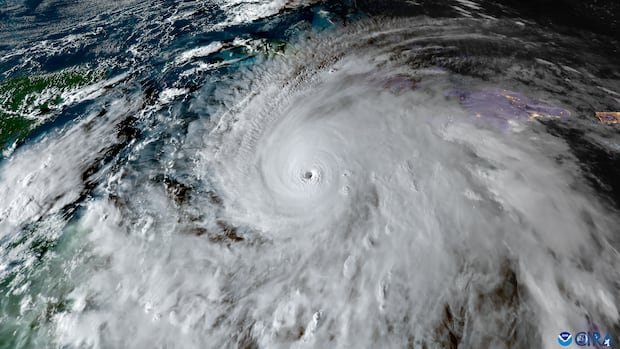

As of the current date, the Atlantic hurricane season has seen only six named storms, with most of them being short-lived. The reduced hurricane activity this season can largely be attributed to the influence of El Niño, according to Phil Klotzbach, a senior research scientist at Colorado State University. El Niño, a significant climatic event, is part of the El Niño-Southern Oscillation (ENSO) cycle, affecting ocean temperatures and atmospheric winds in the central Pacific.
The ongoing “super” El Niño is exerting a suppressive effect on Atlantic hurricane formation. El Niño events occur when the central Pacific Ocean experiences temperatures 0.5 degrees Celsius above normal. The current El Niño advisory indicates the potential for a historically strong event, with projections suggesting anomalies exceeding the 2.4-degree Celsius record set in the 1982-1983 winter.
Despite the quiet hurricane season, forecasters had anticipated this trend due to El Niño’s impact. The Pacific’s conditions can influence the Atlantic by creating vertical wind shear, disrupting the formation of hurricanes. This season may be notable for its lack of activity, with the possibility of only one or two hurricanes forming.
Although the Caribbean region is experiencing high wind shear, the Gulf of Mexico and the eastern U.S. coast remain conducive for possible hurricane formation. In contrast, El Niño typically enhances hurricane activity in the Pacific, where 16 named storms have occurred so far.
Tropical Storm Fay, which formed near 32 degrees north latitude, approached hurricane wind speeds but did not intensify to a Category 1 hurricane. While El Niño has deterred Atlantic hurricanes, some short-lived tropical storms in the Gulf of Mexico have impacted coastal communities.
The current El Niño is expected to peak in late 2026 and persist into 2027, with implications for the following hurricane season uncertain. Typically, post-El Niño years experience warmer Atlantic conditions, but whether this will lead to an active hurricane season next year remains uncertain.