
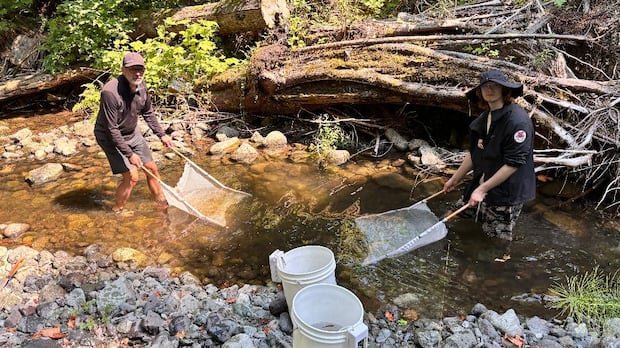

Parts of British Columbia are currently experiencing severe drought conditions, leading to water use restrictions in Bessette Creek and the issuance of temporary protection orders for the Salmon River watershed. The Cowichan Lake Salmonid Enhancement Society is actively involved in fry salvage efforts to rescue fish from drying rivers and relocate them to other water bodies to prevent ecosystem disruptions. This initiative, although crucial, is facing challenges due to worsening climate conditions, with streams drying up farther upstream, necessitating more intensive efforts.
Bob Crandall, treasurer of the society, emphasizes the importance of human intervention to address ecological issues caused by human activities. Collaborating with the Ts’uubaa-asatx Nation and volunteers, the society works tirelessly to relocate fish species like salmon, trout, and char to safer habitats. However, the changing climate has made the process more challenging, with longer distances to cover and increased logistical difficulties.
The Ts’uubaa-asatx Nation plays a vital role in fry salvage operations, utilizing drones to identify drying streams and actively participating in relocation efforts. The community’s deep connection to salmon underscores the significance of these conservation projects, focusing on holistic approaches to ensure the long-term sustainability of fish populations.
Similarly, in France, severe drought has impacted fish relocation initiatives, with extreme heatwaves and low river flows posing significant threats to aquatic life. Jean-Pierre Faure highlights the need for ecosystem restoration and adaptive water management strategies to address the adverse effects of climate change on fish populations. He emphasizes the limitations of rescue fishing and the necessity of broader conservation efforts to mitigate the impacts of environmental challenges on aquatic ecosystems.