
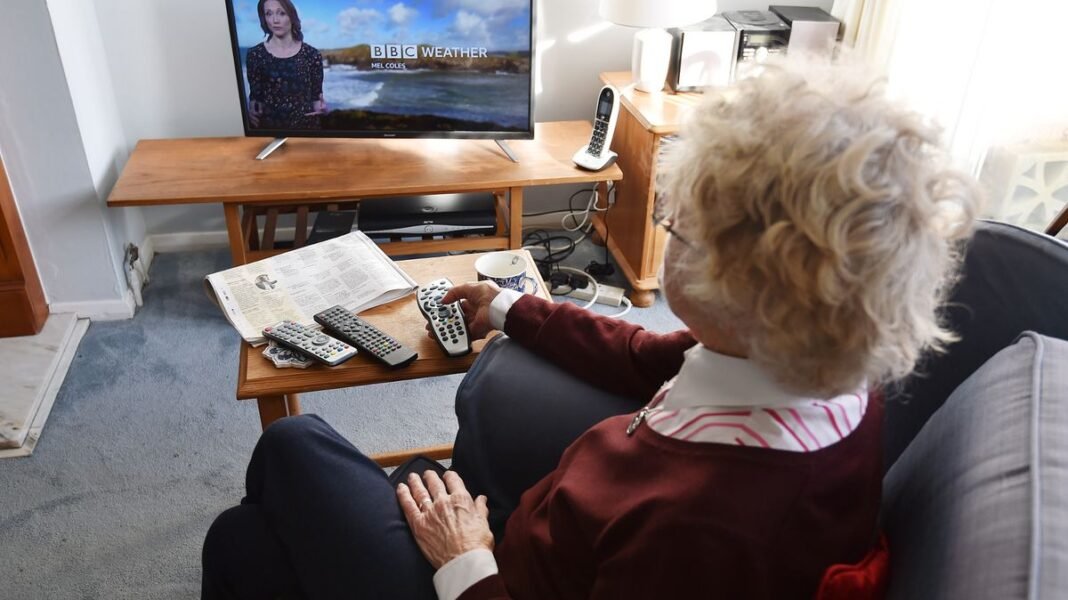

Over 150,000 individuals have voiced their support for safeguarding free-to-air terrestrial TV, with pressure mounting on Andy Burnham to champion the cause should he assume the role of Prime Minister.
Government officials are urged to endorse a mixed future for TV and radio services, ensuring the sustained availability of terrestrial TV alongside online streaming to prevent exclusion of any segments of the population.
The security of free-to-air terrestrial broadcast TV is guaranteed only until the early 2030s, coinciding with the expiration of current licenses. A petition initiated by the pensioners’ group Silver Voices calling for the protection of these licenses has recently surpassed 150,000 signatures. This initiative is backed by the Digital Poverty Alliance and the Broadcast 2040+ Coalition.
Several Labour MPs, including Luke Akehurst, Polly Billington, Sarah Champion, Lorraine Beavers, and Jess Asato, are rallying behind this campaign.
In correspondence to Mr. Burnham, Silver Voices director Dennis Reed emphasized the critical nature of Freeview TV in shaping public perception of political parties. He contends that the preservation of Freeview until the 2040s should form part of Labour’s commitment to engaging with older demographics and working-class communities.
He stated, “If successful in the Makerfield election, I trust you will leverage your influence, both current and potential future governmental positions, to safeguard the free-to-air television services that millions still rely on.”
The transition to IPTV-only services would necessitate viewers depending solely on fixed broadband, raising concerns about affordability and accessibility, particularly for older individuals, those with disabilities, and low-income households.
An 80-year-old from Kent, Lynette, highlighted the significance of traditional TV services in upholding independence and connectivity. She expressed, “Free terrestrial TV is indispensable for me – be it for entertainment, news updates, or educational purposes. I prefer not to navigate through apps or deal with streaming glitches. With my TV, I can simply switch it on and enjoy watching what I like. I am concerned that the government might deprive people like me of this convenience.”
Advocates argue that while IPTV brings advantages, it should complement rather than replace the current broadcasting system. They advocate for a continued hybrid model that allows viewers to select their preferred mode of TV access, ensuring a reliable backup during emergencies or connectivity issues.
Concerns have also been raised regarding the potential repercussions on radio broadcasting and emergency service communications, which rely on similar infrastructure.
Labour MP Mr. Akehurst remarked, “This sends a clear message to officials: the public opposes a hasty phasing out of free-to-air terrestrial TV. While streaming is gaining prominence, choice is essential, and households should not be compelled to acquire a broadband subscription to access basic public service broadcasts. The government now has the chance to demonstrate attentiveness by safeguarding terrestrial TV until the 2040s, especially with viable proposals on the table.”
<p class="Paragraph_paragraph-text__PVKlh" data-tmdatatrack="content-unit" data-tmdatatrack-type="paragraph