
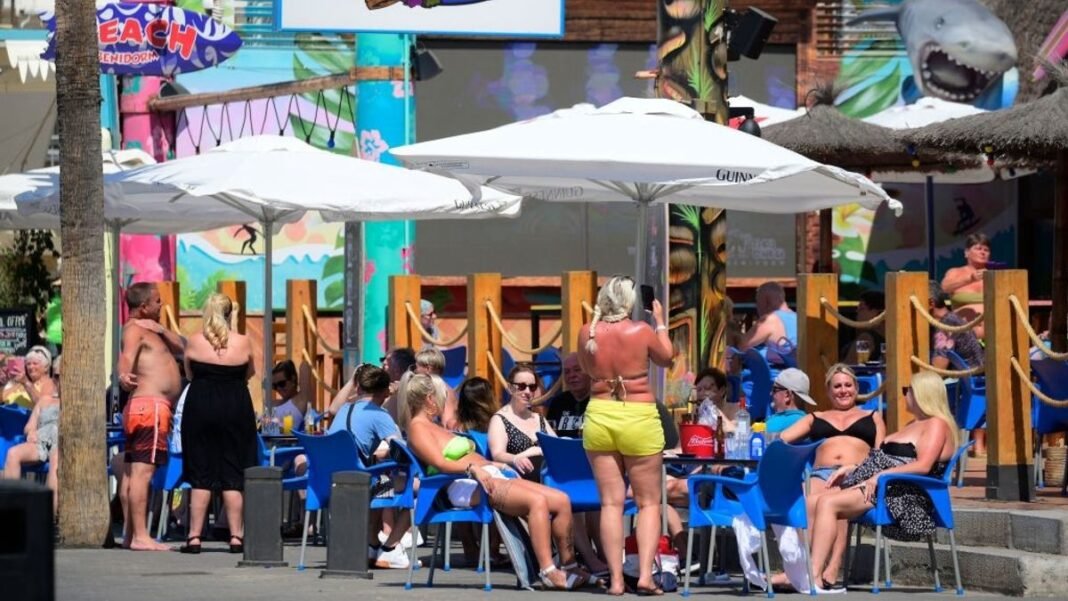

Many British tourists traveling to sunny destinations like Spain often find joy in dining outdoors, soaking up the sun while savoring a refreshing beer and tapas for lunch or dinner.
However, upcoming travelers to Spain may face hurdles in their plans for al fresco dining as new regulations could require them to enjoy their meals indoors, potentially impacting the tradition of outdoor dining.
The weather phenomenon El Niño, occurring every two to seven years and bringing prolonged warm temperatures across the Pacific Ocean, is projected to cause a surge in temperatures, prompting possible red weather alerts across Spain. While forecasts are still under scrutiny, the World Meteorological Organization (WMO) anticipates a potentially severe El Niño event this year, indicating exceptionally high temperatures in the coming months.
This climatic development coincides with recent modifications to the National Labour Agreement for the Hospitality Sector (ALEH), designed to protect workers, such as waitstaff, during extreme weather conditions. The amendment mandates the closure of outdoor terrace areas in bars and restaurants when red or orange weather warnings are issued due to soaring temperatures, ensuring patrons are served indoors instead to maintain health and safety standards.
According to Majorca Daily News, businesses with outdoor terraces in Spain must comply with the regulations during red or orange weather alerts, adjusting their service provision accordingly. Non-compliance, such as requiring staff to work outdoors during red alerts, could result in fines exceeding €50,000 (around £43,000) imposed by the country’s Labour and Social Security Inspectorate.
Certain regions in Northern Spain are currently under orange weather alerts following a heatwave reaching 40C, accompanied by rain and thunderstorms. Recent yellow warnings were issued in parts of Andalucía due to temperatures soaring into the 40s, signaling a potentially intensifying weather pattern as the peak summer season approaches, potentially prompting a shift to indoor dining options.
Apart from changes in outdoor dining experiences, British tourists landing at Spanish and other EU airports are now required to utilize the EU Entry/Exit System (EES), causing congestion at some of the busiest airport terminals.
To manage the effects of overtourism, additional Spanish cities, such as Vigo, are implementing tourist taxes, while Barcelona is redirecting cruise ships to a port further from the city center to alleviate overcrowding.
<p class="Paragraph_paragraph-text__PVKlh " data-tmdatatrack="content-unit" data-tmdatatrack-type="paragraph