

A man, while using his metal detector one morning, stumbled upon what he initially thought was a massive gold nugget but turned out to be something even more remarkable. David Hole made this discovery in the soft yellow clay of Maryborough Regional Park near Melbourne, Australia. This area had a history of gold rushes in the 19th Century that had transformed Australia into a sought-after destination for immigrants.
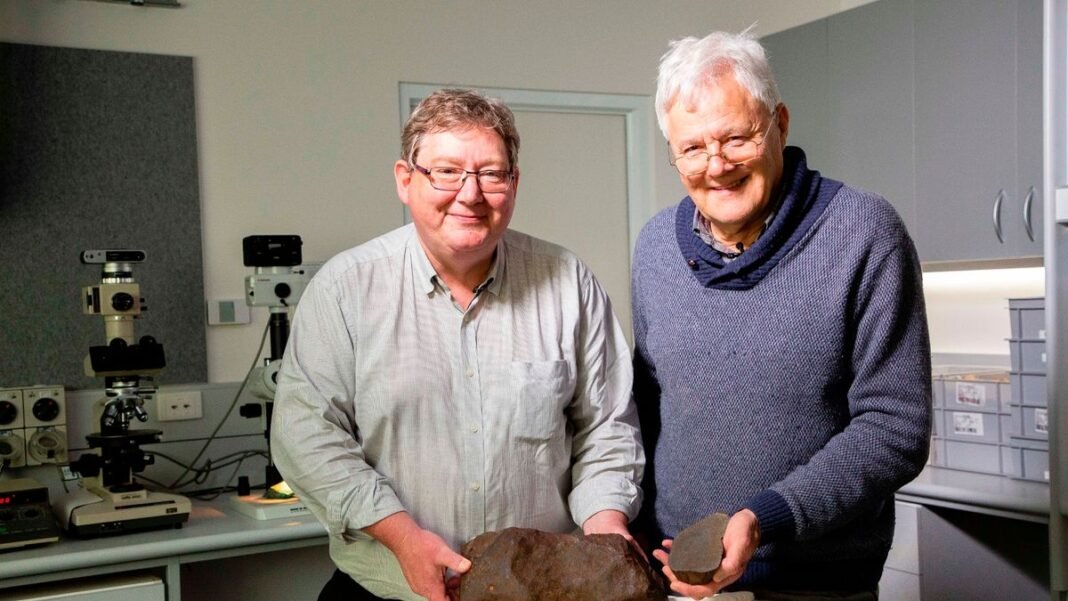
Although David found something intriguing on that bright May day, the dense stone he unearthed was not gold. Attempts to cut open the stone to confirm its composition failed, as it resisted tools like rock saws, drills, and even acid. After three years, David took the stone to the Melbourne Museum, where geologists Dermot Henry and Bill Birch identified it as a 4.6 billion-year-old meteorite.
Genuine meteorite discoveries are rare, and upon examining David’s find, Dermot recognized its unique features, indicating it had originated from outer space. The meteorite, now named the Maryborough Meteorite, likely dates back to the early stages of the Solar System’s formation. Meteorites like this provide valuable insights into the Solar System’s history, offering clues about its age, composition, and even the origins of life.
Characterized by its dense iron and nickel composition, the Maryborough Meteorite is significantly heavier than an ordinary rock of the same size. The geologists used special tools to reveal its internal structure, which included crystallized metallic minerals known as chondrules. This meteorite belongs to the H-type ordinary chondrites group, making up a substantial portion of cataloged meteorites.
Believed to have originated from the Asteroid Belt, the Maryborough Meteorite likely traveled through space for thousands of years before being captured by Earth’s gravity and landing near Maryborough. The rock’s arrival may have coincided with a reported sighting of a fireball in the sky near the discovery location in June 1951.
David described the find as a stroke of luck, emphasizing the rarity of such discoveries. The chances of finding a meteorite like this are incredibly slim, making it a one-in-a-trillion event.