
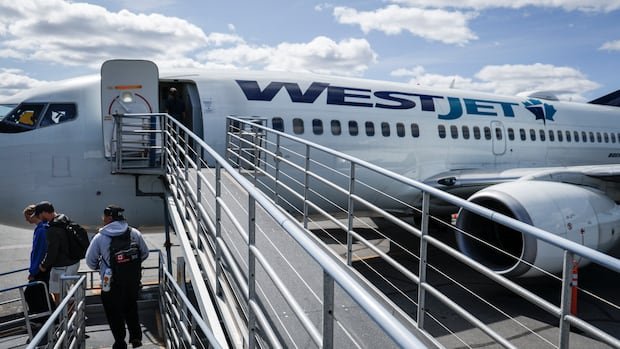

WestJet has reached a $4.5 million settlement to resolve a sexual harassment class-action lawsuit filed over ten years ago by more than 3,000 flight attendants, as confirmed by the lead plaintiff and her legal counsel. The terms of the settlement, which were finalized in June and approved by a B.C. judge on Monday, have been met with approval from WestJet, as stated in their recent announcement.
The lawsuit stemmed from former flight attendant Mandalena Lewis’s allegations of a sexual assault by a pilot during a layover in Hawaii in 2010. Subsequently, in 2016, additional female employees of the airline joined the legal action, leading to the certification of the case as a class action by the B.C. Court of Appeal in 2022. The flight attendants claimed that WestJet had failed to ensure a safe working environment with adequate measures to prevent harassment.
Lewis expressed a sense of relief that the case has concluded but conveyed disappointment in what she perceives as a lack of complete justice for the plaintiffs. Despite feeling deflated by the symbolic monetary value and WestJet’s non-admission of fault in the settlement terms, Lewis acknowledged the challenges faced in securing even this outcome.
The $4.5 million settlement will be divided among the 3,452 flight attendants involved in the lawsuit after deducting expenses, including legal costs. Each flight attendant is expected to receive approximately $400 from the settlement. Additionally, Lewis noted that the judge had reduced her agreed-upon honorarium to $10,000 from the initially planned $20,000.
WestJet emphasized its commitment to enhancing operational protocols and training to prioritize the safety and well-being of its staff, aiming to foster a culture of empowerment. As part of the settlement, the airline will engage a third-party consultant to conduct a workplace assessment to gauge the prevalence of harassment, address underreporting issues, and improve reporting and response mechanisms.
Throughout the legal proceedings, Lewis, in her role as the lead plaintiff, supported numerous former flight attendants who shared their experiences of sexual harassment, a process that took a significant toll on her physically and emotionally. She described the ordeal as a “nightmare” and highlighted the deep-rooted systemic issue of assault and harassment faced by female flight attendants within the aviation industry.
Amid the settlement, WestJet denied the allegations of breaching employment contracts by failing to implement an adequate anti-harassment program, citing the compensation as a remedy for the costs the airline purportedly avoided by not having such a program in place, rather than as recompense for the flight attendants’ suffering.
Legal expert Joshua Coratti viewed the settlement as favorable for WestJet, noting that it shields the company from potential individual claims that could have been more financially burdensome. While acknowledging that class-action lawsuits often yield lower monetary awards per plaintiff, Coratti highlighted their role in setting boundaries for acceptable behavior and deterring companies from engaging in widespread violations.
The resolution of the lawsuit marks a milestone for the affected flight attendants, although Lewis remains critical of the outcome, emphasizing the broader issue of workplace harassment and the necessity for continued advocacy within the industry.