
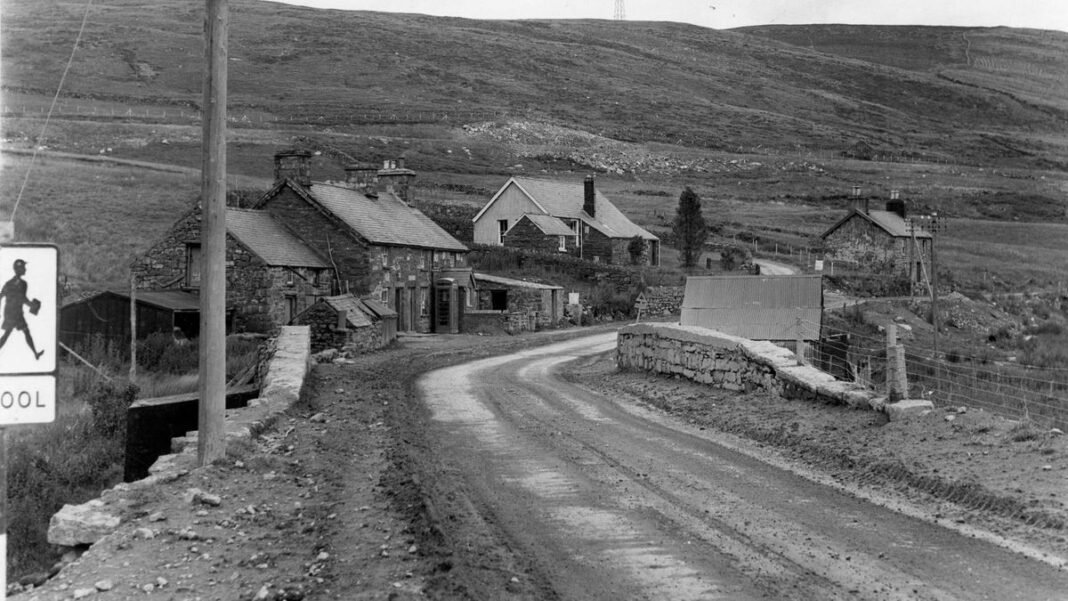

In a sorrowful turn of events, the once vibrant Welsh-speaking community of a beloved village was forsaken and allowed to vanish beneath the water without a trace.
The inundation of this treasured settlement remains a poignant subject for locals, who fiercely fought to protect their homes. Despite their resolute resistance, the village of Capel Celyn in North Wales succumbed to being submerged in a reservoir to supply water to Liverpool and the Wirral.
The controversial decision in 1965 brought about the irreversible loss of Capel Celyn, sparking a significant political outcry and a surge in support for the Welsh nationalist party Plaid Cymru. The community’s decade-long battle against the flooding project, led by the Capel Celyn Defense Committee, ultimately ended in defeat.
Even though all Welsh Members of Parliament opposed the plan, it was enforced in 1962, leading to the submersion of the village and its vital establishments. The reservoir swallowed approximately 800 acres of land, including the school, post office, chapel, and cemetery, displacing 48 residents out of the valley’s 67 inhabitants.
The destruction of this traditional Welsh community, symbolizing Welsh culture and language, stirred controversy and left a lasting impact. Today, visitors are drawn to the site, where remnants of the village occasionally resurface when water levels recede, evoking a mix of beauty and sorrow.
The reservoir, set against the picturesque valley hills, offers a serene setting for reflection. A memorial chapel stands as a tribute to the lost village, serving as a poignant reminder of its history. As the village may reemerge during extreme heat periods, the ongoing heatwave could potentially unveil it once more, as demonstrated in 2018.