


The breakdown of trade negotiations between Ottawa and Washington may prompt U.S. negotiators to aggressively pursue a favorable deal with Mexico in their ongoing discussions, according to a former Mexican trade negotiator.
Kenneth Smith Ramos, who served as Mexico’s lead technical negotiator during the initial 2017 to 2019 negotiations for the Canada-U.S.-Mexico Agreement (CUSMA), anticipates that the U.S. will strive to establish a framework agreement with Mexico by year’s end, deferring more complex issues—such as U.S. restrictions on Mexican agricultural exports—until 2027.
“It’s possible that in the forthcoming rounds, in weeks or months … the U.S., for political motives, similar to what happened with the European Union … states, ‘we have a framework agreement,'” Smith Ramos remarked in an interview with CBC News.
“I consider that a likely scenario.”
-
Exclusive
Trump’s top trade negotiator disputes Canadian assertion that U.S. made last-minute demands
-
Canada, U.S. far apart on tariff deal as deadline looms: sources
Both Canada and Mexico have been negotiating with the U.S. separately to address tariff issues and other specific bilateral trade concerns, aiming to finalize agreements prior to entering trilateral discussions on modifying and extending CUSMA.
The talks between Canada and the U.S. collapsed on August 21 when Prime Minister Mark Carney retracted his negotiators to Ottawa, citing last-minute demands from the U.S. regarding culture, automotive industries, and sovereignty that Canada found unacceptable.
These discussions were intended to avert a U.S. threat of imposing 50 percent tariffs on a wide array of Canadian goods, affecting approximately $27 billion in Canadian exports.
In retaliation, Canada has announced equivalent counter-tariffs on over 700 U.S. products, set to take effect on September 8.
Smith Ramos noted that the Canada-U.S. trade dispute has now indefinitely stalled any trilateral negotiations regarding CUSMA.
“The future of these tariffs and threats remains uncertain.”

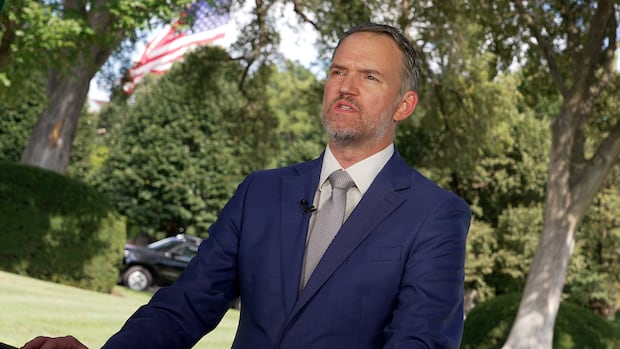
Kenneth Smith Ramos served as Mexico’s chief technical negotiator during the initial 2017 to 2019 CUSMA negotiations. (Submitted by Kenneth Smith Ramos)
On July 1, the U.S. declared it would not extend the CUSMA agreement, intending to renegotiate its terms.
Both Canada and Mexico expressed a desire to continue the agreement, firmly believing that the continental trade framework benefits all three nations.
During a press briefing on Thursday, Mexico’s Secretary of Economy Marcelo Ebrard stated that the tensions between Canada and the U.S. do not “benefit” Mexico and emphasized the importance of finding common ground for progress.
“We hope they can reach an agreement; they were quite close just a few days ago,” Ebrard remarked, adding that he plans to travel to Washington, D.C., next month for further bilateral discussions.
“The North American region needs to integrate; we have to collaborate in one way or another, and we anticipate that will occur, though it’s difficult to predict when.”
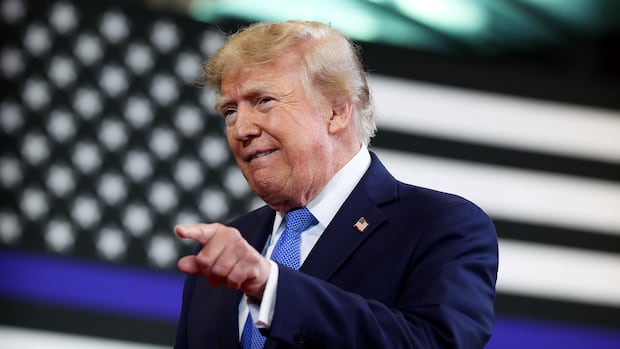
U.S. Trade Representative Jamieson Greer informed CBC News that Canada was accountable for the failure of the negotiations and refuted Ottawa’s claims that last-minute U.S. alterations derailed an agreement. Meanwhile, the premiers of Ontario and Saskatchewan considered further retaliatory measures.
Mexican President Claudia Sheinbaum also chose her words carefully when asked about the trade tensions between Canada and the U.S. earlier this week. Sheinbaum had a conversation with Carney on August 20, the day prior to the prime minister’s decision to halt the negotiations.
“I spoke with Prime Minister Carney on Thursday. I believe that the breakdown had not yet occurred. I would prefer not to label it a breakdown, but rather a disagreement—it’s more accurate to describe it that way,” Sheinbaum stated during her Monday morning news briefing.

Mexico’s Secretary of Economy Marcelo Ebrard, left, with Canada-U.S. Trade Minister Dominic LeBlanc in Toronto on May 6, prior to the initiation of a Mexican trade mission to Canada. (Mexico Secretariat of Economy)
The Sheinbaum administration must navigate the situation carefully while addressing their own unresolved issues in trade discussions with the U.S., according to Solange Marquez, vice-president of policy at the Canadian Council for the Americas.
“They are attempting to prevent any contamination of dialogue or discussions due to Canada’s situation,” Marquez noted.
“From the Mexican perspective, there seems to be a heightened apprehension about angering U.S. authorities. … With Canada out of the negotiations, Mexico is focusing on safeguarding its own interests.”
A ‘weird Frankenstein deal’
Marquez indicated that it appears the era of free trade in North America has come to an end.
“Currently, there is no discussion surrounding a free trade agreement. We are negotiating tariffs and a new trade agreement without using the term ‘free’,” she explained.
“Although we are negotiating within the framework of a trilateral accord, what is actually happening is the formation of two separate bilateral agreements.”

Solange Marquez, vice-president of policy at the Canadian Council for the Americas, stated that the Sheinbaum administration must approach the situation with care. (Courtesy of Solange Marquez)
Mexican journalist Alex González Ormerod, executive director of The Mexico Political Economist, suggested that CUSMA could evolve into a peculiar “Frankenstein deal,” where Mexico and Canada selectively opt out of certain provisions imposed by the U.S.
González Ormerod mentioned that his sources within the Mexican government have revealed that the U.S. has also presented “outrageous demands” to Mexico during their bilateral negotiations.
“It seems Canada was the first to react, but it’s not the only one being presented with a poor deal in the hope that parties will concede,” he stated.
“Mexicans are adept at diplomatically resisting the more unreasonable requests, while Canadians have opted to reject what they consider humiliating or insulting.”
As businesses navigate the uncertainty surrounding U.S. tariffs, trade policy experts caution that Canada risks being outmaneuvered at the negotiating table, urging Prime Minister Mark Carney’s team to learn from Mexico’s approach.
Time to leave the U.S. out of it?
Both Marquez and González Ormerod suggested that Canada and Mexico should strengthen their bilateral trade relations independent of their ties with the U.S.
Despite expressing a desire to enhance connections—evidenced by trade missions between the two nations this year—the overshadowing influence of the U.S. limits the potential for a genuine Canada-Mexico partnership, they argued.
“The challenge is that Mexico and Canada often perceive each other through the perspective of Washington,” Marquez pointed out.
“Perhaps the Mexico-Canada trade relationship would thrive if both parties could engage as equals, rather than being filtered through the lens of the United States,” González Ormerod concluded.