
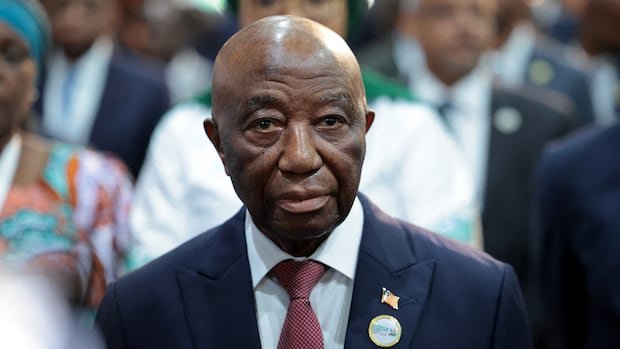

Liberia has agreed to receive a maximum of 1,200 third-country deportees from the United States within the next 12 months, with an initial batch of 20 individuals expected to land on Thursday, according to an official announcement by the Liberian government. The deportees are set to comprise individuals from African and Western Hemisphere nations who have been medically cleared for travel. Specific details regarding the nationalities of the deportees were not immediately disclosed, as the U.S. State Department typically refrains from revealing such information.
Historically, the U.S. has upheld the principle of non-refoulement in its immigration policies, both domestically and under international agreements. This principle prohibits sending migrants back to their home countries or third-party nations where their fundamental human rights, safety, or liberty may be endangered based on factors like race, religion, or nationality. However, since assuming office in January 2025, the administration of President Donald Trump has entered into agreements with various African countries and others worldwide to deport individuals whom the U.S. cannot lawfully return to their countries of origin. While Washington has defended these third-country deportation agreements as legal, judicial intervention has been limited, despite some criticism over the lack of notification provided to deportees.
Immigration attorneys have pointed out that the Trump administration leverages third-country deportations as a legal workaround, often resulting in migrants being sent to unfamiliar destinations where they are left with few options but to find their way back to their home countries. Last year, Liberian President Joseph Boakai, alongside four other West African leaders, visited the White House for discussions with President Trump, during which Trump reportedly encouraged the leaders to accept third-country deportees.
In a recent statement, Liberia emphasized that the deportees would be welcomed as “guests” with the freedom to depart at their discretion and the opportunity to seek asylum within Liberia. The government clarified that the arrangement did not involve any reciprocal agreement with Washington, and Monrovia was not seeking compensation for accommodating the deportees.
Senate Democrats raised concerns in a February report, characterizing such agreements as exploitative. They alleged that deals with five countries, including Equatorial Guinea, Rwanda, El Salvador, Eswatini, and Palau, had incurred costs of $32 million for American taxpayers. The senators criticized the use of deportation as a bargaining tool, highlighting secretive financial transactions and coercive measures employed against countries to secure their cooperation.
Several other African nations, such as the Democratic Republic of Congo, Central African Republic, Cameroon, Ghana, and Sierra Leone, have also accepted third-country deportees from the United States. This move is part of a broader strategy by the Trump administration to reduce the foreign-born population in the U.S., which includes urging undocumented individuals to voluntarily leave the country and revoking thousands of visas held by foreign nationals.
A federal judge recently permitted the Trump administration to terminate legal protections for over 5,000 Ethiopians, following similar decisions affecting individuals from South Sudan, Myanmar, and Somalia. These protections, granted under the temporary protected status (TPS) designation, had enabled recipients to live and work in the U.S. The administration argued that TPS was not intended as a permanent status and contended that some beneficiaries could have pursued asylum claims upon arrival.
The U.S. Chamber of Commerce and various organizations have criticized the termination of TPS protections, warning of adverse economic impacts and labor shortages in sectors like construction and healthcare. Additionally, the U.S. Conference of Catholic Bishops condemned the demonization of migrants in the country, with support from Pope Leo, denouncing the negative portrayal of immigrants within the nation.