
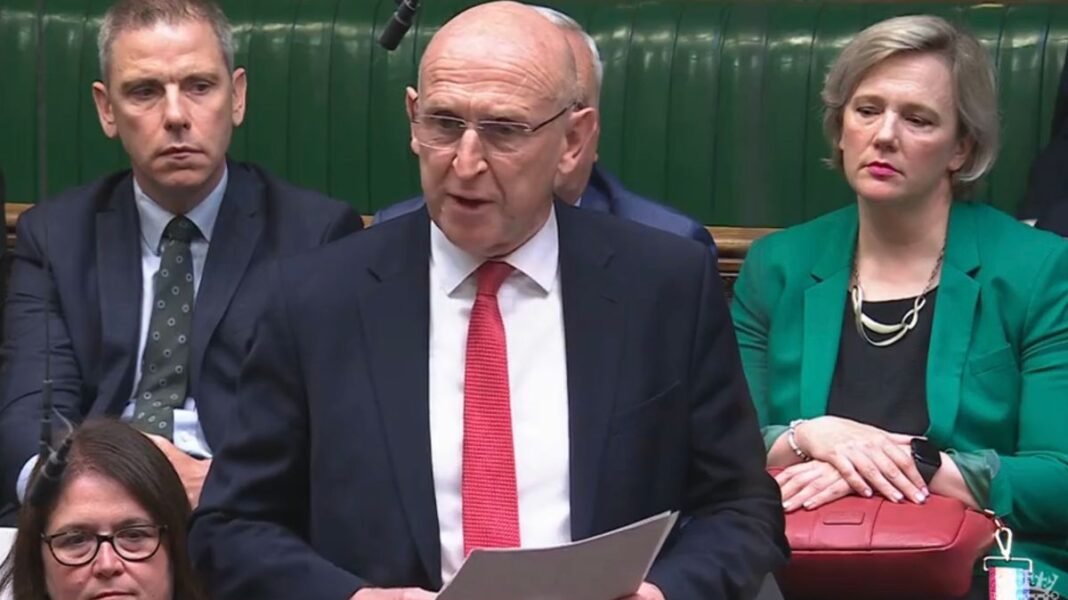

John Healey criticized the Treasury in a resignation statement as Keir Starmer hinted there would be no rise in the defense budget. The former Defense Secretary, who resigned dramatically last week, reiterated his call for the UK to allocate 3% of GDP to defense by 2030. He took a swipe at Chancellor Rachel Reeves’ department, stating, “Our adversaries do not adhere to the Treasury’s timelines.”
In a serious warning, the former Starmer ally informed MPs in the House of Commons that the government’s current military expenditure plans are inadequate during a period of global instability. Sitting on the backbenches for the first time in ten years, alongside Labour MP Al Carns who also resigned from the Ministry of Defence last week, Healey expressed regret over his resignation but emphasized its importance for the future of the armed forces and alliances.
He emphasized the urgency of increased defense investment, highlighting that the current plans fall short of what is necessary. He pointed out the lack of a clear path to reach the 3% target, noting that by 2030, a majority of NATO members are expected to meet or exceed this threshold. He stressed the importance of British leadership and solidarity with allies, emphasizing that adversaries do not wait for the Treasury’s schedules.
Meanwhile, the new Defense Secretary, Labour MP Dan Jarvis, is working to salvage the Defense Investment Plan before the upcoming NATO summit in July. The plan, already significantly delayed, faced setbacks following Healey’s resignation. Notably, Healey believed that the proposed 0.08% increase in defense spending was insufficient to address the erosion of the UK’s armed forces over the years.
Healey reaffirmed that his decision to resign was based on the country’s interests and not personal gain. He expressed pride in the achievements made during his tenure and stressed the importance of adequate defense preparations for future conflicts. His resignation speech was followed by remarks from Mr. Carns, who echoed concerns about the government’s defense strategies not aligning with future military needs.
Starmer indicated during the G7 summit in France that there would be no additional funding beyond what was already outlined in the Defense Investment Plan. While Labour has increased defense spending and committed new funds, no additional pledges were made after Healey’s resignation. Starmer highlighted the government’s efforts to reallocate resources into defense, emphasizing the commitment to enhancing defense capabilities and priorities.
The Treasury defended its position, stating that it has already boosted defense spending significantly, aiming to increase it from 2.3% to 2.6% of GDP, with a commitment of £270 billion over the Spending Review period. The Defense Investment Plan intends to enhance long-term defense capabilities, modernize the armed forces, and ensure efficient spending to support job growth in the UK.