
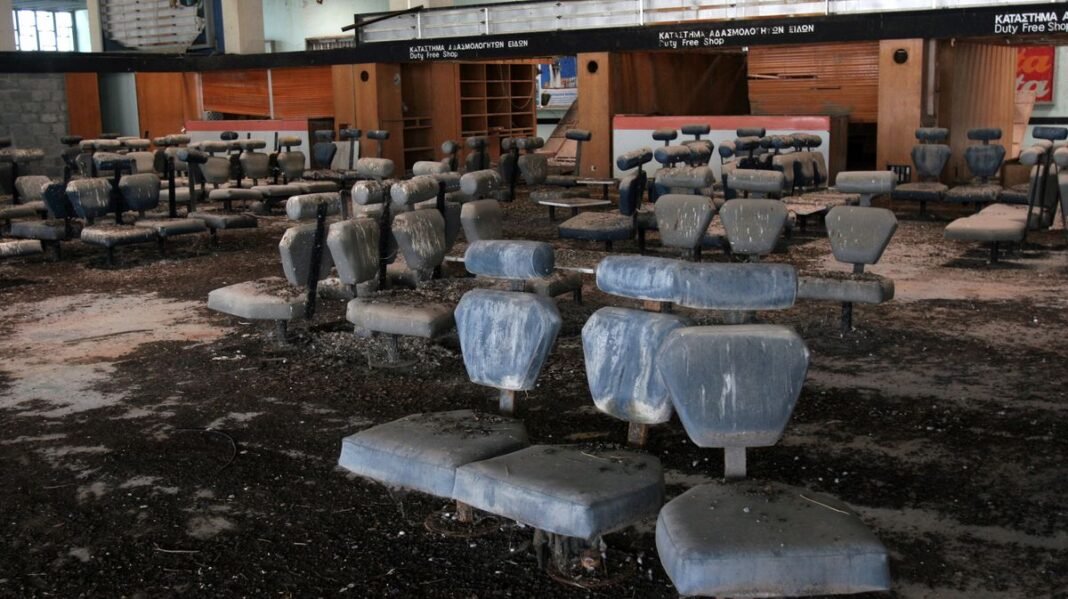

Glimpses into an abandoned airport frozen in time for nearly five decades reveal deteriorating terminals and aircraft left to decay.
Nicosia International Airport, once a bustling entry point to Cyprus, now stands desolate and silent, a haunting reminder of a tragic conflict that ravaged the island. Originating as an RAF station in the 1930s, the airport evolved into Cyprus’ primary civilian air hub.
In 1974, following a Turkish invasion, the airport transformed into a battleground, enduring heavy bombing and warfare. Despite a subsequent ceasefire, the location was designated a United Nations Protected Area, with its surroundings integrated into the island’s buffer zone.
Briefly, commercial flights continued to operate. By 1977, the efforts of British Airways engineers facilitated the removal of three stranded Cyprus Airways planes from the airport. However, the airport never fully recovered and has remained virtually untouched, encapsulating a time of conflict.
Today, within the terminal, dusty rows of chairs remain where travelers once awaited their flights, while weathered advertising boards promise exotic vacations. The only sounds now echo from pigeons nesting in the structure, as nature gradually reclaims the abandoned facility.
On the runway sits a Hawker Siddeley Trident, its engine components stripped and bearing the scars of past conflicts.
Though regular passenger flights ceased long ago, the airport remains in memory. It currently serves as the headquarters for the UN Peacekeeping Force (UNFICYP), with some sections still utilized by helicopters.
Public access is heavily restricted due to safety risks and decades of neglect, limiting the number of individuals able to witness the abandoned halls.
Efforts to revive the airport have been considered over the years, with discussions facilitated by the UN in the 1990s. However, unresolved political tensions have halted any progress towards reopening the facility.
Aleem Siddique, spokesperson for the UN peacekeeping force in Cyprus, stated to Reuters, “It is frozen in time.”
He added, “Despite numerous attempts to negotiate the airport’s reopening and restoration, political differences have prevented any agreement, leading to the airport’s deterioration over time.”
“Since 1974, no aircraft have departed or arrived.”
Through a digital project by the Cyprus Institute, the public can virtually tour the airport. The “NIC Platform” enables users to explore preserved offices, duty-free areas, and jetways in intricate detail online.
One local resident, living near the airport, was granted special access to the site.
<p class="Paragraph_paragraph-text__PVK