
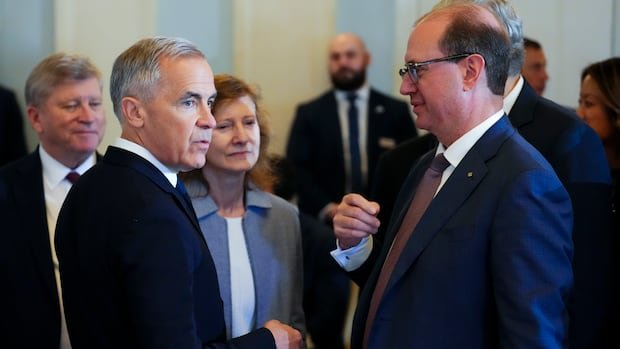

Canada’s representative to the United States emphasized the necessity of reintroducing American alcohol into Canadian markets during a video conference on Thursday as a key step in securing a trade agreement and averting potential new tariffs, according to information obtained by CBC News. Ambassador Mark Wiseman made this assertion while delivering a comprehensive overview of the trade deal to approximately 100 members of the Canada-U.S. trade council.
The council, comprising various businesses, industry associations, and labor unions, also received insights from a former Canadian chief trade negotiator who expressed reservations about the proposed agreement. The Canadian negotiation team is currently engaged in urgent discussions with the Trump administration in Washington to prevent the imposition of 50% tariffs on Canadian exports amounting to billions of dollars before the looming midnight deadline on Friday.
During his presentation, Wiseman reportedly outlined a preliminary consensus to avoid the impending tariffs, as disclosed by three sources familiar with the call. These sources, who were not authorized to publicly comment on the matter, shared that Wiseman mentioned approximately 35 Canadian officials working at the Canadian Embassy in Washington to finalize the agreement’s language within 24 to 48 hours from Thursday morning.
Wiseman detailed that the potential deal encompasses reducing tariffs on steel, aluminum, and automotive products, as well as modifications to the allocation of dairy import licenses by the government, a move that could potentially increase American dairy products in Canadian markets. Following Wiseman’s briefing, former Canadian chief trade negotiator Steve Verheul cautioned the council about the risks associated with the proposed deal, citing concerns about potential concessions and the impact of Trump’s Section 338 tariffs.
Verheul, who played a key role in negotiating the Canada-U.S.-Mexico Agreement and previous NAFTA talks, warned that Canada could be relinquishing vital leverage prematurely by agreeing to certain tariffs, which may lead to further demands from the U.S. industry. He highlighted the lack of broad support for Trump’s tariffs within the American industry and emphasized the importance of maintaining duty-free trade under the CUSMA framework. Verheul also stressed the need for Canada to clearly articulate its stance against the sectoral tariffs and prioritize duty-free trade in future discussions.
Industry sources expressed frustration over a perceived lack of consultation by the Canadian government and insufficient briefing of industry stakeholders compared to the detailed engagement between the U.S. industry and the Trump administration. The council also featured former finance minister and deputy prime minister Chrystia Freeland, who raised concerns about the potential challenges of reversing tariff agreements once in place, particularly if there are changes in the U.S. administration.
The ongoing negotiations between Canada and the U.S. are critical as both sides strive to reach a mutually beneficial agreement before the impending deadline, amid complex considerations and differing perspectives on trade policies and tariffs.