
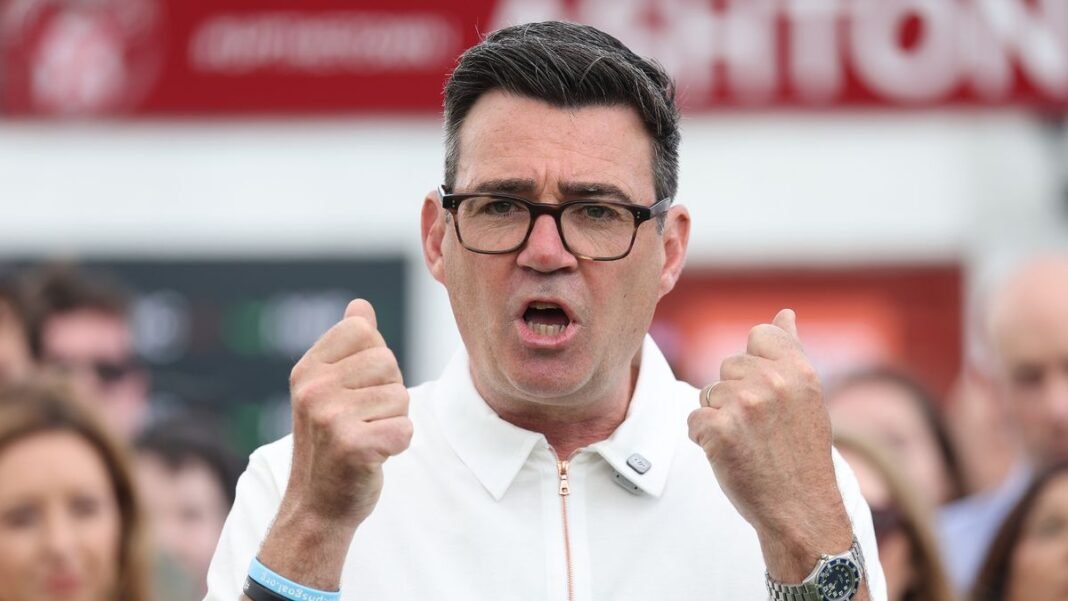

Andy Burnham is set to make a comeback to the Parliament next week, nearly ten years after stepping down as an MP. The former Mayor of Greater Manchester will be sworn in as the newest MP for Makerfield on Monday following his decisive victory over Nigel Farage’s Reform party in a crucial by-election.
During a celebratory event in the North West constituency, Burnham emphasized the need for a change in direction after four decades of policies that have not benefitted the region. He expressed optimism about the opportunity to bring about positive change, restore faith in politics, and instill hope in the people.
Following Burnham’s win, his close aide, former Transport Secretary Louise Haigh, urged Labour leader Keir Starmer to reflect on the outcome and consider a smooth transition of power to avoid a contentious leadership contest. Burnham’s supporters are pushing for Starmer to contemplate his position over the weekend and prepare for a seamless handover of leadership.
Speculation suggests that for Burnham to ascend to the top role without opposition, other potential contenders within the Labour Party, like former Health Secretary Wes Streeting, would need to refrain from challenging him. However, Streeting has expressed willingness to compete and engage in a battle of ideas regarding the party’s future trajectory.
In the face of Burnham’s victory, the Prime Minister remains resolute and has refused to entertain thoughts of resigning, citing his mandate from the 2024 election. The coming days may witness further discussions between the Prime Minister and Burnham, with the former potentially resisting pressure to outline his exit strategy.
If the Prime Minister persists in his stance, it is likely that Starmer’s rivals will trigger a leadership challenge, leading to a potential internal struggle within the Labour Party over the summer. The process for selecting a new leader would involve securing support from a significant number of MPs and navigating the party’s rule book for a formal contest.
The timing and conduct of the leadership contest would be overseen by Labour’s governing body, the National Executive Committee (NEC). The process could extend into the summer months, involving party members and unions in candidate selection through a series of voting rounds.
While the contest could culminate before Labour’s annual conference in September, there are concerns about the potential for a drawn-out and divisive leadership battle. Former Deputy Leader Harriet Harman has proposed streamlining the selection process by allowing MPs, rather than party members, to decide on the new leader, a move that would require approval from the party’s governing body.