

Welcome to our weekly newsletter focusing on environmental trends and solutions that promote a more sustainable world.
Concerns about air quality have been heightened due to the pandemic and recurring exposure to wildfire smoke. How can we raise awareness about the dangers of invisible pollutants?
This week’s topics include the concept of wearing air-quality warnings, the impact of El Niño, and solar power initiatives in unexpected locations.
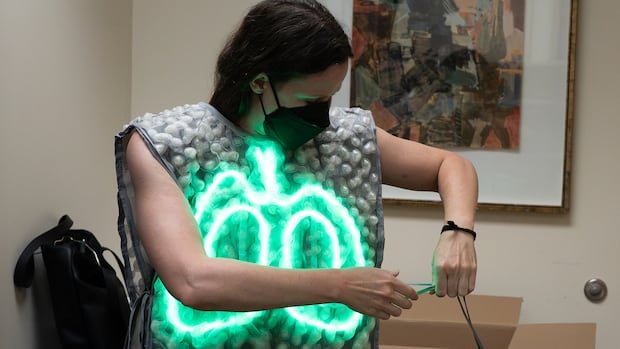
Would you consider displaying an air-quality warning on your clothing? One innovative prototype, AtmoSpheres 01, uses illuminated green lungs to visualize air quality levels. Developed by Grace Grothaus from York University, this wearable device detects PM2.5 and black carbon pollution, providing real-time feedback based on the U.S. Environmental Protection Agency’s air quality index.
Artists like Michael Pinsky are also addressing environmental issues creatively. Pinsky’s Pollution Pods project offers immersive experiences replicating the air quality of different cities, emphasizing the need to confront pollution’s impact.
In Toronto, Grothaus is developing AirWear, a portable air quality sensor designed through community engagement. By involving local residents in the design process, the device aims to raise awareness and empower communities to monitor air quality collectively.
The Ikayuut solar and energy storage project in Naujaat, Nunavut, is a prime example of turning challenges into opportunities. By reducing diesel consumption through renewable energy, this initiative showcases the potential for sustainable energy solutions in remote regions.
As we navigate environmental challenges, combining art, technology, and community engagement can drive meaningful change. Stay informed and engaged to contribute to a cleaner, healthier future.
Thank you for reading. For questions, feedback, or story suggestions, contact us at whatonearth@cbc.ca.
Editor: Emily Chung | Logo design: Sködt McNalty