
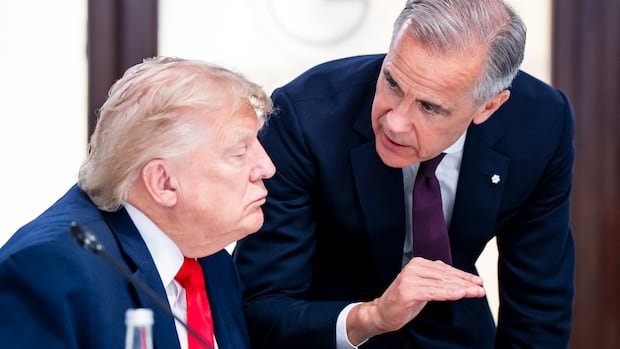

U.S. Trade Representative Jamieson Greer may prefer not to label it a trade “war,” but regardless of the terminology used — a disagreement? a disparity? an unpleasant situation? — the dispute has persisted for over 19 months.
Back in February 2025, Donald Trump, in defiance of a trade agreement he had previously ratified in 2018, initiated tariffs on various Canadian goods.
It appears that it could be several additional months before tensions de-escalate, let alone come to a halt.
Predictions from Wolfgang Alschner, a business and trade law professor at the University of Ottawa, suggest that the current state of affairs might persist unchanged until the end of the year. Talks have hinted at a potential resolution, but the negotiating positions are currently too far apart to easily reach a consensus. While the status quo is challenging, it is not intense enough to compel either side to shift their stance.
Mark Carney, speaking to the press, characterized the recent wave of American tariffs introduced earlier in the week as “relatively modest” compared to other actions taken by the U.S. administration. This assessment may indicate reluctance to implement further measures against American imports, hinting at a possible equilibrium in the escalating cycle.
Carney emphasized Canada’s readiness to strike a fair deal, but the situation appears to have led both sides to entrench their positions.
The primary negotiators, including Greer for the U.S. and Dominic LeBlanc and Janice Charette representing the Canadian government, have maintained a professional demeanor, potentially keeping the door open for future negotiations, according to insights from Meredith Lilly, an international economic policy professor at Carleton University.
Lilly highlighted potential “trigger moments” in the upcoming months that could reignite talks, such as an agreement between the United States and Mexico or the results of the U.S. midterm elections. Additionally, there looms an American threat to impose new auto and truck tariffs by January 1, 2027.
The possibility of a new tariff threat from Trump remains, as seen in his actions this past summer.
On a less optimistic note, Manitoba Premier Wab Kinew mentioned that provinces have been advised to prepare for “two-plus years” of turmoil.
The ongoing conflict may be seen differently by American officials, who believe that U.S. economic strength gives them the upper hand. However, both Paul Krugman, an American economist, and Roland Paris, a Canadian foreign policy expert, argue that Canada may hold the political advantage due to strong public support against a significant threat.
Public sentiment in Canada, as reflected in polls, shows considerable backing for tough stances against the U.S., potentially bolstering Carney’s position at the negotiating table.
The future direction of Canada in response to the trade dispute remains uncertain, with considerations on transparency, trust-building, and political resolve playing crucial roles in shaping the ongoing negotiations.
The lasting impact of the trade war on Canadian perceptions of the United States is a point of interest, suggesting that even if a resolution is reached in the near future, it may take a considerable amount of time for the conflict to be forgiven or forgotten.