
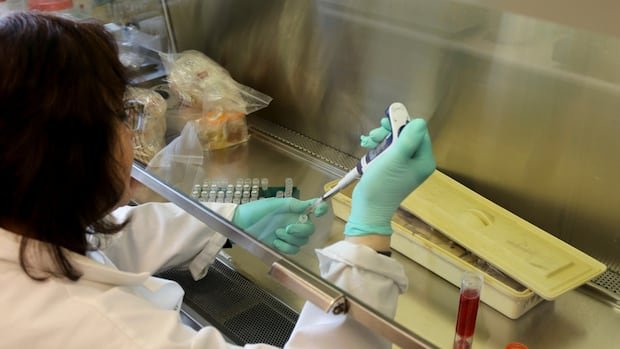

Canada’s initiative to construct a $267 million medical countermeasures laboratory in Winnipeg has been hailed as a crucial step in preparing for future pandemics. However, experts caution that the facility will encounter significant challenges related to securing ongoing funding, staffing, and governance.
The federal government recently awarded a $10.2 million design contract for the facility, which is expected to be operational by 2033 adjacent to Winnipeg’s National Microbiology Laboratory (NML). While the laboratory is designed to address the critical need for early-stage testing of vaccines, treatments, and diagnostic tools, health experts emphasize that sustained investments in skilled personnel are essential for its success.
Dr. Joanne Liu, a physician and professor at McGill University, stresses the importance of having a skilled workforce to complement the infrastructure. She highlights the necessity of backing up the construction with a commitment to supporting the necessary personnel and resources for long-term success.
The proposed facility aims to enhance Canada’s capacity for preclinical trials, providing dedicated space for lab and animal testing within the country’s research and development framework. This dedicated space would alleviate the current constraints at the NML, where lab facilities are occasionally repurposed to accommodate preclinical testing due to limited space.
Notably, the lack of local cleanrooms for producing test batches has hindered Canadian researchers in advancing vaccine discoveries to early human safety trials. Therefore, the expansion of Canada’s capabilities in this area is seen as a logical and timely step by experts.
Sustainability in funding is emphasized as a critical factor for the project’s success. Experts stress the importance of continuous financial support, especially during periods when pandemic research may not be in the spotlight. It is crucial to maintain funding and resources consistently over the long term to ensure the laboratory’s effectiveness.
Concerns also arise regarding governance risks and potential bureaucratic challenges. Experts point to past instances, such as Canada’s handling of the Ebola vaccine development, where red tape and funding issues hindered progress. The need for effective leadership, streamlined processes, and clear governance structures is paramount for the successful operation of the new laboratory.
In conclusion, while the construction of the medical countermeasures laboratory signifies a positive step towards pandemic preparedness, addressing funding, staffing, and governance challenges will be crucial for its long-term effectiveness and impact on public health.
[Source](https://www.cbc.ca/news/health/countermeasures-lab-challenges-canada-9.7303331)