
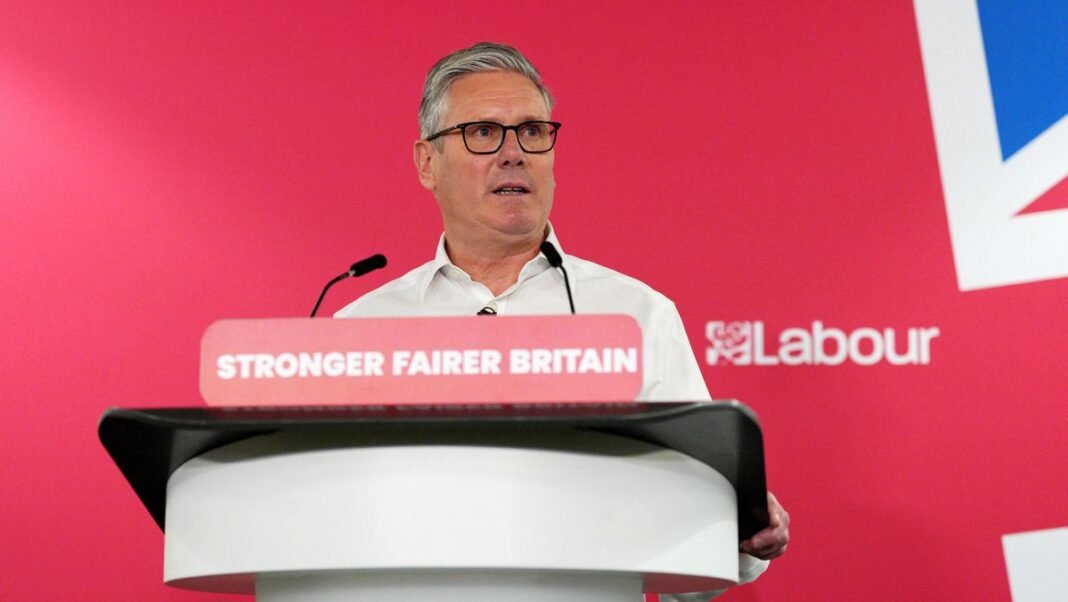

Friendships are deteriorating at a rapid pace in the UK, mirroring the swift descent of Sir Keir Starmer. Individuals on social media continue to distance themselves from friends, colleagues, and even family members who supported the Reform party. This reaction is not surprising given that the core objective of the affluent Nigel Farage-led Reform lobby group is to rid the country of immigrants, particularly those with similar ethnic backgrounds.
The proposed mass deportation schemes outlined by Farage in August and the subsequent threats to hundreds of thousands of legal immigrants last September are well-documented. A prominent MP from Reform, Sarah Pochin, expressed her frustration in October over advertisements featuring individuals of different ethnicities.
During a televised political program on the BBC, deputy leader of Reform, Richard Rice, refused to denounce derogatory remarks made by a council candidate suggesting violent actions against Nigerians. Additionally, the infamous “Stop the boats” slogan, originating from Reform’s rhetoric, was echoed by rioters during the 2024 summer unrest.
The divisive tactics employed by Reform seek to shift blame onto immigrants rather than addressing the underlying issues of a broken system that impacts all individuals regardless of their background. This strategy has led to rifts within communities, families, and friendships, prompting many to reassess their social circles and affiliations.
The need to engage in constructive dialogue rather than resorting to censorship is emphasized during these turbulent times. Criticism is also directed towards the Labour party for failing to connect with its supporters, paving the way for a shift towards extreme ideologies. Calls for new leadership, such as Angela Rayner or Andy Burnham, highlight the urgency for change within the party.
The recent elections saw the emergence of young politicians like Dylan Law from the Green Party, who resonated with voters seeking fresh perspectives. The desire for representation by individuals who understand their constituents’ needs is evident, challenging traditional political structures.
It is crucial for Labour to adapt and address the concerns of the electorate before it is too late, as highlighted by the evolving political landscape and the demand for progressive leadership.