
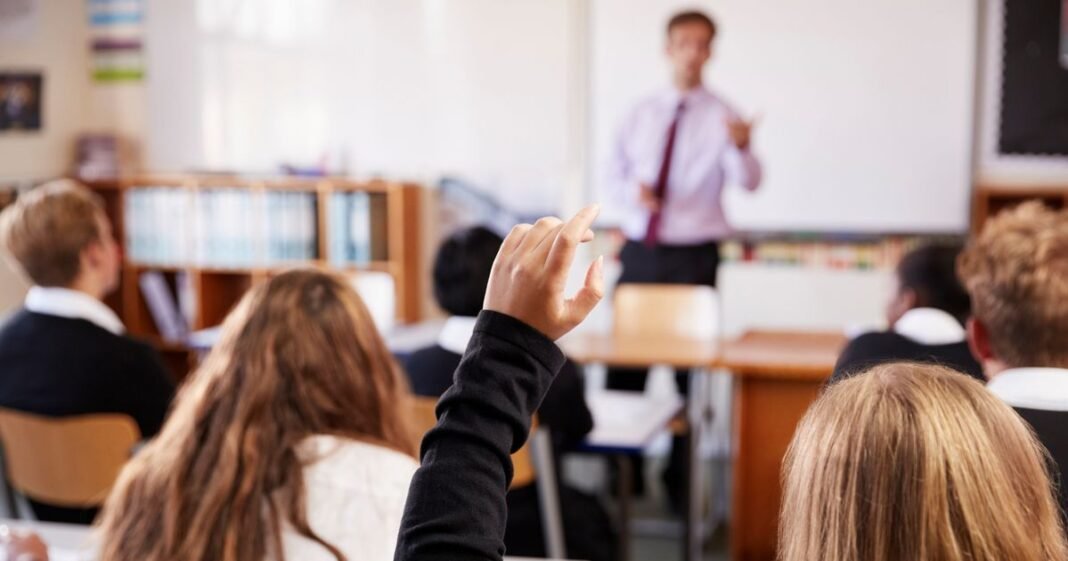

Primary school children are set to receive lessons on identifying fake news, managing finances, and understanding the climate crisis as part of a significant overhaul of the school curriculum. Additionally, they will learn about the law, voting, and arts and culture in mandatory citizenship education classes.
In secondary schools, there are plans to reduce the time spent on GCSE exams by up to three hours, allowing teenagers to have less testing. Education Secretary Bridget Phillipson announced these changes following a comprehensive review of the curriculum, the first in over ten years.
The updated curriculum aims to equip young people with the necessary skills to tackle contemporary challenges, including artificial intelligence, online risks, and global social and environmental issues. The report highlighted concerning statistics indicating that a significant percentage of youth have encountered conspiracy theories in their social circles.
The government will update the curriculum to include modern elements such as online safety and climate education, while eliminating the English baccalaureate system. Schools will be encouraged to offer a broader range of subjects, including arts, humanities, and languages. Moreover, there are plans to standardize triple science GCSEs and introduce new qualifications in data science and artificial intelligence for older students.
The government recently introduced V-level qualifications to replace hundreds of vocational courses, offering more choices alongside T Levels and A levels. Schools will be required to provide diverse enrichment activities for students, covering civic engagement, arts, nature, sports, and life skills.
However, some educators have expressed concerns about the additional pressures these changes may bring to schools, emphasizing the need for adequate funding and resources. The curriculum review also recommended reducing the number of exams taken by 16-year-olds by at least 10% and decreasing GCSE exam duration.
The updated curriculum is scheduled for full implementation starting in September 2028, aiming to prepare students for the evolving challenges of the modern world.