
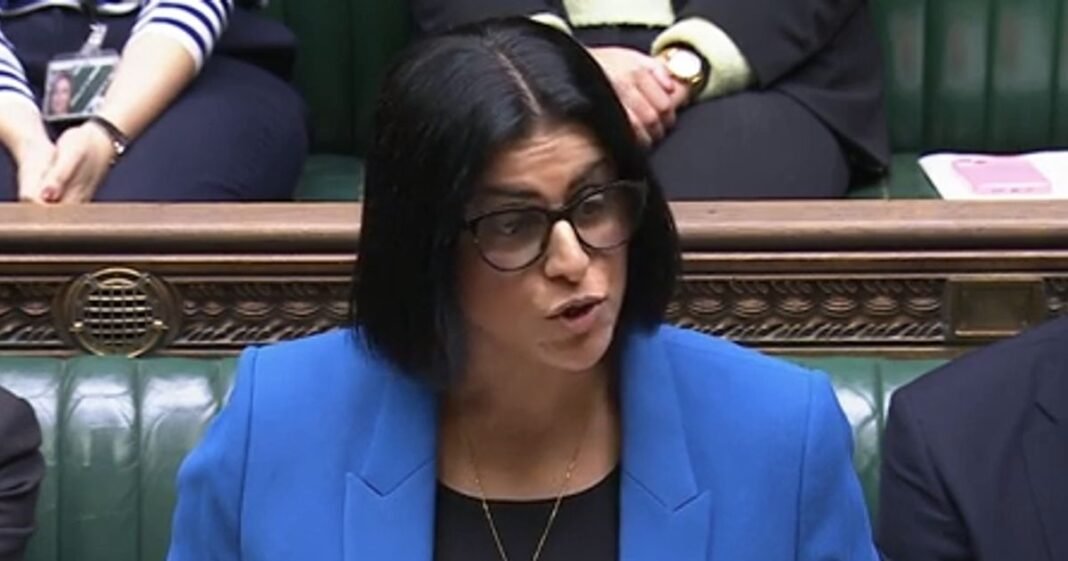

Shabana Mahmood has unveiled significant changes to immigration regulations, marking the most extensive reform in five decades, with a focus on high-earning individuals and public sector workers receiving preferential treatment.
The Home Secretary asserts that the proposed adjustments, which would substantially lengthen the period before migrants can seek permanent residency, aim to incentivize those who contribute to the economy and adhere to regulations. She suggests extending the standard qualification duration for permanent settlement to between 10 and 15 years, up from the current five years.
Under the government’s strategy, a variety of incentives and sanctions will be implemented. This means that certain groups such as skilled public sector employees, entrepreneurs, and high earners will be expedited in the process, while others may have to wait for several decades before becoming eligible.
According to the plan, individuals arriving via small boats or reliant on benefits may face a waiting period of 20 to 30 years before applying for settlement. Critics caution that the government’s approach could potentially subject individuals fleeing conflict and persecution to prolonged uncertainty and stress over three decades.
In an appeal to Members of Parliament, Ms. Mahmood cautioned that a lack of control over migration could fuel the influence of individuals promoting division and hatred. She emphasized the importance of demonstrating that migration can be effectively managed for those who view it as an integral part of Britain’s identity.
The revised rules will impact around two million individuals who have entered the country since 2021 but will not affect those who already hold settled status. The Home Secretary emphasized to MPs that the right to settle permanently in the UK is not automatic but must be earned.
She highlighted that an estimated 1.6 million people are expected to settle in the UK between 2026 and 2030, with a peak of 450,000 in 2028. According to the new guidelines, individuals must meet various criteria to be granted permanent settlement, including a clean criminal record, proficiency in English up to A-level standard, no government debts, and a minimum of three years of National Insurance contributions.
Those who have claimed benefits for a year or longer may face a ten-year delay before being eligible under the new rules. However, voluntary work could potentially reduce the waiting period for migrants, as outlined in the proposals.
Ms. Mahmood emphasized the importance of migration to Britain’s narrative but stressed that the recent influx of arrivals has been unprecedented. She emphasized the need to replace a flawed immigration system with one that prioritizes contribution, integration, and respect for British values of fairness.
The government intends to expedite skilled frontline workers like doctors, entrepreneurs, and high earners, enabling them to apply for permanent settlement after five years. Conversely, low-wage workers, including those on health and social care visas, would be subject to a 15-year qualifying period based on recent statistics.
Moreover, migrants relying on benefits might face a 20-year wait for settlement under the proposed penalties, significantly longer than the current waiting period. Additionally, migrants may only access benefits and social housing after acquiring British citizenship.
The government assured that doctors and nurses working in the NHS could secure settlement after five years, while high earners and entrepreneurs could qualify after three years. The Home Office stated that these reforms aim to establish a fairer immigration system for UK citizens while acknowledging the contributions of migrants to the economy and public services.
Immediate family members of UK citizens and Hong Kong BN(O)s will maintain their existing five-year pathway to settlement.
Enver Solomon, chief executive of Refugee Council, expressed concerns that the proposed changes could prolong uncertainty for individuals fleeing conflict and persecution, hindering their ability to rebuild their lives effectively. Solomon emphasized the importance of providing refugees with stability to facilitate their integration and contributions to British society.