
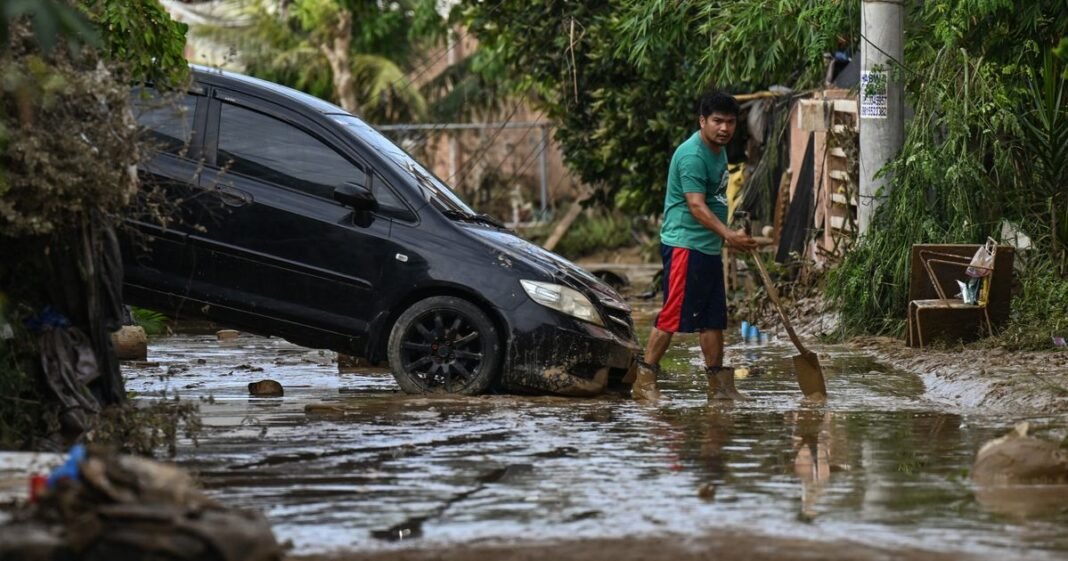

Vietnam and the Philippines are currently facing the aftermath of Typhoon Kalmaegi, which has tragically claimed the lives of more than 241 individuals. The typhoon first caused flash floods in the Philippines, resulting in severe damage to homes and businesses, before moving on to Vietnam where coastal areas experienced winds reaching speeds of up to 92mph.
The Vietnamese government has closed six airports across the country, anticipating significant disruptions to hundreds of flights. With the looming threat of strong winds, flooding, and landslides, over 260,000 soldiers are standing by for potential rescue operations, as reported by local media.
In the Philippines, memorial services are underway to honor those who lost their lives in the landslides, with over 560,000 people displaced from their residences. Vietnamese authorities have highlighted the risk of flooding and landslides in numerous localities, with reports of damage already emerging from various provinces, including homes losing roofs and hotels experiencing shattered glass panels.
Anwar Ibrahim, the Prime Minister of Malaysia, expressed his heartfelt condolences to the victims of Typhoon Kalmaegi, acknowledging the widespread devastation caused by the natural disaster. Images from coastal towns in Vietnam depict significant damage inflicted on businesses, with workers seen clearing debris at a hotel near Quy Nhon beach.
As the typhoon continues its path, Vietnam braces for the impact, deploying over 260,000 personnel, along with vehicles and aircraft, for rescue operations. The Vietnamese government has shared updates on the typhoon’s wind speeds, reaching up to 92 mph, according to reports from the BBC.
Forecasters predict heavy rainfall of 200-400mm, raising concerns for potential flooding in central Vietnam. The remnants of the typhoon may also affect neighboring countries like Cambodia and eastern Thailand. Typhoon Kalmaegi is projected to hit just north of Quy Nhon, prompting evacuations and warnings for residents to seek shelter.
The typhoon’s escalation to a Category 4 storm has heightened concerns, with officials urging coastal residents to evacuate due to potential surges of up to 8 meters. The Philippines, already grappling with the aftermath, declared a state of calamity to expedite emergency response efforts and aid distribution to affected areas.
Vietnam and the Philippines, both accustomed to natural calamities, are now confronting the challenges posed by Typhoon Kalmaegi, underscoring the need for coordinated response and resilience in the face of such disasters.